- Memorandum
- Posts
- Apple’s Gemini Turn: When Control Became Too Expensive
Apple’s Gemini Turn: When Control Became Too Expensive
Siri’s reboot runs on Google inside Apple’s cloud—revealing how AI economics are forcing even Apple to outsource the 'brains'.

Memorandum
January 18, 2026
Welcome to Memorandum Deep Dives. In this series, we go beyond the headlines to examine the decisions shaping our digital future. 🗞️
Today, we’re diving into Apple’s decision to build the next generation of Siri around Google’s Gemini models—and what it could mean for privacy, competition, and the future of AI on your phone.
For decades, Apple’s advantage came from owning the most important parts of the stack. This deal signals a shift: instead of treating external AI as an optional add-on, Apple is making a third-party model part of its core infrastructure. It’s a move driven as much by the economics of frontier AI as by product ambition, and it could reshape the balance of power across the AI ecosystem in ways regulators, enterprises, and users are only beginning to grapple with.

Build faster with a Forward Deployed Engineer deployed directly into your team.
With Athyna, you get Forward Deployed Engineers who don’t just build software—they embed into your team, understand your business, and deploy solutions that work right now.
Here’s what you get:
Modern tech stack expertise—engineers experienced in Python, TypeScript, React, Node.js, AWS, Kubernetes, Terraform, and more.
AI-powered matching that identifies engineers aligned to your stack, product, and use case—no guesswork, no mismatches.
4-day turnaround—from brief to interviews, so you start shipping fast instead of waiting for hiring cycles.
Save up to $80k per year, per hire with top-tier global talent ready to deploy.
*This is sponsored content. See our partnership options here.
Apple’s Ownership Doctrine Meets the AI Era
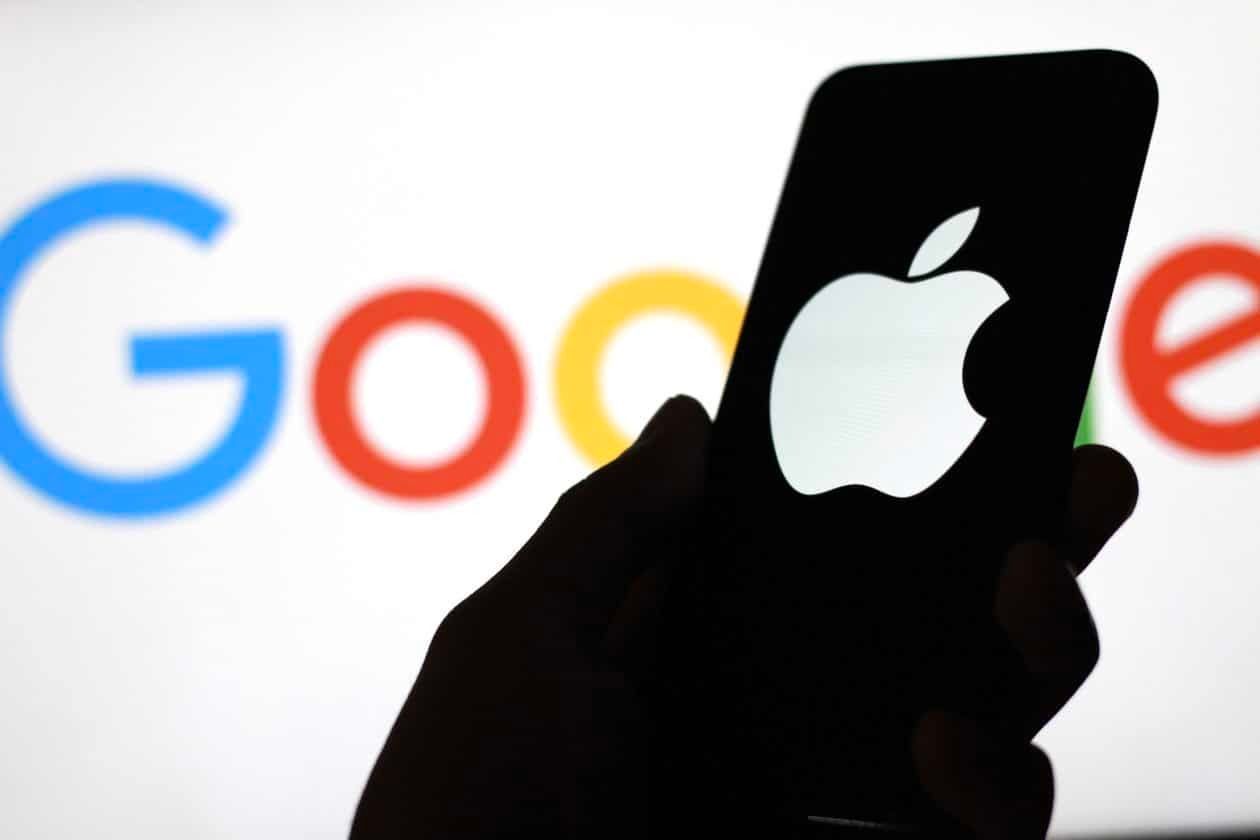
By embedding Gemini into Siri’s core stack, Apple trades independence for speed—and reshapes the balance of power in mobile AI. Photo: Stock Editorial Photography.
For decades, Apple built its identity on a single, stubborn belief: the most important parts of a product should be owned, not outsourced. That conviction allowed the company to redefine entire categories, from smartphones to laptops, by rethinking design and engineering from first principles.
One of the clearest expressions of that mindset comes from a story that has become Silicon Valley folklore. During the development of the original Macintosh, Steve Jobs dropped a prototype into a fish tank and pointed to the bubbles rising from it. If there was air inside, he argued, there was wasted space. The problem was not the hardware. It was the imagination behind it.
Nearly forty years later, Apple’s decision to build the next generation of Siri around Google’s Gemini models marks a quiet but profound departure from that philosophy. For the first time, Apple is relying on an external intelligence layer to define a core part of its platform, not as a stopgap or an optional feature, but as foundational infrastructure.
The shift says less about Siri’s long-promised revival and more about how the economics of artificial intelligence are forcing even Apple to rethink what it can afford to own.
Inside Apple’s three-layer AI stack
The technical heart of Apple's announcement is a three-tier Intelligence architecture that changes what a smartphone can do.
At the first layer, Apple still relies on its three-billion-parameter on-device models for everyday tasks like setting timers or summarizing text. But when a user asks something more complex, such as “Siri, find the flight details from my email and book an Uber to arrive 20 minutes before boarding,” the system switches to what Apple calls Private Cloud Compute, or PCC.
This middle layer is Apple’s way of keeping AI both powerful and private. PCC nodes run on custom Apple Silicon inside secure data centers. They process data temporarily in a stateless environment and then delete it immediately.
The real brains in this secure space are no longer Apple’s own struggling models, but a special version of Google’s Gemini 3 Pro. By licensing the model’s weights rather than sending data to Google’s servers, Apple keeps control of the system. Google provides the underlying logic, while Apple provides the sensors, the interface, and the secure environment.

Apple’s Gemini tie-up shows how the cost of AI is pushing even Apple to give up control at the core. Photo: Getty Images
The system is expected to finally bring the much awaited, and delayed, revamped Siri to iPhone users, while establishing Google’s dominance in the market as a reliable AI provider.
The deal is not the first time Apple has looked to an external power source for its AI needs. Earlier in 2024, Apple signed a deal with OpenAI to give Siri access to ChatGPT.
Why Gemini is no ChatGPT
However, Apple’s earlier partnership with OpenAI offers a useful contrast. When Apple gave Siri access to ChatGPT in 2024, it did so carefully.
OpenAI’s models functioned as an optional plug-in, invoked only with explicit user consent and run entirely on OpenAI’s servers. ChatGPT could answer questions, but it never became part of Siri’s core decision-making system.
The Gemini deal crosses that line. Rather than acting as an external helper, Google’s model is embedded directly into Siri’s intelligence stack and runs inside Apple’s own Private Cloud Compute infrastructure.
Complex tasks are routed to Gemini by default, without user prompts. Where OpenAI was a safety valve, Gemini is structural. The difference is not about capability, but about control—and for the first time, Apple has chosen to give up part of it.
The timing of the announcement is also interesting. Apple has repeatedly delayed the launch of AI features on its devices. Even the ones that the company released were not very well received.
In contrast, Google’s AI features available on Android devices have had a better run. Which begs the question, what was Apple doing till now.
While on one hand the decision to use Google’s technology to power Siri may look practical, considering the massive cost of developing and training AI models. It also goes against the mindset of not being limited by challenges that helped the company make its mark in its formative years.
A shortcut that cuts against Apple’s DNA
By renting Gemini 3 for an estimated $1 billion annually, Apple avoids the tens of billions in research and development and electricity costs required to catch up to Google’s DeepMind legacy. And it allows Apple to focus on what it does best: the user interface and the hardware-software handshake.
However, it also pokes holes in the belief that Apple is continuing to push the frontiers of technological advancements. Beyond Apple, the deal also sets the stage for the global AI race.
As AI companies continue to push for larger infrastructure and bigger user-bases, the deal gives Alphabet a big leg up.
For Alphabet, the deal is a distribution victory of unprecedented scale. The market reflected this immediately, pushing Alphabet’s valuation past $4 trillion as investors realized Gemini would now sit inside the pockets of 2 billion active iPhone users.
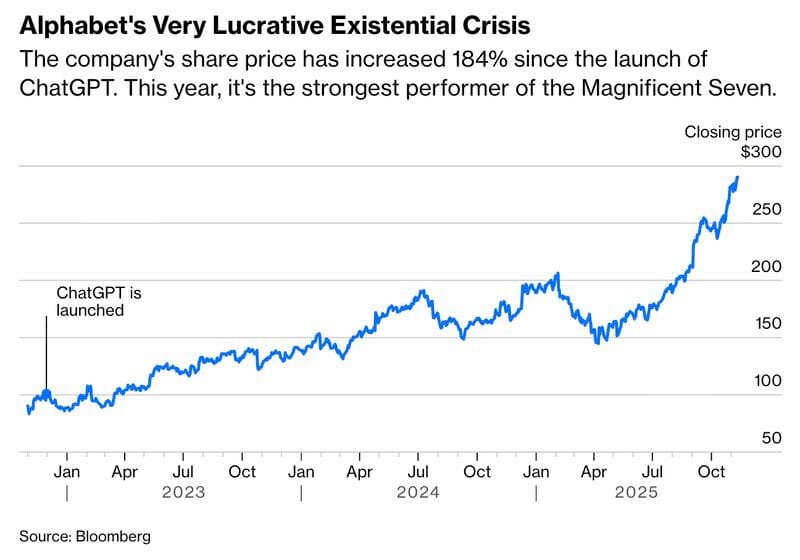
This full-stack advantage, owning the Trillium TPU chips, the frontier model, and now the largest mobile distribution channel, has effectively repositioned Google as one of the key utility provider of the AI age, while OpenAI’s role on the iPhone remains limited to an opt-in secondary option for specialized queries.
Additionally, if the deal successfully revamps Siri it would also demonstrate what Google calls Agentic AI.
With Gemini 3, Siri will gain something Google calls Generative Interfaces and advanced multimodal reasoning. In practice, this means the assistant can now ‘read the room’, or more accurately, read the screen. By spring 2026, when iOS 26.4 rolls out, Siri will have on-screen awareness, letting it understand information across third-party apps and take action inside them.
For the everyday tech worker developers, IT admins, and operations teams this represents a new way of working. Siri is no longer just an engine for answers. It’s becoming an engine that can do things. However, the shift is not going to be seamless.
Explore the essential startup reading database.
We've diligently curated a list of top-notch articles, blogs, and readings that are pivotal for startup founders. These resources come from reputable platforms and are geared towards fueling your entrepreneurial journey.
And here's the kicker: we've organized it all in a user-friendly Notion database for easy access and tracking. Double win!
Learning from the best is how you become the best. As aspiring leaders and innovators, this curated list serves as a bridge to absorbing the knowledge that has propelled others to success.
*This is sponsored content
The risks of making Google the intelligence
Enterprise compliance teams are already raising questions about data residency and audibility within Apple’s Private Cloud Compute framework. Because Apple keeps the physical locations of its PCC nodes secret to prevent targeting, organizations that must follow strict rules like GDPR or HIPAA. Both of which require organisations to strictly control how personal and sensitive user information is stored, processed, and audited.
The choice is either to trust Apple’s assurances or lose access to some of the device’s most powerful productivity features. Beyond the market, regulators are also watching the deal with interest and its implications are starting to ripple through in Brussels and Washington.
The timing is delicate. In 2025, Judge Amit Mehta issued antitrust remedies that prohibit exclusive default arrangements between Google and Apple lasting more than a year. By calling this a multi-year collaboration on foundational AI models rather than a search deal, the two companies are testing the limits of the law.
Critics worry that this creates too much concentrated power. If Gemini becomes the intelligence layer for nearly all Android and iOS devices, it could squeeze out independent AI startups. The people building and maintaining the tools, the working class of tech, may have to operate in an ecosystem where their software comes from one company, runs on hardware from another, and relies on a logic engine they cannot fully inspect.
The wall between companies has become a bridge, but for many, it feels more like a toll road. While Apple continues to be one of the major players in the hardware and software markets, the ripples of Apple’s reliance on Google, a company that stood in stark contrast to Apple’s promise of privacy, will be felt far beyond the domain of a revamped Siri.
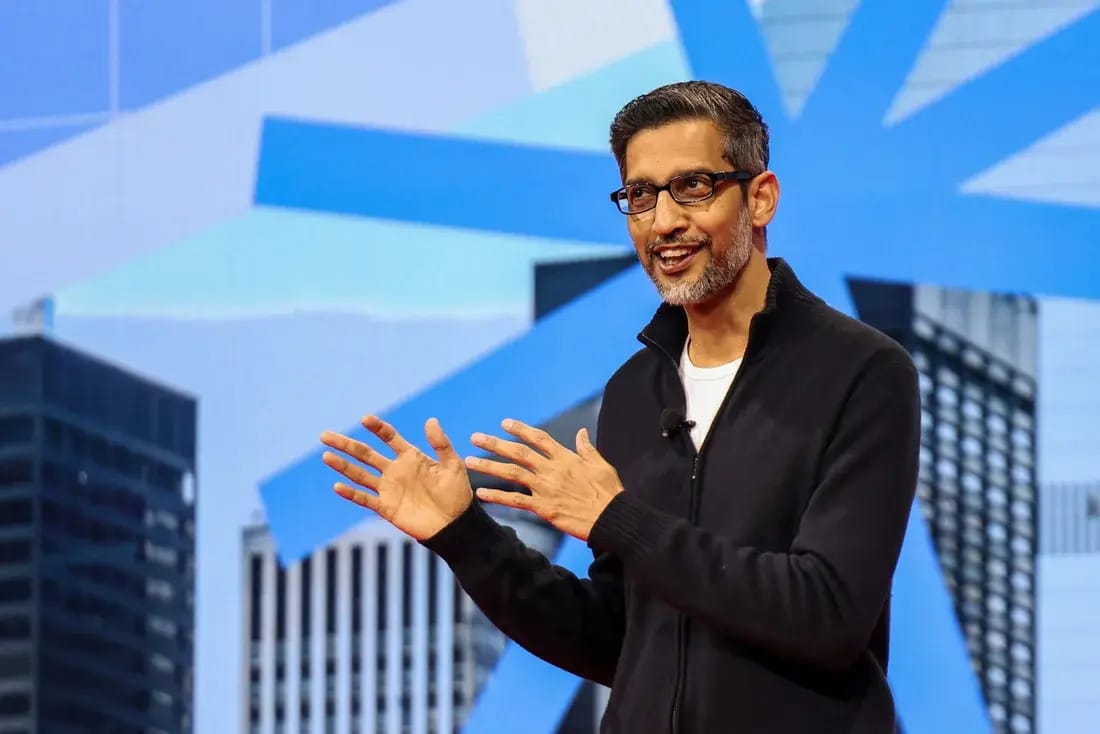
Google and Alphabet CEO Sundar Pichai speaks during a keynote session about how Google is implementing AI. Photo: Reuters/Kylie Cooper
Apple’s real test is still ahead
For Apple, the coming years define its legacy depending on whether the company chooses to use Google as a shield to work on its own AI ambitions or whether it relegates it ambitions and settles on renting AI capabilities.
And if the future of devices is to be the gateway through which users access AI models, then Apple will have to go back to its root philosophy, look for bubbles in its AI efforts and find determination to reinvent itself.
P.S. Want to collaborate?
Here are some ways.
Share today’s news with someone who would dig it. It really helps us to grow.
Let’s partner up. Looking for some ad inventory? Cool, we’ve got some.
Deeper integrations. If it’s some longer form storytelling you are after, reply to this email and we can get the ball rolling.
What did you think of today's memo? |