- Memorandum
- Posts
- When Arm Stops Being Neutral
When Arm Stops Being Neutral
Arm’s first in-house AI chip could unlock new revenue while putting the company in direct conflict with customers.

Memorandum
March 28, 2026
Welcome to Memorandum Deep Dives. In this series, we go beyond the headlines to examine the decisions shaping our digital future. 🗞️
This week, one of the most important companies in tech stepped into the spotlight. For decades, Arm helped power the modern computing era by designing the processor architecture behind billions of devices, while other companies turned those designs into finished chips.
That quiet role made Arm unusually influential. It sat near the center of the semiconductor ecosystem, supplying the blueprint for everyone from smartphone makers to cloud giants, without directly threatening the customers that relied on it.
Now that the balance is starting to shift. Arm has launched its first in-house processor and moved closer to the most lucrative and competitive part of the market, raising a bigger question: what happens when the industry’s neutral supplier decides it wants more?

Framer for Start Ups

Launch a beautiful, production-ready site in hours with Framer, no dev team needed. Early-stage founders get 1 year of Framer Pro free and save $360. Go from MVP to full product with built-in CMS, analytics, and AI localization. Trusted by hundreds of YC-backed startups.
Eligibility: Pre-seed and seed-stage startups new to Framer.
*This is sponsored content. See our partnership options here.
The company behind everyone else’s chips
Modern industries run on hidden dependencies. Behind every smartphone, app, or AI system is a long chain of companies designing components, supplying materials, writing software, and building hardware. What people see as a single product is usually the result of an entire ecosystem working together.
Arm Holdings has sat near the center of that ecosystem for decades. It designed the processor blueprints used in most of the world’s chips, licensed them to companies like Apple, Samsung Electronics, and Qualcomm, and earned royalties while those companies built the hardware. Arm was the architect everyone relied on, but rarely the one in the spotlight.
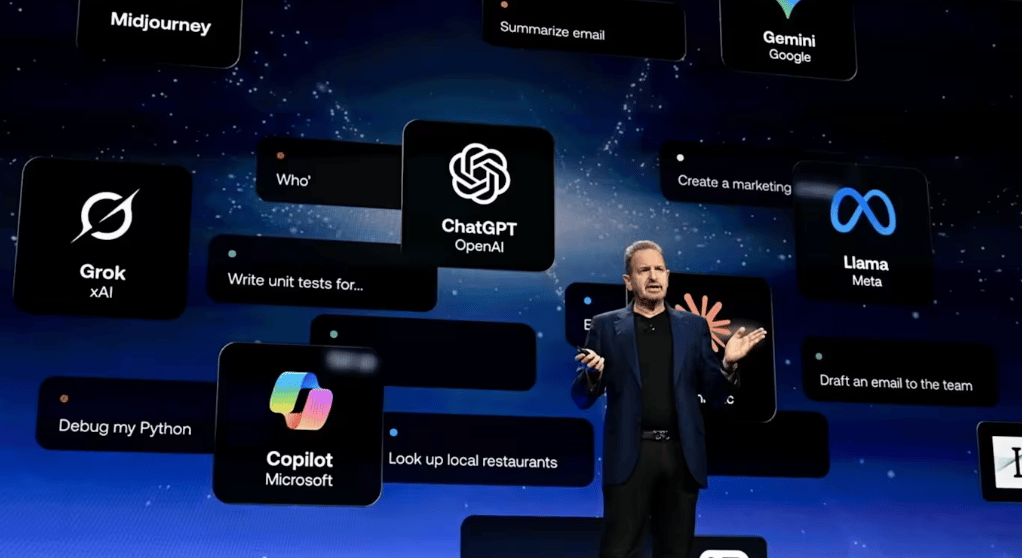
That model worked for years, until the rise of AI made the companies actually building chips some of the most valuable players in tech. On 24 March 2026, Arm stepped out of its old role and crossed a line it had never crossed before. The company launched a chip it designed itself and plans to sell to customers. The product is the Arm AGI CPU, a 136-core data center processor built on TSMC’s 3nm node, clocked at 3.7GHz with a 300W thermal design envelope.
Targeted at agentic AI workloads, the emerging category of AI systems that operate autonomously rather than just responding to prompts, the chips have already found takers in Meta Platforms, OpenAI, Cloudflare, and SAP.
To understand why Arm is shifting strategies and how it can reshape the industry, one needs to understand where the company fits into the existing supply chain.
The business of staying invisible
For decades, Arm Holdings has designed the underlying blueprints for processors that other companies, such as Apple, Samsung Electronics, and Qualcomm, have used to build their own chips. Instead of manufacturing hardware itself, Arm licensed its architecture and earned royalties on every device that ran on its designs, a model that eventually helped power almost all smartphones and billions of embedded devices worldwide.
The company’s latest AGI CPU is purpose-built to run the next generation of AI systems, which need serious compute since they run continuously, often across thousands of servers simultaneously.
Arm built the chip with Meta as an active collaborator rather than just an early buyer. The two companies co-designed it, and Meta plans to run the AGI CPU alongside its own custom AI accelerators in the data centers it’s building out this year.
Meta has also committed to a multi-generation roadmap, which means this isn’t a one-off experiment; it’s a long-term partnership that gives Arm a major anchor customer and real-world deployment data as it enters a market it has never competed in before.
This is a dramatic shift for Arm, which so far has relied on steady income from royalties flowing from the entire chip ecosystem, rather than from any single chip.
However, the stability also limited how much Arm could grow, and as AI turned chip design into one of the most valuable parts of the tech industry, companies making the actual silicon captured most of the profits while Arm continued collecting licensing fees.
Now building its own AI-focused processor is an attempt to change that by earning revenue directly from hardware, not just from intellectual property. But doing so means competing with the same companies that once depended on it.
Outperform the competition.
Business is hard. And sometimes you don’t really have the necessary tools to be great in your job. Well, Open Source CEO is here to change that.
Tools & resources, ranging from playbooks, databases, courses, and more.
Deep dives on famous visionary leaders.
Interviews with entrepreneurs and playbook breakdowns.
Are you ready to see what’s all about?
*This is sponsored content
Competing with companies that built you
The problem is that this shift changes Arm’s relationship with its own customers. Many companies that rely on Arm’s architecture have spent years building their own chips to avoid depending on outside suppliers. Amazon’s Graviton processors, Google’s custom CPUs, and similar efforts across the industry are all based on Arm designs but built in-house.
If Arm starts selling competing processors, those same customers may look for alternatives. One of them is RISC-V, a royalty-free architecture that has been gaining traction among companies seeking greater control over their silicon. The more Arm competes, the greater the risk that parts of its ecosystem drift away.
The competitive landscape makes the move even harder. NVIDIA dominates AI computing, while Intel and AMD are still fighting for relevance in servers and data centers. The largest cloud providers already design their own chips, which means Arm is unlikely to win their business easily. That leaves a narrower market made up of companies that need powerful AI hardware but lack the resources to build it themselves.
Arm’s advantage is that its architecture is already deeply embedded across the industry, so any processor it builds can run the same software and tools developers already use. That gives the company a head start compared with a new entrant, but it also means the stakes are higher.
A company that spent decades supplying the blueprints is now trying to compete in the market for finished chips, and the outcome will determine whether its role in the industry expands or begins to shrink.
When one player moves, the whole web shifts
In many ways, Arm’s move shows how fragile the balance inside modern technology supply chains can be. Industries that look stable from the outside often depend on companies staying in carefully defined roles for years. Arm built its dominance by remaining the neutral architect that everyone could rely on, collecting a small share of every chip rather than fighting to sell its own. That position helped create the vast, interconnected ecosystem described at the beginning, in which different companies controlled different layers of the stack without directly threatening one another.
By deciding to design and sell its own processors, Arm Holdings is moving closer to the center of the value chain, the place where the most money is made but also where the competition is fiercest. That shift does not affect Arm alone; it forces customers to rethink their dependence on its architecture, gives rivals an opening to push alternatives like RISC-V, and adds another contender to a market already dominated by NVIDIA, Intel, and AMD.
The result is exactly what tends to happen when one company in a tightly linked industry changes its position. The ripple spreads outward through the entire web. Arm’s decision to stop being only the architect and become a builder as well could reshape relationships across the chip industry, and the outcome will show whether controlling more layers of the stack leads to greater power or simply a more complicated fight.
P.S. Want to collaborate?
Here are some ways.
Share today’s news with someone who would dig it. It really helps us to grow.
Let’s partner up. Looking for some ad inventory? Cool, we’ve got some.
Deeper integrations. If it’s longer-form storytelling you are after, reply to this email, and we can get the ball rolling.
What did you think of today's memo? |