- Memorandum
- Posts
- Inside The Rise And Risks Of America’s Prediction Markets
Inside The Rise And Risks Of America’s Prediction Markets
Prediction markets are redefining how we assign value to information, intuition, and future events.

Memorandum
March 22, 2026
Welcome to Memorandum Deep Dives. In this series, we go beyond the headlines to examine the decisions shaping our digital future. 🗞️
This week, we’re looking at a market that is quietly reshaping how people interact with uncertainty: prediction platforms that turn future events into tradable assets. For most of their history, these markets were confined to narrow use cases like elections, operating at the edges of finance and regulation.
That changed after the 2024 U.S. election. As trading volumes surged and platforms expanded into entertainment, culture, and geopolitics, prediction markets began to move from niche tools to mainstream infrastructure. What was once a way to forecast outcomes is increasingly becoming a way to speculate on them at scale.
But as the scope of these markets expands, so do the risks. Turning everything into a contract introduces new questions about insider information, regulatory boundaries, and whether these platforms are fundamentally financial exchanges or simply a new form of gambling. The deeper shift may not be technological, but conceptual: a world where nearly every future outcome can be priced, traded, and monetized.

In partnership with

Your first HR system, implemented right

Rolling out your first HR tool? Get a step-by-step guide to avoid common mistakes, drive adoption, and build a scalable HR foundation.
*This is sponsored content. See our partnership options here.
Turning the Future Into a Market
Since the dawn of human civilization, people have had an affinity for placing economic bets on future outcomes. History is littered with evidence, literary and physical, that humans wagered on everything from board games to athletic contests.
In the modern era, this affinity for wagering has been turbocharged, and now, with technology’s assistance, prediction platforms are expanding the scope of betting to anything under the blue sky.
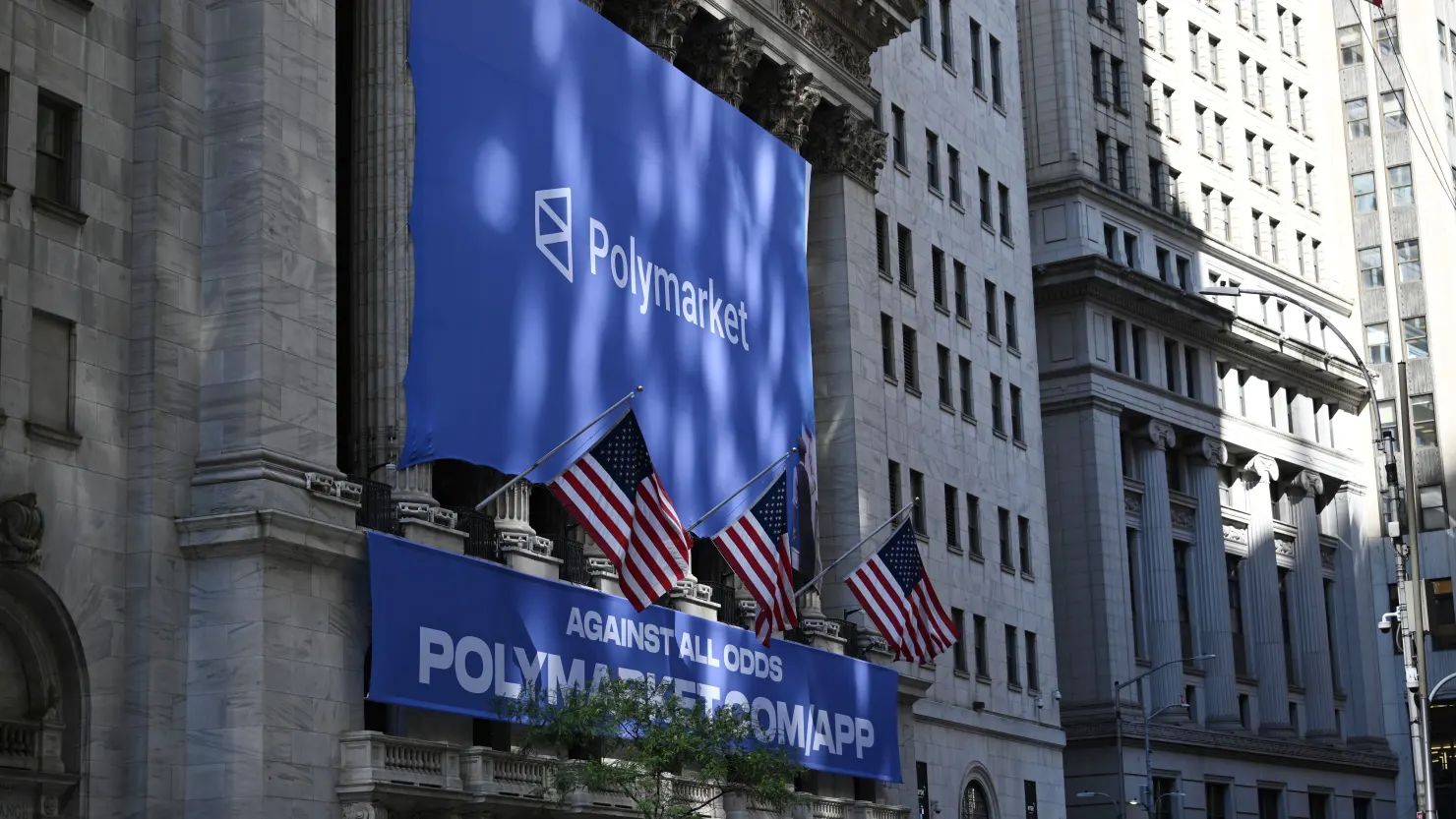
On the night of 11 January 2026, viewers tuning into the 83rd Golden Globes on CBS encountered something new between the acceptance speeches and the red carpet commentary: live prediction market odds that updated in real time as each category was announced.
Polymarket, the blockchain-based prediction platform, had struck an exclusive partnership with the ceremony’s organizers, embedding its data directly into the broadcast. By the time the credits rolled, the platform had correctly called 26 of 28 winners. To sum up its success, Polymarket CEO Shayne Coplan called it the “single most mainstream prediction market integration to date.”
Two months later, more than $100M had been traded on contracts tied to the 2026 Oscars across Polymarket and its primary rival, Kalshi. On Polymarket alone, $30M changed hands on Best Picture, a category that generated just $5.3M in total trading volume for the entire 2025 race, according to Variety. Users could wager on which celebrities would attend, which words would be spoken on stage (“ballet” was trading at 62 cents on Polymarket), and whether specific films would sweep multiple categories.
Events like the Oscars and the Golden Globes are not outliers in their acceptance of prediction markets; they are part of broader efforts by a growing industry to lure in more users.
The prediction market has been around since the late 1800s, and while modern iterations were limited to tracking U.S. presidential election races, things began to change during the 2024 elections.
The $44B experiment
Until the 2024 U.S. presidential election, the prediction markets were a niche area where users bought and sold contracts on the outcomes of real-world events.
A ‘yes’ share priced at 70 cents meant a 70% chance that an event would happen. If it did, the share paid out $1; if not, the buyer lost their money. The system worked more like a stock exchange than a sportsbook, with users trading against each other on an open order book instead of betting against a house.
The market blew up when a federal appeals court allowed Kalshi to offer contracts on the 2024 presidential election race. At the time, users heavily backed Donald Trump and were proven right, giving prediction markets new credibility. This was followed by the CFTC (Commodity Futures Trading Commission, the federal derivatives regulator) dropping its appeal against Kalshi, clearing the way for expansion.
What followed was rapid growth, with the total prediction-market trading volume reaching about $44B in 2025. Kalshi and Polymarket accounted for most of it, according to Keyrock, and Dune Analytics reported that monthly volume rose from under $100M in early 2024 to more than $13B by the end of the year. Kalshi’s monthly trades grew from about 196k to 21M, while Polymarket’s jumped from roughly 45k to 19M.
Betting on everything
This growth did not rely solely on the election cycles, which would mean sitting idle for years. To support the massive surge, the market leaders turned to entertainment, economics, weather, and geopolitics.
Kalshi CEO Tarek Mansour has been explicit about the long-term vision, saying he aims to financialize everything and create a tradable asset out of any difference of opinion.
The platform now lists more than 3,500 individual markets spanning economic indicators, Fed policy decisions, Supreme Court rulings, tech company IPO probabilities, Spotify rankings, Rotten Tomatoes scores, and the highest temperature in a given city on a given day.
The platform even launched a “mention market,” where users trade on whether specific words or phrases will appear in speeches, press conferences, or social media posts.
Not to be outdone, Polymarket offers an even more diverse mix of categories than Kalshi’s, with roughly 60% of its volume coming from outside sports, including politics, geopolitics, crypto, and what the industry calls “long-tail global events.”
Users have traded on whether the U.S. would strike Iran on a particular date, which Trump cabinet member would be first to leave office, and, more whimsically, whether Jesus Christ would return before 2027.
The shift of these platforms from their traditional base in sports to entertainment and pop culture markets is a calculated move that allows them to expand not only the scope of their predictions but also to rope in new demographics.
Traditional sportsbooks were built for a narrow audience of sports-obsessed, predominantly male users. Prediction markets reward a broader mix of expertise and intuition. Knowing Taylor Swift’s public persona well enough to anticipate her choices, understanding political dynamics well enough to price an election, or following pop culture closely enough to call a reality TV outcome all become monetizable knowledge.
And the numbers suggest that this strategy is working. According to the Wall Street Journal, women now make up 26% of Kalshi’s users, up from 13% just 10 months earlier. DraftKings has reported a similar pattern, saying its Oscar-related markets attract a disproportionately high number of female users.
And the platforms controlling the market appear to have no plans of stopping anytime soon. Kalshi co-founder Luana Lopes Lara told the WSJ that the company’s long-term goal is to have its user base mirror the U.S. population’s demographic makeup within the next decade.
Gambling or trading?
While advances in technology and new areas of prediction have paid off massive dividends for platforms operating in this market, the rapid growth has raised questions about whether these platforms are trading on opinions or promoting gambling. The question is not limited to a philosophical enquiry; it is a jurisdictional one with billions of dollars in consequences.
Kalshi argues that, as a Designated Contract Market registered with the CFTC, it falls under federal derivatives law rather than state gambling laws. Because the Commodity Exchange Act gives the CFTC primary authority over approved exchanges, Kalshi says state betting laws should not apply.
That interpretation is what allows DraftKings Predictions to operate in 38 states, including Texas and California, where traditional sports betting is still illegal, according to Axios.
However, state regulators see it differently. Gaming commissions in Nevada, New Jersey, New York, Massachusetts, Maryland, Ohio, and Connecticut have issued cease-and-desist orders or filed lawsuits, even going so far as to temporarily block the platforms, as seen in January 2026, when a Massachusetts court stopped Kalshi from offering sports contracts in the state.
The NFL has also warned Congress that event contracts tied to sports are being offered in places where sports betting itself has not been legalized.
However, the ambiguity around their nature, combined with support from federal regulators, has allowed the market to flourish and expand.
Under Chairman Michael Selig, the CFTC has pulled back a proposed ban on political and sports event contracts. He has also reportedly asked his staff to draft rules that allow event markets to expand, and signed a cooperation agreement with the SEC in March 2026 to align oversight of new financial products.
Despite the existing support, the industry is prepping for future shifts in policy and regulations. The industry formed the Coalition for Prediction Markets in December 2025, uniting Kalshi, Crypto.com, Robinhood, Coinbase, and Underdog to lobby for federal oversight, according to Kalshi’s own announcement.
The move comes close on the heels of allegations of insider trading stemming from the industry’s push into entertainment, culture, and corporate events.
The AI Talent Bottleneck Ends Here
If you're building applied AI, the hard part is rarely the first prototype. You need engineers who can design and deploy models that hold up in production, then keep improving them once they're live.
Deep learning and LLM expertise
Production deployment experience
40–60% cost savings
This is the kind of talent you get with Athyna Intelligence—vetted LATAM PhDs and Masters working in U.S.-aligned time zones.
*This is sponsored content
When information becomes a trade
The problem emerges when a bet can influence the outcome it’s based on.
The challenge for platforms operating in the prediction market is real, as was evident when Kalshi disclosed its first public enforcement actions in February 2026. A video editor for YouTuber MrBeast was fined $20k and suspended for trading on insider knowledge about upcoming videos. This was followed by a political candidate being penalized for betting on his own race.
The incidents were also noted by the CFTC’s Enforcement Division, which issued a formal advisory the same day, asserting its full authority to police illegal trading on prediction market platforms.
Then there was the AlphaRaccoon case, where an anonymous Polymarket user won more than $1M by correctly predicting 22 of 23 outcomes in Google’s Year in Search 2025 rankings, prompting accusations of insider knowledge. And to make matters worse, these are not edge cases; they appear to be structural features of a market designed to be infinitely expandable.
When everything from an earnings call transcript to a celebrity’s Instagram post can become a tradable contract, the line between informed trading and insider trading becomes almost impossible to police.
An old instinct, new tools
Modern prediction markets are not mere inventions of technology; they are enablers of an age-old human desire to predict every future outcome and then place a bet on it. The instinct now has access to new tools. What began with bones, boards, and wagers between friends now runs on exchanges, algorithms, and billion-dollar markets. Prediction platforms may look like financial infrastructure, but at their core, they reflect something older: humans will always find a way to bet on what comes next.
P.S. Want to collaborate?
Here are some ways.
Share today’s news with someone who would dig it. It really helps us to grow.
Let’s partner up. Looking for some ad inventory? Cool, we’ve got some.
Deeper integrations. If it’s longer-form storytelling you are after, reply to this email, and we can get the ball rolling.
What did you think of today's memo? |