Welcome to Memorandum Deep Dives. In this series, we go beyond the headlines to examine the decisions shaping our digital future. 🗞️
This week, the largest test of whether social media harms teenagers ended without a verdict. Meta and a coalition of state attorneys general filed a consent judgment in Oakland eight days after opening arguments, cutting short a trial that was expected to run into October. The money is enormous. The denial of wrongdoing is intact.
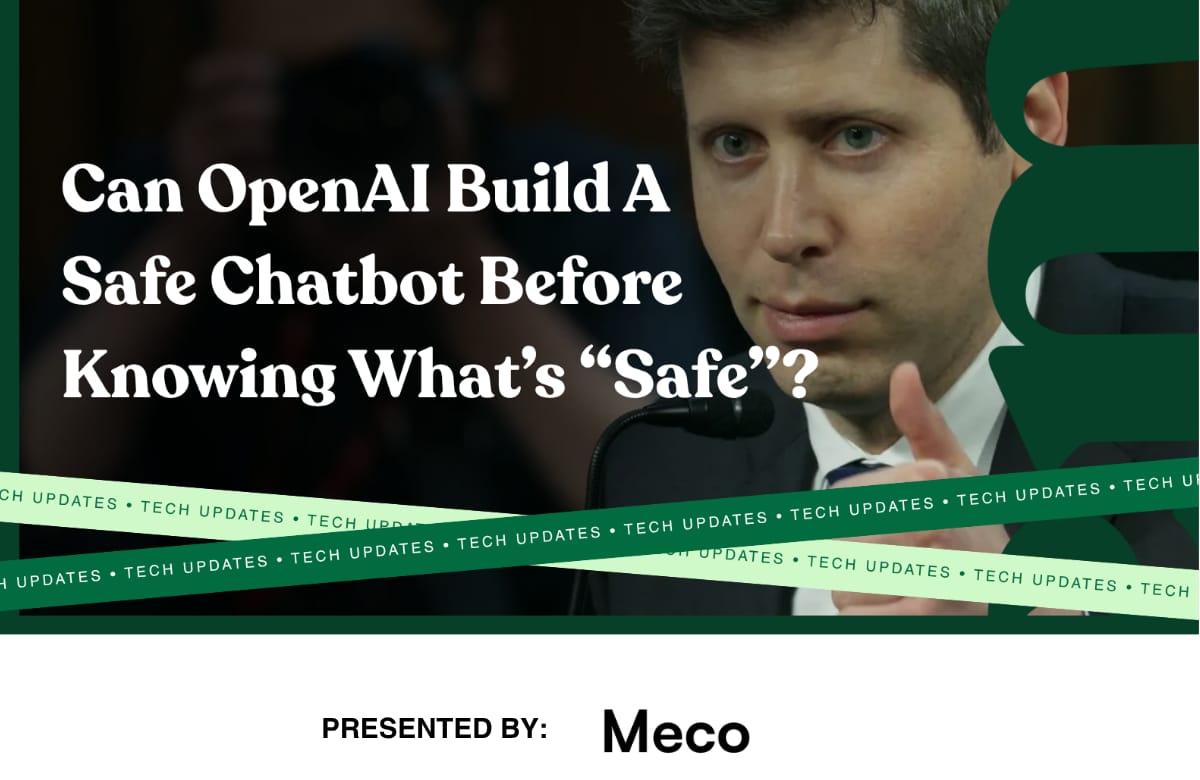
Hours before those arguments began, OpenAI published a blog post introducing a version of ChatGPT built for 13-to-17-year-olds. It was reported at the time as a coincidence of scheduling. It was not a small one.
Five years separate the first internal warnings about Instagram from the filing entered last week, and almost all of that time went into a question nobody could answer quickly enough to act on. A second technology is now standing in front of the same question, and the conditions for answering it have changed.
Newsletters don’t belong in your inbox.
Your inbox was built for email, not focused reading.
Meco gives newsletters a dedicated, distraction-free home away from the noise. Connect Gmail or Outlook in seconds, organize subscriptions with smart filters and groups, bookmark your favorites, and read everything in a clean, scrollable feed.
Join 50,000+ readers who are decluttering their inbox and getting more from the newsletters they love.
Build your website on Framer - Now with Agents.
Framer is a pro website builder trusted by companies like Miro and Perplexity that helps creators, teams, and businesses ship production-ready sites faster than ever.
With AI agents built directly into the canvas, teams can design pages, manage CMS content, write copy, add SEO, and audit for issues — all without leaving the tool where the real site lives.
OpenAI built a teen chatbot before the social media question was settled
Five years ago, the Wall Street Journal published its report on Facebook's internal research into Instagram, which showed that the company's own researchers had found the app made body image worse for some teenage girls. The report raised serious questions about what social media does to adolescents, but it did not settle the question for the population as a whole.
Three years later, the same question was still unanswered when the National Academies of Sciences, Engineering, and Medicine published a consensus report in 2024. That report was again unable to establish whether social media was causing declining teenage mental health at the population level. The authors documented real harm to individual teenagers, but they stopped short of making the broader causal claim. Researchers therefore continue to disagree about the size of the effect and about which teenagers carry it.
The absence of consensus became Meta's central line of defense, and throughout the litigation brought against it, the company has maintained that no scientific consensus establishes social media as a cause.
Courts began ruling anyway, and a jury in Santa Fe found in March 2026 that Meta had willfully violated New Mexico's consumer protection law, imposing $375M in civil penalties. Judge Bryan Biedscheid then ordered a further $567M into an abatement fund on August 6, 2026, bringing the total to $942M and making New Mexico the first state to try a major technology company over child safety and win.
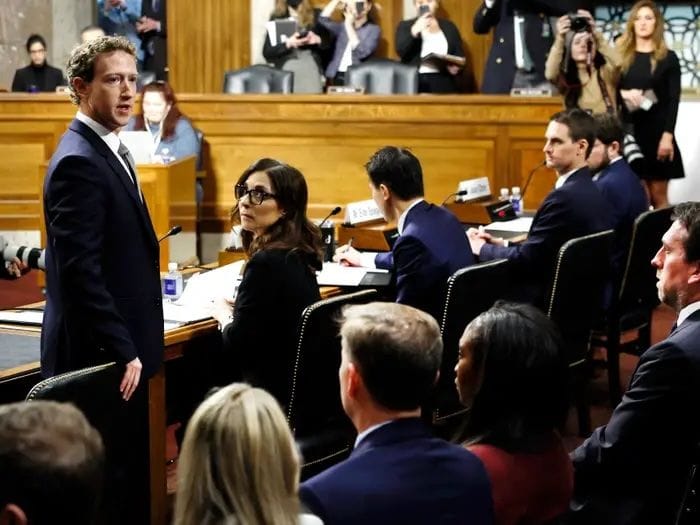
A far larger case opened on the morning of August 18, 2026, when lawyers for four state attorneys general opened their case against Meta in Oakland, California, on behalf of a 29-state coalition. Their claim was that Instagram and Facebook had been designed to capture and hold the attention of minors.
That trial never reached a finding because Meta and the states filed a proposed consent judgment on August 26, 2026, eight days after opening arguments and one day after Instagram chief Adam Mosseri testified. The court filing lists a payment of $16.7B; the New Jersey attorney general announced a settlement of up to $17.1B resolving the claims of 51 attorneys general, and Meta's own statement describes a payment of approximately $18B spread across annual installments over 10 years. The company denied any wrongdoing in agreeing to it.
The money goes to state governments rather than to families, and the individual injury cases continue in separate dockets. What Meta actually conceded was product design, since the agreement requires daily usage limits and nighttime blocks for teenage users, along with enhanced age assurance measures and stronger parental tools.
Hours before those opening arguments in the Meta, OpenAI had published a blog post introducing ChatGPT for Teens, a version of its chatbot built for people aged 13 to 17. CNBC noted the coincidence that on the day, it turned out to be sharper than it looked, because the settlement Meta signed eight days later required roughly the same features OpenAI had shipped that morning.
OpenAI's teen product is a serious piece of engineering, and the company has also published, in its own technical documents, a plain statement that it cannot say how often those protections fail a real teenager. That gap between a safety program and a safety record runs through the whole story, because the social media era did not fail for want of warnings. It failed on measurement, since nobody outside the companies could establish the harm quickly enough to act on it, and the largest test of the question closed with a payment rather than a verdict.
New rules about warmth, not just content
ChatGPT for Teens is a mode inside the existing app rather than a separate product, and an account enters it when a user gives an age between 13 and 17. OpenAI's systems can also place an account there by predicting that its owner is under 18, using signals such as how long the account has existed and what it is used for. Inside the mode, the company applies tighter limits on self-harm, violence, eating disorders, and sexual content, while parents who link an account can set quiet hours and receive alerts in high-risk situations.
The content limits are familiar, but the rules that sit alongside them are not. Under the updated policy for under-18 users, the chatbot is not supposed to use romantic language, encourage emotional dependence, or imply that it has feelings or consciousness. Social media never needed a rule against the product behaving as though it cared about the user, and that difference is the clearest sign that the old regulatory playbook may not transfer.
Two limits are built into that design, and OpenAI was candid about the first when it said in August 2025 that its protections work more reliably in short exchanges. The company added that parts of the model's safety training can degrade as conversations grow. Guardrails, meaning the rules and filters meant to stop a chatbot from producing a harmful answer, behave less like a locked door and more like a habit the system can be talked out of. The teenager most at risk is, by definition, the one having the longest conversations.
The second limit is harder to engineer around because a chatbot composes its answers rather than pulling them from a library, so no filter can screen a sentence that does not yet exist. Applied to a 14-year-old asking about calories or medication, the failure is not a refusal to help but help delivered confidently and wrongly. Neither limit is hypothetical, and families have already gone to court over what they believe those limits cost them.
The lawsuits arrived before the safeguards
TechCrunch, covering the launch, pointed out that ChatGPT had reached 900M weekly users before protections specifically built for teenagers were introduced. The first serious pressure to build them came in August 2025, when the parents of a 16-year-old sued OpenAI in San Francisco over their son's death. Their claim is that the chatbot contributed to it, and an amended complaint that October alleged the company had loosened its suicide-prevention rules earlier in the year. OpenAI denies responsibility, saying that teen well-being is a priority for the company.
Regulators moved in the same period, and California now requires companion chatbots to remind users every three hours that they are talking to a machine. Litigation and regulation explain the pressure on OpenAI, but they do not explain why the product arrived in August 2026 rather than a year later.
Outperform the competition.
Tools & resources, ranging from playbooks to databases, courses, and more.
Deep dives on famous visionary leaders.
Interviews with entrepreneurs and playbook breakdowns.
*This is sponsored content
A second reason sits on the balance sheet
The rest of the explanation sits in the company's finances, since OpenAI filed confidentially in June 2026 for a U.S. stock market listing. CNBC reported that the company was last valued at $852B and is not yet profitable. A firm about to sell shares to the public must describe its risks in a prospectus; thousands of pending claims are a risk, while a documented teen-safety program is a mitigation. None of that makes the product cynical, but it does make the timing legible without appealing to anyone's conscience.
The commercial thread runs deeper than the listing because OpenAI also began testing advertising in ChatGPT in February 2026. Its advertising documentation states that ads are not shown to accounts identified as belonging to users under 18. The system that decides which teenagers get protected is therefore the same system that decides which accounts advertisers are allowed to buy, and both of those pages sit on OpenAI's website today.
The available facts establish a structure in which teen safety and advertising inventory share a single dependency, although they do not show that the company has weakened one to serve the other. What they do establish is that a great deal now rests on that age classifier being right.
Nobody can say how often it fails
The accuracy of that classifier has never been published by OpenAI, though the Wall Street Journal reported in March 2026 that the system was at one point treating roughly 12% of under-18 users as adults. The Journal also reported that OpenAI's own well-being advisory council had unanimously opposed a planned adult content mode partly for that reason, and the company has delayed that feature repeatedly without launching it.
A deeper version of the same problem appears in the system card OpenAI published 12 days before the teen launch, which is the technical report the company issues whenever it updates a model. That document carried teen-specific safety tests for the first time, and those tests were run with the production safety systems switched off. They therefore describe the model's raw behavior rather than the product a teenager actually meets. The company also states that the results should not be read as estimates of how often such behavior occurs in ordinary use.
OpenAI can therefore tell you that its model does better than the last one on a difficult test, but it cannot tell you how often ChatGPT for Teens fails a real teenager. The same document records a regression, since in multi-turn tests where a simulated user pushes and adapts across a long exchange, the new model performed significantly worse on the self-harm evaluation than its predecessor. OpenAI adds that it saw no matching rise in bad responses during live testing and says it will investigate the gap between the two.
Testing by outside researchers has pointed in the same direction for a year, starting with research from the Center for Countering Digital Hate that the Associated Press reviewed in August 2025. Those researchers posed as vulnerable teenagers and got past refusals by claiming a request was for schoolwork, and more than half of the 1.2k responses they collected were classified as dangerous. No independent evaluation of the teen mode itself existed as of late August 2026, which leaves the company's own tests as the only account of how it behaves.
The ban instinct has already been tested
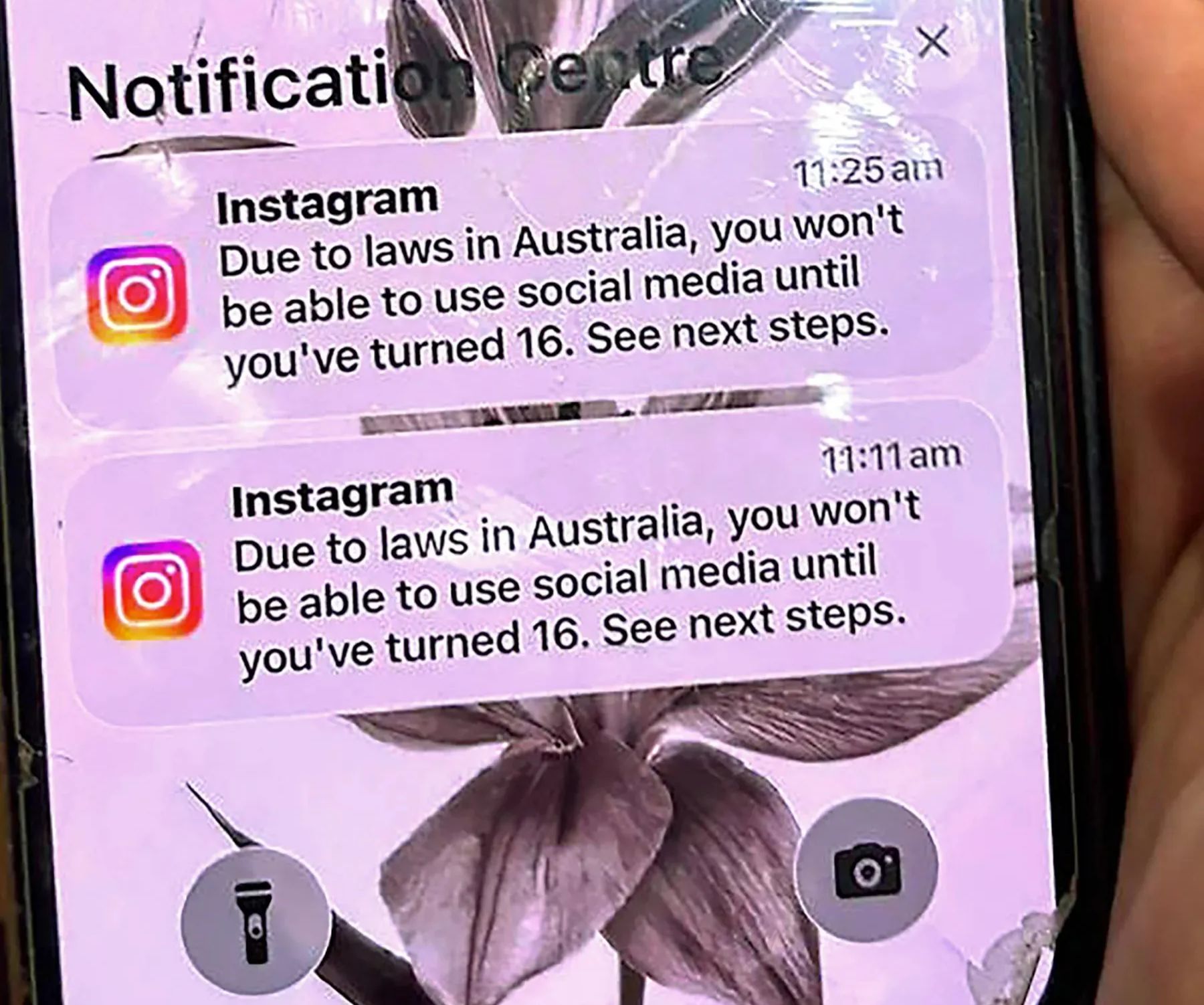
Faced with that kind of uncertainty, the instinct has been to keep teenagers away from the products entirely, and Australia tried that approach before anyone else. The country's under-16 social media restrictions took effect on December 10, 2025, but an early peer-reviewed evaluation published by the BMJ in June 2026 found no substantial reduction in use. Australia's online safety regulator later found that more than eight in 10 under-16s were still on the platforms three months in.
Companies have reached the same instinct from the inside, and Character.AI removed open-ended chat for under-18 users in November 2025 while facing lawsuits of its own. OpenAI has taken the opposite route of keeping the product, publishing the tests, and letting the age classifier sort everyone.
The argument for patience is that the alarm may be pointed at the wrong thing, since Pew Research Center found that about two-thirds of U.S. teens have used chatbots. When Pew asked what for, 16% reported casual conversation and 12% reported emotional support. Schoolwork and search dominate, so the companionship problem is real for a minority and is not the typical case.
What separates this from the social media story is not the scale of the risk but the difficulty of seeing it. Feeds were public or semi-public, so outside researchers could scrape them, audit them, and eventually subpoena the internal studies that ended up in front of a court. A chatbot conversation is one-to-one and private, generated in the moment for one person and existing nowhere else afterward.
Five years of discovery, two verdicts, and a trial produced a payment, a denial of wrongdoing, and a list of settings Meta must now build into Instagram. OpenAI shipped its version of that list eight days before the order landed, without being asked, and one of its own documents says the numbers inside it are not frequencies. The second clock, therefore, leaves an open question: whether the first should be read as a forecast or as a warning.
Reading it as a forecast means waiting once again for courts and bans to catch up with a technology already in children's hands. Reading it as a warning means asking a chatbot built for teenagers to survive outside scrutiny before it reaches them, or accepting that it should not reach them at all.
P.S. Want to collaborate?
Share today’s news with someone who would dig it. It really helps us to grow.
Let’s partner up. Looking for some ad inventory? Cool, we’ve got some.
Deeper integrations. If it’s some longer-form storytelling you are after, reply to this email, and we can get the ball rolling.
What did you think of today's memo? |
|






.svg)
.svg)