Welcome to Memorandum Deep Dives. In this series, we go beyond the headlines to examine the decisions shaping our digital future. 🗞️
This week, the U.S. government told a federal judge exactly where it stands in one of the biggest fights over how AI models get built, and it did so without being asked. The case has been working its way through a Manhattan courtroom for nearly three years, and whatever the judge decides could reach every AI company training on other people's work.
The filing runs 20 pages, and it reads like Washington has picked a side. It leans on an idea in copyright law that is nearly a century old, one that has quietly protected all sorts of ordinary copying for decades, and it warns that ruling the other way could cost American AI companies ground they insist they cannot afford to lose. Reactions have been swift, and not always along the lines you might expect.
But a letter to a judge cannot decide a case on its own, no matter how forceful it reads, and this one is already being picked apart for what it leaves out as much as for what it argues. One AI company has already found out, in a very specific dollar figure, how expensive the other side of this fight can get. What follows is the part of the story the letter doesn't tell.
Label Faster. Train Smarter. Ship Better Models.
Multimodal models are only as good as the data behind them. Our trainers work across text, audio, and image pipelines—handling transcription, labeling, and annotation tasks with speed and consistency.
Audio transcription and speech data labeling
Image and video annotation for vision model pipelines
Multilingual coverage across Portuguese, Spanish, and English
Goodies delivered straight into your inbox.
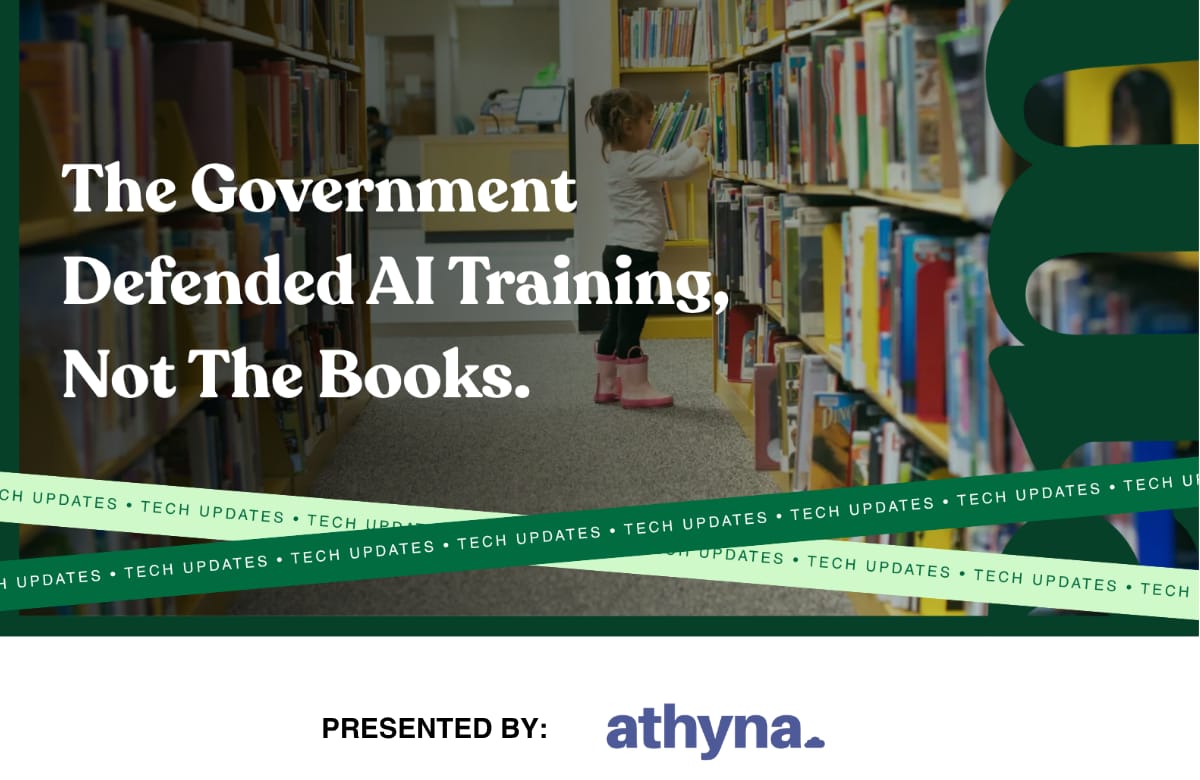
The government defended how AI learns, not how it got the books
In 1920, the United States banned alcohol, and the law Congress wrote to enforce it went after making liquor, selling it, and moving it around the country. It said nothing about owning a bottle you already had, so anyone who had filled a cellar the year before could keep drinking from it quite legally. The ban ran through the middle of the chain, leaving the ends alone. A man drinking his own claret broke no law, while the man who sold him the bottle did. Congress had taken on part of the problem, and the part it left out shaped the decade that followed.
The American government has just done something similar in the fight over artificial intelligence and copyright. On September 1, 2026, the Justice Department wrote to Judge Sidney H. Stein, who is handling the largest of those cases in Manhattan. The letter is called a 'statement of interest', and it lets the department tell a court what it thinks without joining the case. It defended one part of what AI companies do: the learning that happens when a model is trained. It said nothing about how the material to learn from was collected, which is the part that has already cost a company real money and is the harder half to defend. The letter cannot decide anything on its own, but it tells you which half of the problem Washington is willing to argue about.
The letter defends the reading & not the gathering
Copyright has always allowed some copying without permission, under a rule called 'fair use'. This means you can use somebody else's work without asking if what you are doing with it is different enough from what they were doing with it. A judge weighs what the copying was for, what was copied, how much was taken, and whether it damaged the market for the original. Copying that serves a genuinely new purpose, which lawyers call 'transformative', is the kind most likely to survive, and that is the ground the training argument stands on.
Fair use is also settled step by step rather than for a company as a whole, and the letter leans hard on that. Lawyers break model building into three steps, each with a name worth knowing. 'Acquisition' is getting hold of the material, 'training' is the copying that teaches the model, and 'output' is whatever the finished system says to a user. The simplest way to keep those in mind is for a student to get hold of the books, read them, and then write essays of their own. A judge looks at each step separately, which means a company can be perfectly safe reading and still be in serious trouble over how it got the books.
The Justice Department set out to defend the training step, and it defended nothing else. Its case is that training does not reproduce books so much as learn from them, which makes the copying "exceedingly transformative". It also pushes back on the newer argument that models hurt authors simply by flooding the market with machine-made competition, calling that reasoning deeply flawed. Put simply, the government says that writing books in the same genre as somebody is not the same as stealing from them. Acquisition, the step where the books arrive, is mentioned once as a question for another day, and the letter never comes back to it.
Stay ahead of AI at work.
Cut through the hype. Roko’s Basilisk distills the day’s AI breakthroughs, market moves, and workable workflows into a five-minute brief.
Get one sharp deep dive, fast Quick Hits, and a witty pro tip, plus links that actually matter.
*This is sponsored content
The cases it walked into are mostly about the gathering
Stein is handling dozens of copyright lawsuits that a court has grouped together before him. The best-known of them comes from the New York Times, which says its journalism was copied without permission and used to build ChatGPT. Book authors and other newspapers have brought similar claims of their own. The arguments in all of them fall into three piles: how the material was collected, what the training did with it, and whether the answers copy anyone's actual sentences.
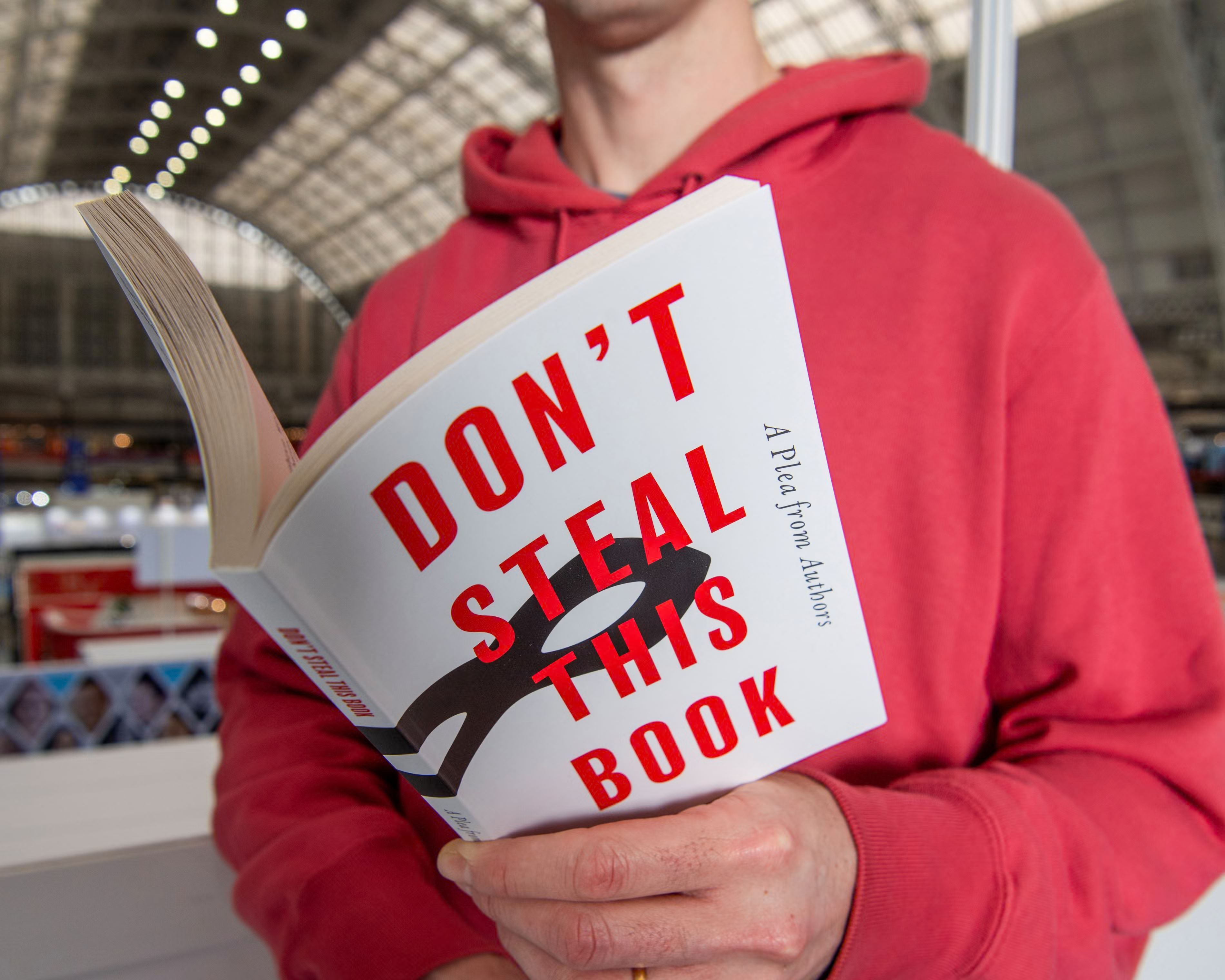
Only one of those piles has produced a serious payment so far, and it is the first one. Anthropic agreed to pay $1.5B to settle claims that it had taken books from pirate websites, and the writers who sued were arguing about acquisition rather than about training. The court paperwork now sets the first payment at $2,203.56 for each book, and publishers and agents are already claiming shares of it before it reaches the writers. In plain terms, the expensive thing so far has been the taking, and the letter argues about everything except the taking. Taking also leaves a trail, since files that arrive on a company's machines can be found again later, which is what makes that half of the fight the dangerous one.
The case for saying nothing happened
The obvious objection is that a letter like this changes nothing at all. It binds no one, the judge is free to ignore it completely, and copyright scholars have pointed out that its arguments are perfectly ordinary. Jonathan Band told NOTUS that the department's positions are mainstream and match how scholars have read these questions for decades. James Grimmelmann of Cornell Tech, who is no admirer of the administration's record in court, called the brief thoughtful and well within the normal range of expert opinion.
The objection holds on the law and weakens on what happened next. Within three days, a legal research company called ROSS Intelligence, fighting its own copyright case, sent the letter to the Third Circuit. That is a federal appeals court, and its rulings bind the district judges beneath it, though not Stein, who sits under the Second Circuit. It is expected to deliver the first federal appellate ruling on whether training on other people's work is allowed, which would reach well beyond Stein's courtroom. The letter also dismisses a government report on AI training by the Copyright Office, which registers copyrights and advises Congress. Meanwhile, the same department is in court trying to remove the official who runs that office. What all of that adds up to is a change in who holds the upper hand rather than a change in the law.
The line still runs through the middle
The cellars stayed legal in 1920 because the law drew its line at one link in a chain, and the rest of the chain kept working on the other side of it. Anthropic has already shown what a company will do once that other link becomes the battleground. It spent many millions of dollars on millions of print books, often used, then had vendors strip the bindings, cut the pages, and scan them, discarding the paper originals. That was a way of getting the books that nobody could call theft, and it was slow, costly, and entirely about acquisition. The Justice Department has now drawn its own line, arguing hard for what happens after the books enter the machine while leaving the question of how they got there untouched. The next fight is about what a company is allowed to do to get hold of the books, not whether a model can learn from them once it has.
P.S. Want to collaborate?
Share today’s news with someone who would dig it. It really helps us to grow.
Let’s partner up. Looking for some ad inventory? Cool, we’ve got some.
Deeper integrations. If it’s some longer-form storytelling you are after, reply to this email, and we can get the ball rolling.
What did you think of today's memo? |
|






.svg)
.svg)