Welcome to Memorandum Deep Dives. In this series, we go beyond the headlines to examine the decisions shaping our digital future. 🗞️
This week, we're looking at what a corporate climate promise is actually worth once the business it was written for stops cooperating.
For most of the last decade, the biggest technology companies competed publicly over carbon. Apple advertised recycled materials, Google and Microsoft set 2030 deadlines, and Amazon co-founded a pledge in 2019 that roughly 700 companies have now signed. The commitments were cheap to make, because for years buying cheaper renewable power and reporting lower emissions were the same decision.
AI ended that arrangement. Electricity demand jumped, grid queues stretched out for years, and the fastest way to power a data center started to look a lot like the thing these companies had promised to stop doing. A project in West Texas has now made that tension impossible to file away, and the way Amazon is answering for it tells you how much of the original promise is left.
Meet your next hire in as little as five days.
Build your website on Framer - Now with Agents.
Framer is a pro website builder trusted by companies like Miro and Perplexity that helps creators, teams, and businesses ship production-ready sites faster than ever.
With AI agents built directly into the canvas, teams can design pages, manage CMS content, write copy, add SEO, and audit for issues — all without leaving the tool where the real site lives.
The promises written for an easier decade
For most of the past decade, the largest technology companies treated cutting their carbon footprint as something worth competing over in public. Apple built years of product announcements around it, reporting this spring that a record 30% of the material in everything it shipped came from recycled content. Google set 2030 as the year it would reach net-zero emissions. Microsoft set a goal to go carbon negative by the same year, meaning it would remove more carbon than it emits each year. Among the big tech companies, Amazon made the most public version of the promise when it co-founded The Climate Pledge in 2019, a commitment to reach net-zero carbon by 2040 that it later turned into a program other corporations could join, and which now lists roughly 700 signatories.
Every one of those commitments shares a feature that mattered very little when it was written: none of them were designed to constrain what companies would do when their business incentives changed. There is no audit, no penalty for missing a deadline, and no outside body that can tell a company that its next investment contradicts what it signed. For years, that weakness barely mattered because the economics pointed in the same direction. Renewable electricity was getting cheaper, so companies could lower their reported emissions and their power bills through the same decisions.
Artificial intelligence changed that equation. Electricity demand surged, grid connections became bottlenecks, and the fastest way to add computing capacity increasingly meant accepting power sources that sit uneasily with the climate promises made when AI was a much smaller business. The clearest evidence emerged on August 8, 2026, when The New York Times reported that Amazon would buy power from a plant permitted to emit more planet-warming gas than any other now operating in the United States.
A record permit in West Texas
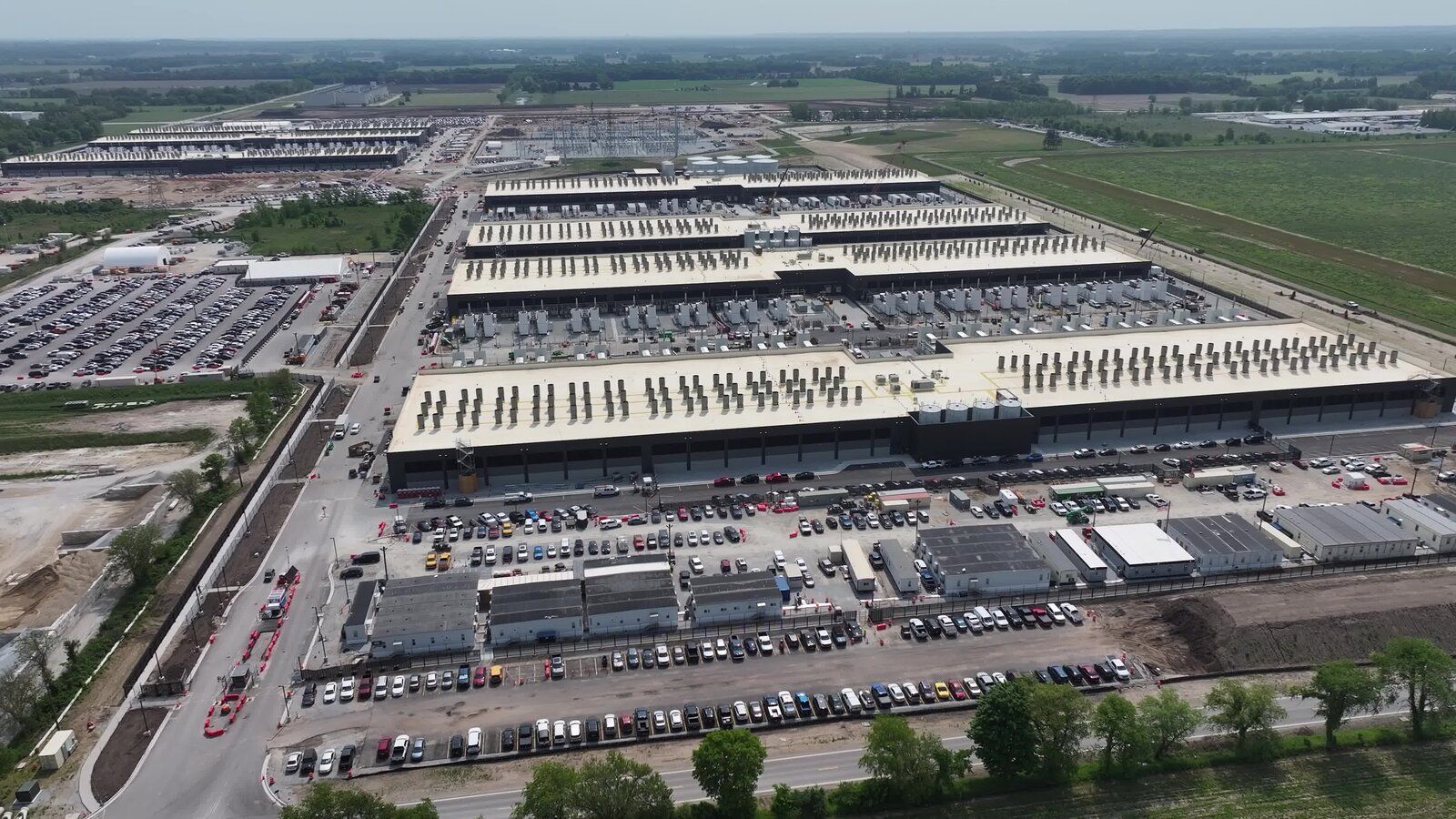
The Amazon power plant in question is being built in Pecos County, a sparsely populated stretch of West Texas, by a developer called Pacifico Energy, operating under the name GW Ranch. According to permit filings, the plant will operate 35 natural gas turbines and is authorized to release up to 33M tons of carbon dioxide equivalent per year. That figure is a legal ceiling rather than a forecast, and plants routinely run below theirs. Even so, a state regulator has cleared a single computing campus to emit more than any other power plant in the country is allowed to emit.
Beyond the allowed emissions, what makes this plant an important landmark in Big Tech's shifting stance on carbon footprints is that it will be wired directly to Amazon's servers rather than to the public grid, an arrangement the industry calls 'behind the meter.' This kind of arrangement skips the years-long wait for a connection to the Texas grid, and it means Texas households do not pay for new transmission lines to serve the campus.
The distinction is important because it allows Amazon to answer the most immediate criticism of data centers without addressing the climate question raised by the project itself. Amazon leads with the second point, saying the site will not raise electricity costs for Texas families. The claim is accurate and addresses the complaint most often raised against data centers, but it also shifts attention away from the question the project raises for Amazon itself: what happens to its climate commitment when avoiding pressure on the grid means accepting more pollution onsite? The turbines burn the same gas whether or not the electricity passes through a public wire. When asked about that gap, an Amazon spokesperson said, “The world looks different now than when we co-founded the climate pledge,” while maintaining that the commitment itself stands.
What the others have said
That is the frankest version of a shift now visible across Big Tech. Google still holds its 2030 target, describes it as a moonshot, and tells visitors to its own data center site that the path will not be linear because its “AI infrastructure buildout is currently accelerating faster than the grid is decarbonizing.” Microsoft, which promised to be carbon-negative by the same year, signed a 20-year agreement with Chevron in June for a 2.67-gigawatt gas plant in West Texas to power its own data center. Amazon's most recent disclosure shows why the pressure matters: its carbon emissions rose 16% in a single year.
xAI shows what that pressure looks like when speed takes precedence over the regulatory process. Federal law requires a permit before a large fixed source of air pollution starts running, yet Elon Musk's company operated gas turbines at its Memphis data centers while arguing that temporary installations were exempt. The Environmental Protection Agency rejected that reading in January and found the company in violation. At its peak, the site ran as many as three dozen turbines, only 15 of which were permitted.
The examples differ, but they point to the same constraint. AI companies are adding computing capacity faster than the infrastructure needed to power it can be built. For xAI, that meant operating turbines before the regulatory process was complete. For Amazon, it means bypassing the grid altogether. The economics behind that urgency are enormous: Amazon expects to spend about $220B on infrastructure this year, a figure it raised from $200B in July as memory prices climbed, most of it on the computing capacity AI requires, while its competitors are racing to serve the same customers on roughly the same timetable.
Stay ahead of AI at work.
Cut through the hype. Roko’s Basilisk distills the day’s AI breakthroughs, market moves, and workable workflows into a five-minute brief.
Get one sharp deep dive, fast Quick Hits, and a witty pro tip, plus links that actually matter.
*This is sponsored content
Build now, clean up later
The companies are not silent about the contradiction, and the defense deserves a fair hearing. Its clearest statement came from OpenAI Chief Executive Sam Altman, who argued in a September 2024 essay that AI would eventually make astounding triumphs commonplace, among them "fixing the climate." The logic is that the electricity used to train and run these systems is an investment, because a capable AI accelerates the science behind cheap fusion, better batteries, and smarter grids, and those breakthroughs repay the carbon spent to reach them. However, not everyone agrees with this outlook. James Temple, who covers climate for MIT Technology Review, responded that this misreads the problem. The technologies needed to clean up the world's electricity already exist, and what blocks them is cost, permitting, and the years it takes to build, none of which can be resolved with better algorithms.
Whatever the merits of that argument, the pledges were never built to settle it. The Climate Pledge asks its signatories to measure and report emissions, reduce them in line with the Paris Agreement, and offset any remaining emissions by 2040. It stops short of auditing or enforcing measures to pause a decision that pushes emissions in the wrong direction. The absence was easy to overlook when the promise and the business were moving in the same direction. It becomes impossible to ignore once they are no longer aligned.
Where the checks fall short
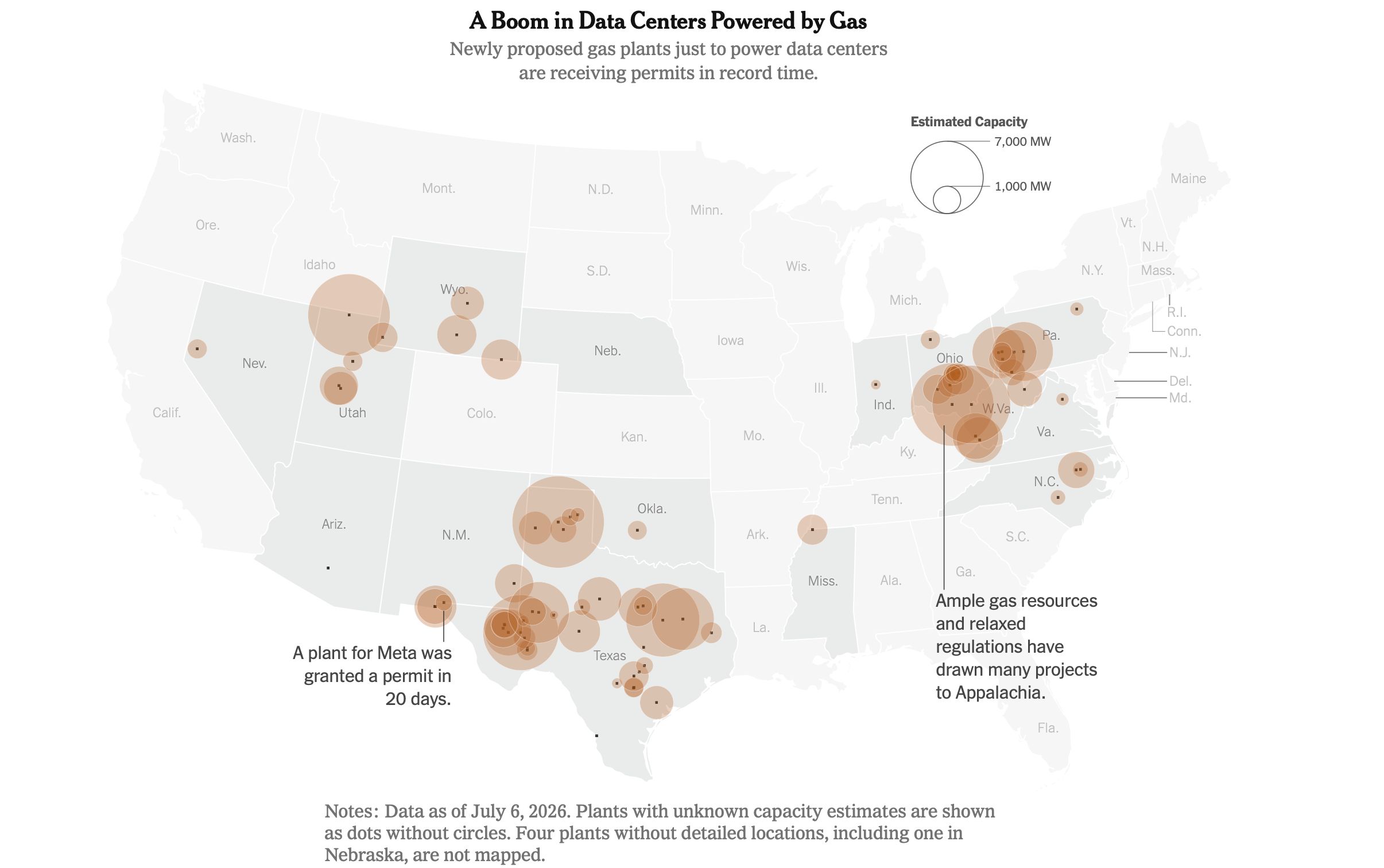
If the companies do not restrain themselves, the question becomes who else might, and the obvious expectation would be that the government would step in to do so. However, in this case, the federal government has spent the year removing obstacles instead, and in June, the agency overseeing the interstate electricity system ordered major grid operators to fast-track data center connections and to be more accommodating of privately owned power.
Meanwhile, states have moved in the opposite direction, and the sharpest example is one that landed in the same week as this project, when Governor Greg Abbott ordered an audit of data center projects in Texas on August 3, pausing new grid connections while regulators reviewed the backlog of requests. That pause reached the grid, which is the one thing Amazon's campus does not need. The project became public five days later and fell outside of it. A plant wired directly to its own customer sits outside the instruments built to control access to something shared, leaving the air permit Texas granted in January as the only applicable approval.
What the 2040 deadline now requires
As of August 2026, the promises made by Big Tech to reduce their carbon footprints have not been withdrawn, which makes the arithmetic behind them worth stating plainly. Reaching net zero by 2040 gives Amazon 14 years to reverse an emissions curve that its own reporting shows is still climbing, and the equipment now being ordered runs against that clock. A gas turbine is built to operate for decades, so a plant switched on in 2027 is designed to burn fuel well past the year the pledge comes due.
If the emissions do not fall, the remaining route to 2040 runs through offsets. An offset is a payment for emissions reductions achieved elsewhere, through forest protection, carbon removal, or similar projects, so that a company's remaining emissions are offset on its balance sheet. The Climate Pledge treats offsets as the last step, reserved for what real cuts leave behind. The further emissions climb in the meantime, the more of the promise the offsets have to carry, turning the pledge into an accounting result while the atmosphere continues to respond only to what is physically released into it.
The Climate Pledge's website still counts its 700-odd signatories, and the 2040 date has not moved. The company behind the country's largest permitted source of carbon dioxide is the same one that wrote that promise and asked the rest of the corporate world to sign it. The pledge remains intact because Amazon has not formally withdrawn it. What the Amazon plant tests is something more consequential: whether a promise can still constrain a company after the economics that made the promise easy have disappeared.
P.S. Want to collaborate?
Share today’s news with someone who would dig it. It really helps us to grow.
Let’s partner up. Looking for some ad inventory? Cool, we’ve got some.
Deeper integrations. If it’s some longer form storytelling you are after, reply to this email and we can get the ball rolling.
What did you think of today's memo? |
|








.svg)
.svg)