Welcome to Memorandum Deep Dives. In this series, we go beyond the headlines to examine the decisions shaping our digital future. 🗞️
This week, we are looking at the microprocessor, a thing almost everyone touches dozens of times before lunch and almost nobody thinks about. The chip industry split itself in two a long time ago: one set of companies draws the designs, another set builds them. Only one of those halves has multiplied since.
On August 5, 2026, Anthropic confirmed it is assembling an in-house team to design custom chips for Claude, hiring engineers who can shape both silicon and models. There is no named foundry, no stated node, and no launch window. Reports have linked the company to early talks with Samsung, and its existing arrangements with Amazon, Google, NVIDIA, and AMD all stay in place.
Nearly every large model builder has now reached the same conclusion about custom silicon, and the arithmetic behind it is strong enough to take seriously. The interesting question is not whether the reasoning holds. It is what happens to a finished design when it stops being a document and has to become an object, and how little of that stage any of these companies control.
Meet your next hire in as little as five days.
Who’s afraid of AI in finance? Not consumers.
Two industries wearing one name
The microprocessor is one of the more consequential inventions of the past century, and most people meet dozens of them before lunch without noticing. They sit inside phones, cars, washing machines, card readers, hearing aids, and the servers that answer every search. Given how central the thing has become, the reasonable assumption would be that hundreds of companies make them. That is not how the industry works.
The chip business split itself into two a long time ago. One set of companies designs them, and another builds them. Over the following decades, the designing half kept multiplying because writing more ambitious software eventually leads a company to want hardware shaped around it, and by now most large technology firms design their own chips. The building half never multiplied the same way, since a leading-edge factory costs tens of billions of dollars and takes years to bring up. The result is that TSMC in Taiwan now produces the majority of the world's leading-edge silicon, and the final stage of the buildout has become the bottleneck slowing AI development.
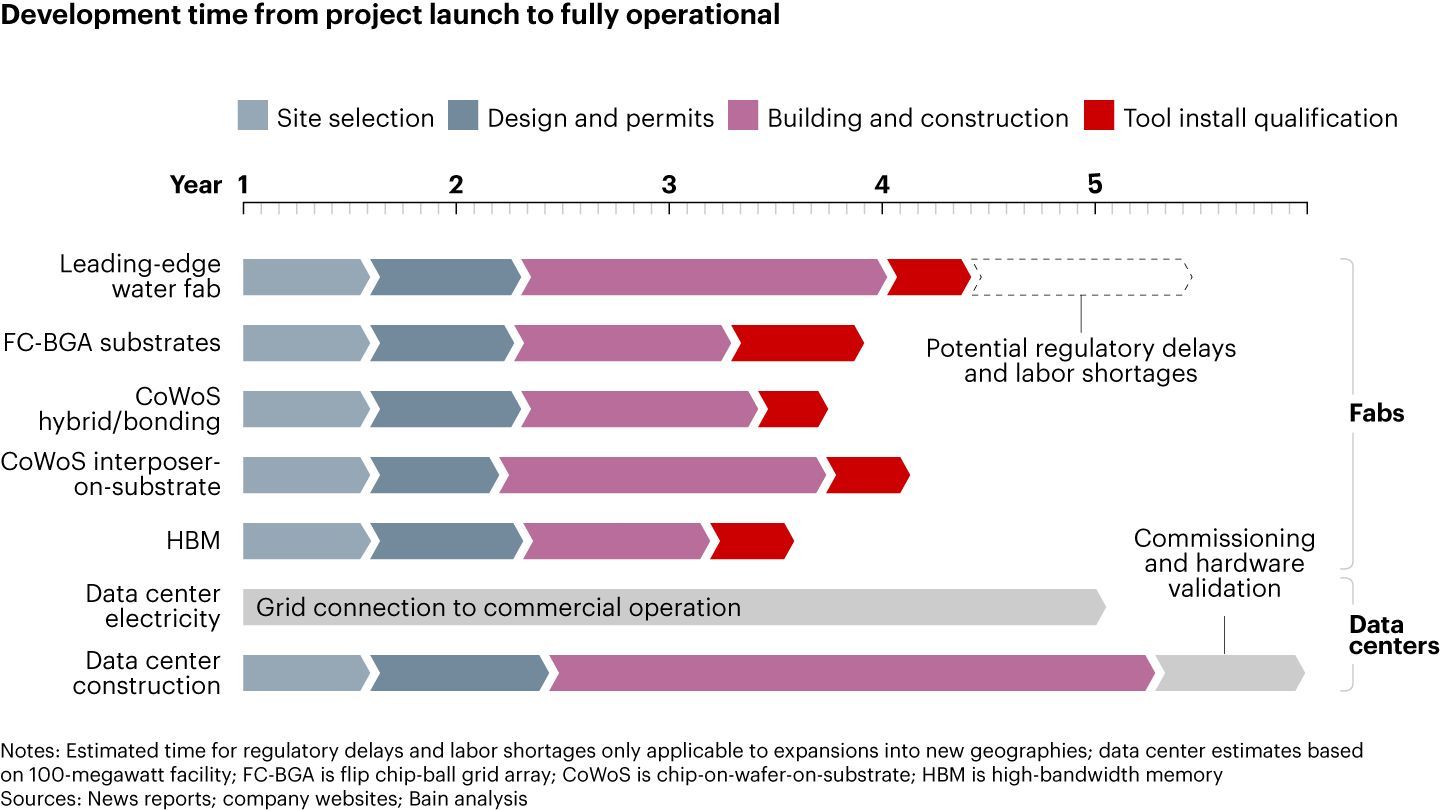
That last stage of chipmaking has a name most people never hear. It is called advanced packaging, and it means joining the finished processor to the memory that feeds it. This is done on a small number of production lines that cannot be quickly duplicated, and most advanced AI chips must clear one of those lines before they can enter a data center. The companies racing to build data centers need enormous numbers of them, and they need them soon. However, many of them have chosen to pursue design rather than manufacturing, with Anthropic being the latest company to join the queue.
Anthropic's chip design ambitions
On August 5, 2026, Anthropic told TechCrunch that it is building an in-house design team to develop its own chips and custom parts for running Claude rather than training it. The company is hiring engineers to design the hardware alongside the models, so the two can be shaped together. It has not named a manufacturing partner or a date, though The Information reported in July that Anthropic had opened talks with Samsung, and its existing arrangements with Amazon, Google, NVIDIA, and AMD all stay in place. Even the drawing is not done alone: two firms, Broadcom and Marvell, hold roughly 95% of the market for turning a customer's chip concept into something a factory can build, and Anthropic has not said which, if any, it will use.
Why would a company take this on
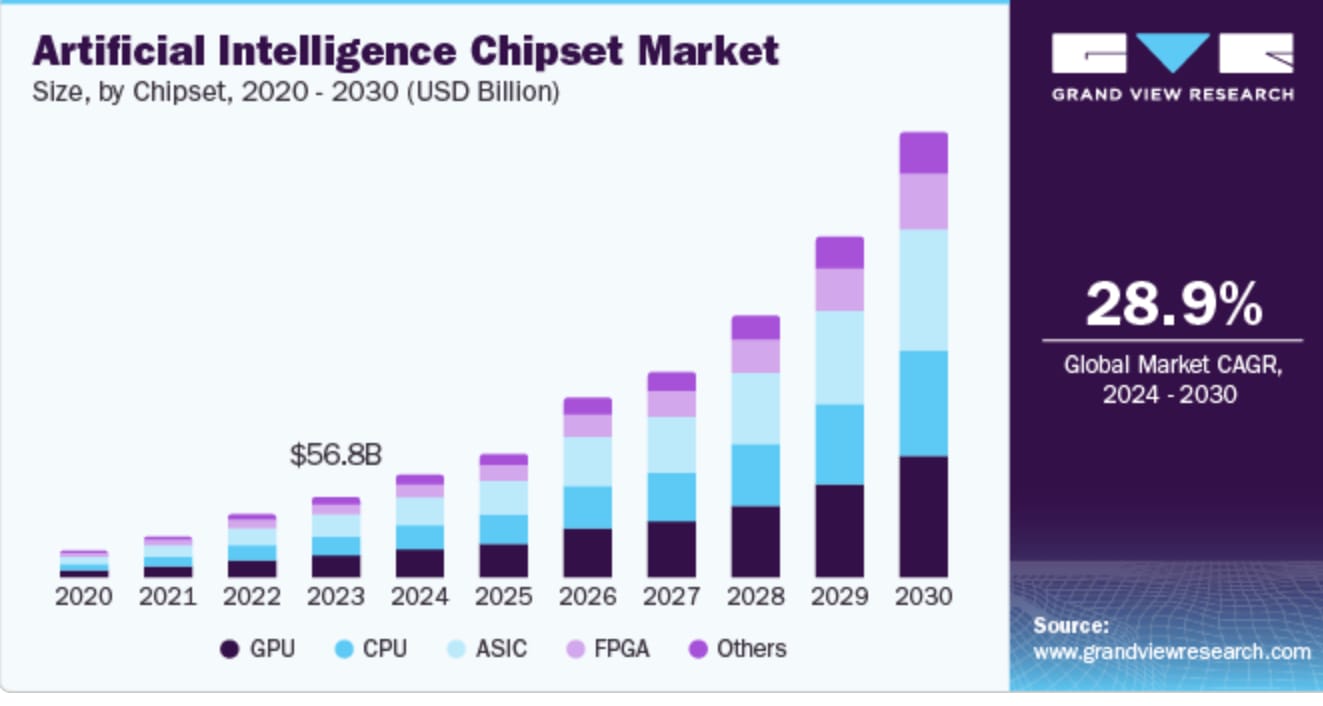
The case rests on a shift in how all that computing is used. Deloitte expects running finished models to account for two-thirds of all AI computing this year, up from a third in 2023, turning inference into a predictable job repeated billions of times a day. A chip built specifically for that job can cut the cost of owning and running it by as much as 65% compared with a general-purpose part. The second motive is control: a company that designs its own chip decides what to build rather than choosing from the market.
Anthropic has already benefited from custom hardware, even though it does not design its own chips. Claude trains and runs on chips designed by Amazon for its cloud, processors co-designed by Google and Broadcom, and NVIDIA hardware. In July, AMD announced that Anthropic would deploy up to 2GW of its systems, with the first gigawatt beginning in the first half of 2027. AMD separately committed to a strategic equity investment of up to $5B in Anthropic. What changes with an in-house team is the focus on authorship rather than supply.
Custom silicon has become an industry strategy
Anthropic is the last of the large model builders to make this move. Google has been developing its own processors for 12 years alongside Broadcom; Amazon has its Trainium and Inferentia lines; Meta has a family of accelerators planned through 2027; and Microsoft has been developing its Maia chips for years. OpenAI joined them in June with a chip built alongside Broadcom for inference rather than training, taking the project from a blank page to a finished design in 9 months, compared with a typical development timeline of closer to 2 years. The first units are expected to enter service at the end of 2026.
The pattern reflects a common calculation across the industry. As inference takes up a larger share of AI computing, specialized hardware becomes more valuable, while designing that hardware gives the companies running the models greater control over how it is built.
The design does not solve the supply problem
That control ends at the factory door. A completed design gives a company authority over what its chip does, while the number of chips it can actually produce depends on a chain of manufacturing steps that remain outside its control. Anthropic's chip would need wafers from a leading-edge fab, where capacity is already booked, followed by a slot on a packaging line, where capacity is also constrained.
It would also need its own stacks of high-bandwidth memory, the specialized chips that sit alongside a processor and feed it data fast enough to keep it useful. Every stage of that supply chain is concentrated in a few hands: all the high-bandwidth memory produced today comes from a small group of manufacturers in South Korea, Taiwan, and Japan, and TSMC dominates leading-edge wafer production. Designing a custom processor, therefore, places new demands on the same scarce manufacturing resources already sought by NVIDIA, AMD, Google, Amazon, Microsoft, and other companies building AI infrastructure at scale.
The scale of that constraint becomes clearer in what TSMC's chief executive, C.C. Wei, has said about demand. Speaking to shareholders in Hsinchu on June 4, 2026, Wei said it would be "a long time before we can meet customer demand," after previously telling an industry group that demand for the company's most advanced capacity was roughly three times greater than what it could supply. That shortage is reflected in how the available capacity is being allocated, with NVIDIA expected to account for roughly 60% of demand for TSMC's CoWoS packaging this year and Broadcom and AMD absorbing another 26% between them, leaving the remaining customers to compete for what is left.
Those lines have been oversubscribed for more than two years, and the pressure is increasing as more companies begin designing their own AI chips. Anthropic is therefore entering the design business at a moment when the ability to specify a processor is spreading across the industry faster than the ability to manufacture and package the processors those designs require.
Stay ahead of AI at work.
Cut through the hype. Roko’s Basilisk distills the day’s AI breakthroughs, market moves, and workable workflows into a five-minute brief.
Get one sharp deep dive, fast Quick Hits, and a witty pro tip, plus links that actually matter.
*This is sponsored content
Google shows what a head start can buy
Google offers the clearest test of what years of chip design experience can deliver when manufacturing capacity remains constrained. It has been developing its own processors alongside Broadcom for 12 years, yet that head start has not given it enough packaging capacity to avoid the broader supply constraint. In June, Tom's Hardware reported that Google had booked Intel to package more than 3M chips in 2028, and that Google had cut its 2026 chip target by 1M units when its allocation fell short. This was done because TSMC's lines are sold out through 2027, and Intel's method is the only alternative the industry can approve for volume production before the end of the decade.
The choice of packaging partner also affects the design, as the two leading approaches are based on different physical architectures. TSMC mounts the components on a large silicon interposer through which the signals and power travel, while Intel's competing method uses small bridges embedded in the packaging material to connect individual components. A design can move between the two approaches, and Intel says it is already redesigning parts drawn for TSMC. But doing so requires engineering and qualification, meaning a company designing its own processor still has to make important manufacturing decisions years before the first units are produced.
More capacity is coming, but so is more demand
The constraint is beginning to loosen as manufacturers add capacity. TSMC's packaging output is expected to rise from roughly 35k wafers per month at the end of 2024 to around 130k by the end of this year, while Counterpoint Research expects industry-wide capacity to expand by roughly 80% in 2026. That expansion arrives around the earliest point at which a team hired in August 2026 could plausibly have working silicon in a data center, giving Anthropic a reasonable chance of reaching production as more capacity comes online.
The increase does not necessarily translate into an available slot for every new customer, because much of the additional capacity is committed through contracts with the same handful of major buyers. The economics of custom silicon, therefore, must be weighed against a manufacturing market in which access to capacity remains as important as the quality of the design itself, even as the overall supply of packaging increases.
Intel represents the other significant path to packaging at scale, although that option is still developing. No named external AI customer is currently in volume production on its packaging technology; its next-generation process has yet to ship commercially, and Intel expects outside designs to reach production within the next year or two. Its foundry business generated just $307M in external revenue last year against a $10.3B operating loss, leaving it with considerable ground to cover before it becomes a genuine alternative to TSMC at the scale AI companies require.
The design process carries its own risks, as Tesla demonstrated after years of developing Dojo before moving on to other designs. Custom silicon can improve a company's economics and give it greater control over its hardware, but it also commits the company to a long development cycle and to a manufacturing chain in which the most important production stages remain concentrated among a small number of suppliers.
The supply chain still sets the AI timeline
The industry is producing more chip designers every year while relying on the same small group of companies to manufacture and package the finished parts. The most literal illustration is already in operation: TSMC's American fabs send their chips back to Taiwan for packaging, while no high-bandwidth memory is currently made or packaged on American soil. The geography of the supply chain, therefore, remains remarkably concentrated, even as the number of companies building AI infrastructure continues to grow.
Anthropic can spend the next couple of years designing a processor around Claude, refining the architecture as its models and workloads evolve, but the finished design will still have to enter a manufacturing system whose most constrained stages are already booked years in advance. That is the central trade-off behind the industry's shift toward custom silicon: model companies are gaining control over the designs that determine how their AI systems run, while the physical infrastructure required to turn those designs into working chips remains concentrated elsewhere. The people describing what artificial intelligence will do to the world tend to say it will arrive soon, and every one of those forecasts ultimately depends on a delivery schedule set at the last stage of a factory in Taiwan.
P.S. Want to collaborate?
Share today’s news with someone who would dig it. It really helps us to grow.
Let’s partner up. Looking for some ad inventory? Cool, we’ve got some.
Deeper integrations. If it’s some longer form storytelling you are after, reply to this email and we can get the ball rolling.
What did you think of today's memo? |
|









.svg)
.svg)