Welcome to Memorandum Deep Dives. In this series, we go beyond the headlines to examine the decisions shaping our digital future. 🗞️
This week, we examine Apple’s announcement that iOS 27 will open Siri to third-party AI models, a move that reframes the company’s role from model builder to marketplace operator across a device base that has grown to 2.5B.
On the surface, the pivot looks like a concession: Apple tried to build its own AI, fell short, and is now outsourcing the hard part. However, this overlooks the repositioning in which Apple will become the distribution layer through which frontier models reach consumers. This positioning will allow Apple to extract platform fees as much as it does with App Store revenue and Google’s estimated $26.3B in default search payments.
Beyond the repositioning, the shift also reflects the broader trend in the industry where control over the last mile of distribution is becoming more important than model capability.
Meet your next hire in as little as five days.
How Apple turns a concession into a competitive position
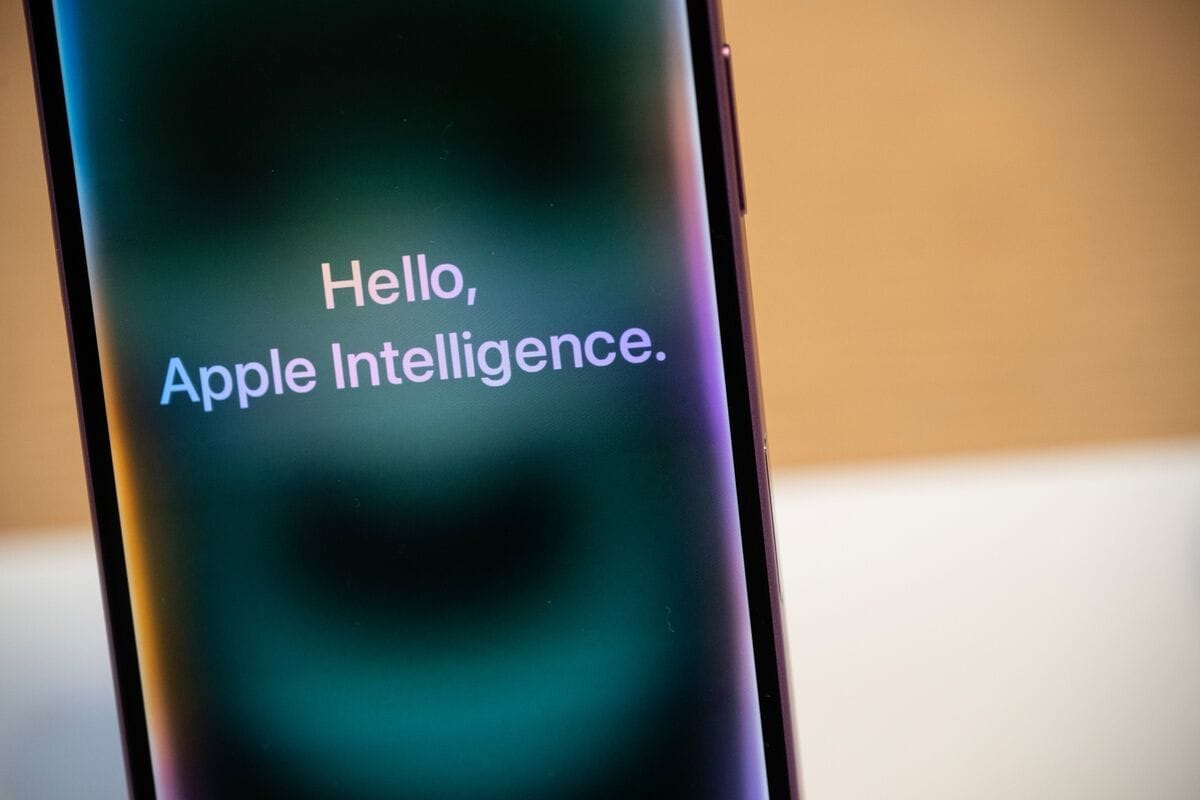
Over the past few years, the center of gravity in the tech industry has shifted sharply away from hardware and toward the algorithms that make devices intelligent and useful. Driven by the rise of LLM-powered tools, the transition has placed enormous pressure on companies that dominated the hardware era to secure partnerships and integrate AI systems for the millions of users already inside their ecosystems. In that environment, Apple has worked aggressively to position itself as a serious player in the AI race, building on-device models, designing a privacy-focused cloud infrastructure, and rolling out a growing suite of features under the Apple Intelligence banner.
However, recently, the company announced a shift in its strategy that could redefine the role it wants to play in a future dominated by AI products.
According to Bloomberg, starting with iOS 27 this fall, Apple will let its users choose from multiple third-party AI models for tasks like generating text, editing images, and powering Siri responses, meaning the company is moving away from building and towards repositioning itself as the marketplace where those models reach consumers. And while the shift may look like a concession, it may be the most strategically sound move Apple has made in AI so far
The distribution advantage
The logic behind the pivot is familiar if you’ve watched Apple operate in other categories. Apple reported more than 2.35B active devices globally as of its January 2025 earnings call, a figure that climbed to 2.5B by January 2026. That installed base is the most valuable distribution channel in consumer technology. And in the past, Apple has shown that it has the playbook for monetizing it.
Currently, Apple’s App Store takes a 15-30% cut of developer revenue, and it’s estimated that Google paid $26.3B in total default-search payments in 2021. Some analysts estimated that Apple received between $18 and $19B from Google just to keep it as the default search engine in Safari.
AI model distribution represents the next version of that arrangement. Apple’s advantage is that it controls the surface through which the best models reach users, then sets the terms. The economics of being an AI intermediary, extracting platform fees from companies that spend billions training models, may ultimately be more durable than competing on model quality in a market where performance gaps are narrowing.
The privacy problem
However, becoming an AI marketplace is not going to be a smooth transition for Apple, especially because the company has spent years pitching itself as the privacy-focused tech provider. The company built Private Cloud Compute specifically so that even Apple itself could not access user data processed in the cloud, a verifiable technical guarantee that underpins the company’s brand promise. But with third-party models, that position will be difficult to maintain, since third parties will now be involved.
When a user selects Gemini, Claude, or ChatGPT, their queries leave Apple’s infrastructure. They are processed on Google’s, Anthropic’s, or OpenAI’s servers, subject to those companies’ respective data retention and usage policies. Each model provider has different rules about whether queries are stored, whether they are used to improve future models, and how long data is retained. A user choosing a model implicitly chooses a privacy regime, but the vast majority of consumers will not read the fine print or understand the trade-offs. This is the cookie-consent problem applied to AI: presenting a choice is not the same as enabling an informed one. If Apple keeps its own on-device model as the default for basic Siri tasks while routing complex queries to external providers, most users will experience a seamless interface without realizing that the privacy architecture shifts depending on what they ask.
For Apple, the biggest challenge will be deciding how prominently to disclose that shift. And regulators, particularly under the EU’s Digital Markets Act, will be watching whether the company’s implementation of ‘choice’ meets the standard of meaningful consent.
Outperform the competition.
Tools & resources, ranging from playbooks, databases, courses, and more.
Deep dives on famous visionary leaders.
Interviews with entrepreneurs and playbook breakdowns.
*This is sponsored content
The default model
At the same time, the company will also have to decide which model becomes the default, which could make things even trickier to manage, as evidenced by the Google antitrust case.
The DOJ’s argument in that case rested on a simple but enormously consequential idea: most users never change their defaults. That is precisely why Google paid an estimated $26.3B across partners to secure default search placement. The default was not just a convenience setting, but the gateway through which the overwhelming majority of users accessed the internet.
The same pattern holds across virtually every consumer software setting. Whichever model Apple designates as the default for complex queries in iOS 27 will, in practical terms, become the AI provider for the vast majority of its users. That makes Apple’s selection criteria the new kingmaking mechanism in the AI industry.
Whether Apple optimizes for model quality, privacy compliance, revenue share, or some combination of all three will shape where billions of dollars flow.
In the meantime, for model providers, the incentives are enormous but asymmetric. Being on the iPhone is transformational for consumer reach, particularly for companies like Anthropic that have limited direct consumer presence. But the terms of access will be Apple’s to set, and the history of the App Store suggests those terms will favor Apple’s margin over the provider’s.
Model companies may find themselves in the same bind that app developers have described for years: unable to reach iPhone users without Apple, unable to negotiate meaningfully because the alternative is invisibility.
The new AI economy
The AI industry is entering a phase in which the models themselves are becoming less differentiated, while the surfaces that deliver them to users are becoming more valuable. Benchmark gaps between frontier models have narrowed steadily through 2025 and into 2026, and the practical difference between a well-integrated Gemini response and a well-integrated Claude response is, for most consumer tasks, marginal.
Apple’s move signals it understands this shift and that building a better model is expensive and uncertain. Controlling the last mile of distribution is expensive, too, but Apple already owns it.
The last mile
The bigger question is whether users will meaningfully choose between AI models at all, or whether model selection will become another default setting that most people never change. That matters because whichever model Apple places at the center of the iPhone experience could gain an enormous distribution advantage overnight.
Apple will also have to balance its privacy-focused brand with the realities of partnering with AI companies that often operate with very different data practices. Regulators in the U.S. and Europe are meanwhile likely to examine whether this creates genuine competition or simply a new form of platform gatekeeping.
Regardless of how things shape up for Apple, what is becoming increasingly clear is that the AI race is shifting away from pure model capability toward distribution. And distribution is a game Apple has spent the last two decades mastering.
P.S. Want to collaborate?
Share today’s news with someone who would dig it. It really helps us to grow.
Let’s partner up. Looking for some ad inventory? Cool, we’ve got some.
Deeper integrations. If it’s some longer form storytelling you are after, reply to this email and we can get the ball rolling.
What did you think of today's memo? |
|





.svg)
.svg)