Welcome to Memorandum Deep Dives. In this series, we go beyond the headlines to examine the decisions shaping our digital future. 🗞️
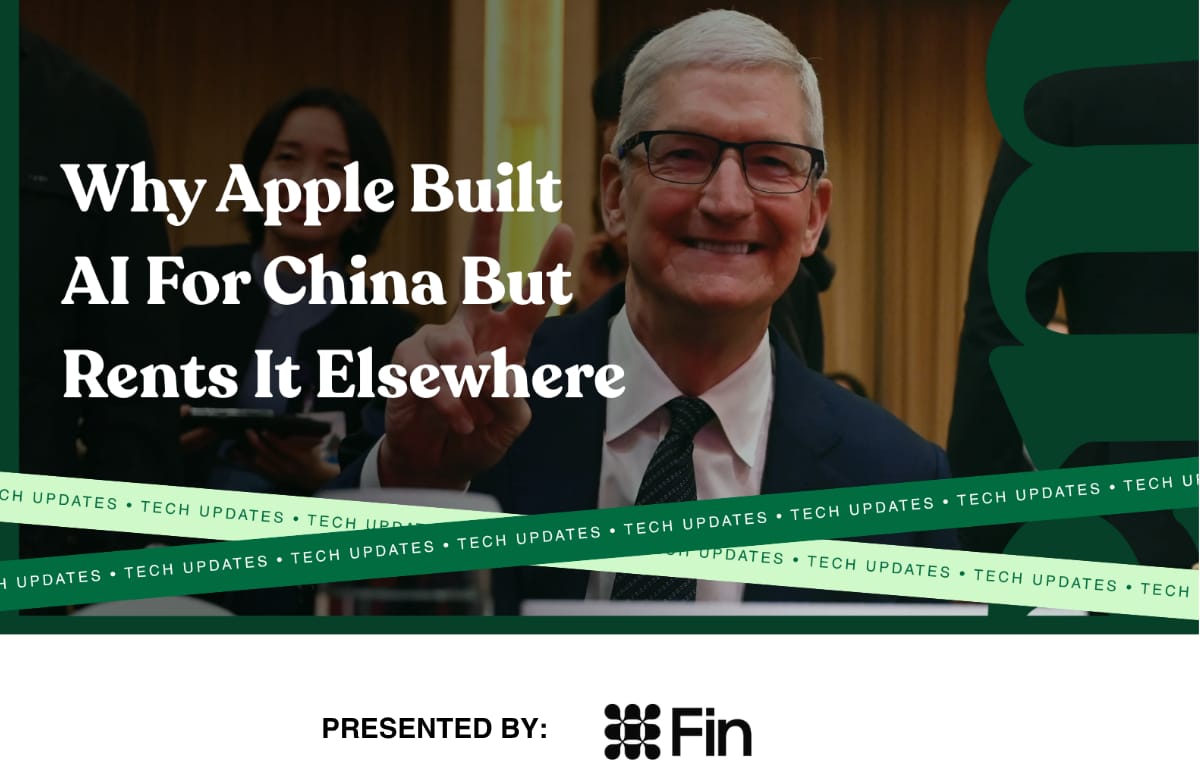
This week, Reuters reported something Apple has never done before. Three people familiar with the work said the company trained a large language model specifically for China, built with Alibaba's support, and none of them would put their name to it. Apple has said nothing publicly.
The timing is what makes it strange. In January, Apple signed a multi-year deal with Google to run a rebuilt Siri, ending most of a decade of insisting it could do this work in-house. That arrangement covers very nearly every market the company sells into. China is the one place it does not reach, and it is also the one place Apple has now gone to the expense of building the thing itself.
Apple already had a working answer in China. It waited 22 months for it, and in July, the Cyberspace Administration finally listed Apple Intelligence among seven filed on-device AI services. Building a proprietary model on top of that permission is slow, costly, and legally delicate. The question is what Apple gets for the trouble, and the answer says more about the next decade of consumer technology than about one phone.
See how AI delivers fast, secure, personalized experiences
Watch Fin and Plaid now on demand to see how AI can resolve issues directly in customer conversations. This includes everything from reducing bank-linking friction, enabling proactive support, and helping customers complete real financial tasks.
In partnership with

Blu Dot surpasses 2,000% ROAS with self-serve CTV ads
Home furniture brand Blu Dot blew up on CTV with help from Roku Ads Manager. Here’s how:
After a test campaign reached 211,000 households and achieved 1,010% ROAS, the brand went all in to promote its annual sales event. It removed age and income constraints to expand reach and shifted budget to custom audiences and retargeting, where intent was strongest.
The results speak for themselves. As Blu Dot increased their investment by 10x, ROAS jumped to 2,308% and more page-view conversions surpassed 50,000.
“For CTV campaigns, Roku has been a top performer,” said Claire Folkestad, Paid Media Strategist, Blu Dot. “Comping to our other platforms, we have seen really strong ROAS… and highly efficient CPMs, lower than any other CTV partner we've worked with.”
Using Roku Ads Manager, the campaign moved from a pilot to a permanent performance engine for the brand.
The market where renting was never an option
One of the biggest advantages of globalization, ushered in by the rapid growth of the internet, was that people almost anywhere could access the same information and choose what they wanted from it. Even where information was curtailed, the ideas found their way across the border, and people came to want some part, if not the whole, of what was for sale in the more technologically advanced corners of the world. For a long stretch, a system grew up around that demand, one that made sure a person in Indonesia ordering an iPhone designed in the U.S. and assembled in China got the same experience as someone in Canada or Australia. Even where a company like Samsung fitted different chips, Exynos in some countries and Snapdragon in others, the software on the devices stayed the same, so the interface and the feel of using them barely differed.
Globalization is no longer the word that gets people excited, having long since given way to regional conflicts and the race to build the AI model that will shape whatever comes next. The jury is still out on what that future looks like, and in the meantime, the technology keeps reminding the world how fractured the political, economic, and social order of 2026 has become. A story carrying those divisions reached the top of the headlines this week, when Reuters reported that Apple trained a large language model specifically for China, with support from Alibaba. Three people familiar with the work described it to the news agency, all of them declining to be named because the arrangement is not public. Apple itself has said nothing about it, and the company had never built a model this way before, since everywhere else in the world, it buys its intelligence from somebody who already made it.
What makes that worth a second look is the decision Apple took only a few months earlier. In January, the company announced a deal to pay Google roughly $1B a year for a custom version of Gemini to run a rebuilt Siri, after spending most of a decade insisting it could do this work itself. The reasoning was not complicated because building a frontier model from scratch costs far more money and far more time than renting a finished one. Apple rented, handing the most visible feature on the iPhone to the company it competes with most directly, and that single arrangement was meant to cover very nearly every market it sells into. China is the exception, and it is also the one place where the company has gone to the expense of building the thing itself.
Why the rented model stops at the border
Understanding why that exception exists starts with a plain fact: the Google arrangement could never have applied in China. Google pulled out of the country years ago, so Apple cannot simply switch on Gemini for Chinese users. That alone would be solvable, because Apple could find another supplier. What makes China different is a set of rules governing not only which generative AI models can operate there, but also who is permitted to operate them.
Any service that produces text or images for the Chinese public must register with the Cyberspace Administration of China and provide information about its training data, algorithms, and controls for preventing prohibited content. A foreign company cannot simply bring its own foundation model through that process. It has to work through a Chinese partner whose model has already been approved.
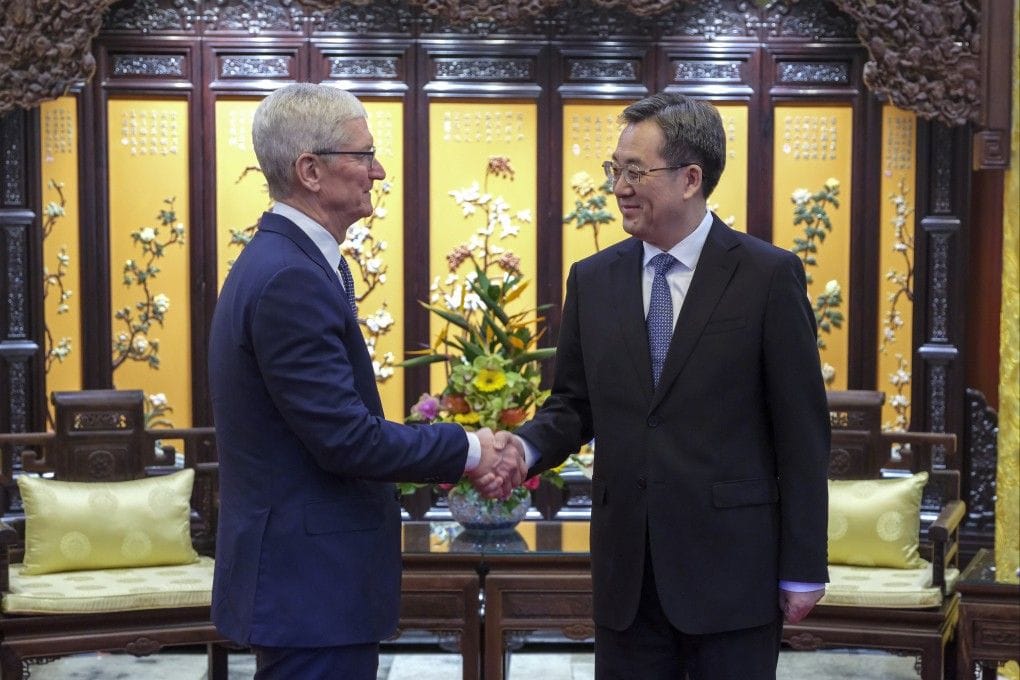
Apple spent 22 months finding out how long that process takes. It promised Apple Intelligence for China at the iPhone 16 launch in September 2024, and every time it repeated the promise over the two years that followed, it attached the same qualifier, "subject to regulatory approval," which was a quiet admission that the timeline was not Apple's to set. The approval came in July 2026, when the regulator published a list of seven cleared on-device services, with Apple among them, sitting alongside Huawei, Xiaomi, OPPO, vivo, Nubia, and Samsung. The arrangement that cleared put Alibaba's Qwen model at the center of Apple Intelligence in China, with Baidu also contributing. Two years of waiting bought Apple a working answer to the problem, and the answer was somebody else's model.
All of which is what makes the Reuters story strange rather than routine, because Apple had already secured the thing it had waited nearly two years to get. Building its own model on top of that permission is expensive, slow, and legally delicate, and it puts the company in a position no foreign firm has held before, as the first one cleared to offer a proprietary model of its own inside the country.
The longer answer starts in 2018
That regulatory account is the simple answer and explains why Apple needed a Chinese partner, but it doesn't explain why the company then went to the trouble of building its own model. The longer answer starts in 2018, when Apple ran up against a Chinese cybersecurity law requiring that data gathered inside the country stay inside it, and that cloud services be run by Chinese companies. Apple could not obey that rule and keep operating iCloud itself, so it handed the service to a firm owned by the Guizhou provincial government, moving customer data and the keys that encrypt it onto servers inside China. Apple's own support page still clearly states that iCloud in mainland China is operated by someone else. A company that had spent years promising customers their data belonged to them alone could no longer make that promise in one market without somebody's help.
Everything Apple has built for China since has taken that same shape: a second version of something, assembled to different rules, run with a partner the company did not choose freely. The pattern matters more now than it did then, because artificial intelligence is not a service bolted onto a phone. It decides what the assistant says back, what a summary leaves out, and which questions get an answer at all.
A separate operating system built for one market is an engineering expense a company Apple's size can absorb without much strain, and a separate intelligence sitting inside that operating system is a much harder thing to carry. Training a model of its own looks like Apple's attempt to carry it, and even that doesn't settle the question, because the model was built with Alibaba's support and ships under an arrangement the regulator approved for Alibaba's Qwen. The intelligence in a Chinese iPhone still rests on a partner who answers to Beijing before it answers to Cupertino.
Outperform the competition.
Tools & resources, ranging from playbooks to databases, courses, and more.
Deep dives on famous visionary leaders.
Interviews with entrepreneurs and playbook breakdowns.
*This is sponsored content
What does renting cost when the landlord answers to somebody else
The cost of renting shows up differently in a country that regulates the thing being rented. In every other market, the model behind Siri comes from a straightforward supplier relationship, so if Google raises its price or falls behind, Apple can change suppliers with a software update. In China, the supplier is bound by law to cooperate with regulators, explain how its system works when asked, and keep its output within the limits the state defines. Whatever Apple ships, it inherits those obligations through somebody else's product, and that somebody, Alibaba, sells its own phones, tablets, and cloud services.
One smaller detail from the past week captures the position Apple now finds itself in. Last week, the company published a Chinese-language guide explaining how Mac users on the mainland could connect Qwen to Siri and Writing Tools, then deleted it within a day without explaining either the posting or the removal. A company that has spent 22 months waiting for permission would not publish and withdraw a support document by accident, and it tends to do that when it is not certain what it is allowed to say.
A fair objection is that none of this needs a grand reading. Apple may simply want a model tuned to the Chinese language and local habits, which is ordinary product work that any company selling into the country would do. The counterpoint is the timing and the secrecy, since a company doing ordinary product work does not do it through sources that will not be named, in the one market where it already has an approved supplier.
The market underneath the engineering
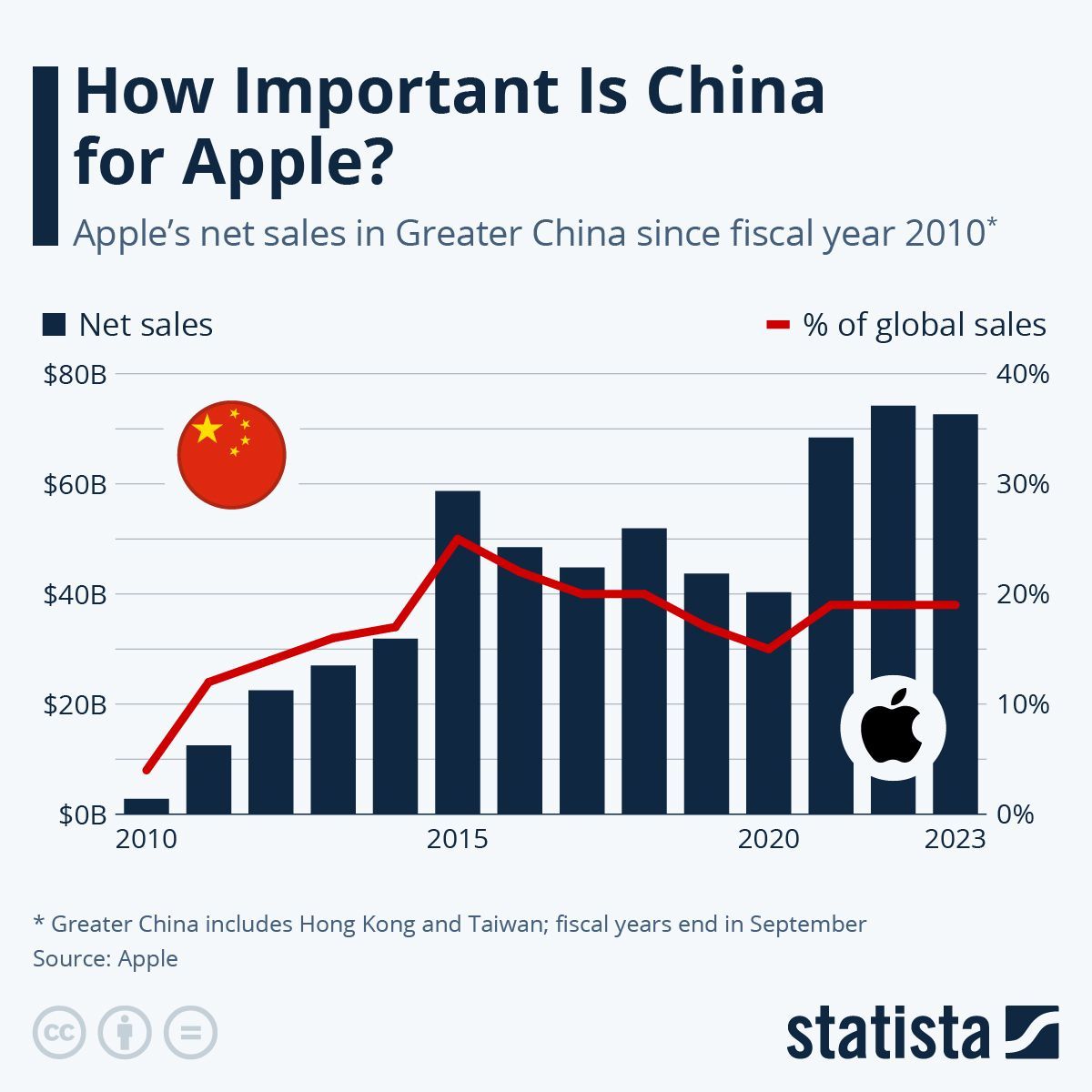
Whatever the motive, the commercial stakes go a long way toward explaining the effort. Apple shipped 24.4% more iPhones in China in the second quarter of 2026 than it had a year earlier, taking its share from 13.9% to 18.1% and moving the company from fifth place to second, according to the research firm IDC.
Only Apple and Huawei grew in a market that shrank for the fifth quarter in a row. Huawei still leads the market, and it sells phones with AI assistants that have been answering questions for two years while Apple waited for a license. The feature gap is the one thing Apple could not fix by adjusting its prices, which is why a slow, difficult, legally awkward model project makes sense to a company sitting second in a market it cannot afford to lose.
The end of one product for everyone
Apple has now built a separate cloud for China, a separate App Store, and a separate intelligence layer. Each was added for a different legal reason at a different time, and taken together, they describe a company that has quietly stopped selling one product and started selling two.
The intelligence layer is the hardest of the three to keep apart because the earlier splits divided where things were stored and what could be downloaded. This one divides what the machine will say, and a model trained under one country's content rules will answer differently from a model trained under another's. Two versions of a phone can be reconciled with good engineering and a bigger budget, while two versions of the thinking inside the phone cannot be reconciled at all.
What nobody has yet answered is whether the rest of the industry can avoid the same split, given that every large market is now writing its own AI rules and every one of those rules points toward local models, local data, and local approval. That problem belongs next to the companies following Apple into China, and to the regulators elsewhere watching what a foreign firm had to build in order to get through the door. Apple spent 15 years learning that the same product cannot be sold everywhere, and it has just discovered that the same intelligence cannot be either.
P.S. Want to collaborate?
Share today’s news with someone who would dig it. It really helps us to grow.
Let’s partner up. Looking for some ad inventory? Cool, we’ve got some.
Deeper integrations. If it’s some longer-form storytelling you are after, reply to this email, and we can get the ball rolling.
What did you think of today's memo? |
|





.svg)
.svg)