Welcome to Memorandum Deep Dives. In this series, we go beyond the headlines to examine the decisions shaping our digital future. 🗞️
This week, we examine Microsoft's Copilot rollout across 1.4B Windows devices and 440M Microsoft 365 subscribers, and what its uneven results reveal about how AI adoption actually works.
The surface reading is that Microsoft moved too aggressively, and users pushed back. But that framing treats this as an execution failure rather than a structural one. The largest distribution moat in consumer software history is colliding with a demand environment it was not built for, and the gap between the two is now showing up in the numbers.
That gap is visible market-wide. While Microsoft was inserting Copilot into every available surface, a smaller competitor without an operating system, a productivity suite, or a single dedicated AI key on any keyboard was quietly building one of the fastest-growing software businesses ever recorded. The contrast points to a shift in how competitive advantage works in AI, and Microsoft is on the wrong side of it.
Build what’s next in AI.
Thousands of AI roles are currently open at companies such as Anthropic, OpenAI, Mistral, ElevenLabs, Perplexity, Midjourney, Google, and Harvey.
The Athyna AI Job Board scans them in the background, matches them to your profile, and pings you when something hits a 75% matching index.
How Microsoft’s biggest bet revealed the limits of forced AI adoption
When Microsoft reported its fiscal third-quarter results on April 29, the headline numbers looked strong: $82.9B in revenue, Azure cloud growing 40% year over year, and an AI business that has now crossed a $37B annual run rate.
However, buried a few paragraphs into the company’s report was a quieter number: revenue in the More Personal Computing segment, which houses Windows, declined 1% year over year, with Windows OEM licensing down 2%. The division that puts Copilot in front of more people than any other product in the portfolio isn’t growing.
That split reveals the core tension in Microsoft’s AI strategy. Microsoft made one of the industry’s largest early AI bets, embedding Copilot across Windows, Microsoft 365, Edge, and built-in apps while leveraging distribution across 1.4B Windows devices and 440M Microsoft 365 subscribers. The assumption was simple: put AI in front of existing users, and adoption would follow.
The biggest distribution advantage in AI history
The strategy looked reasonable in early 2023, when ChatGPT had demonstrated mass demand for conversational AI and Microsoft was already OpenAI’s primary commercial partner.
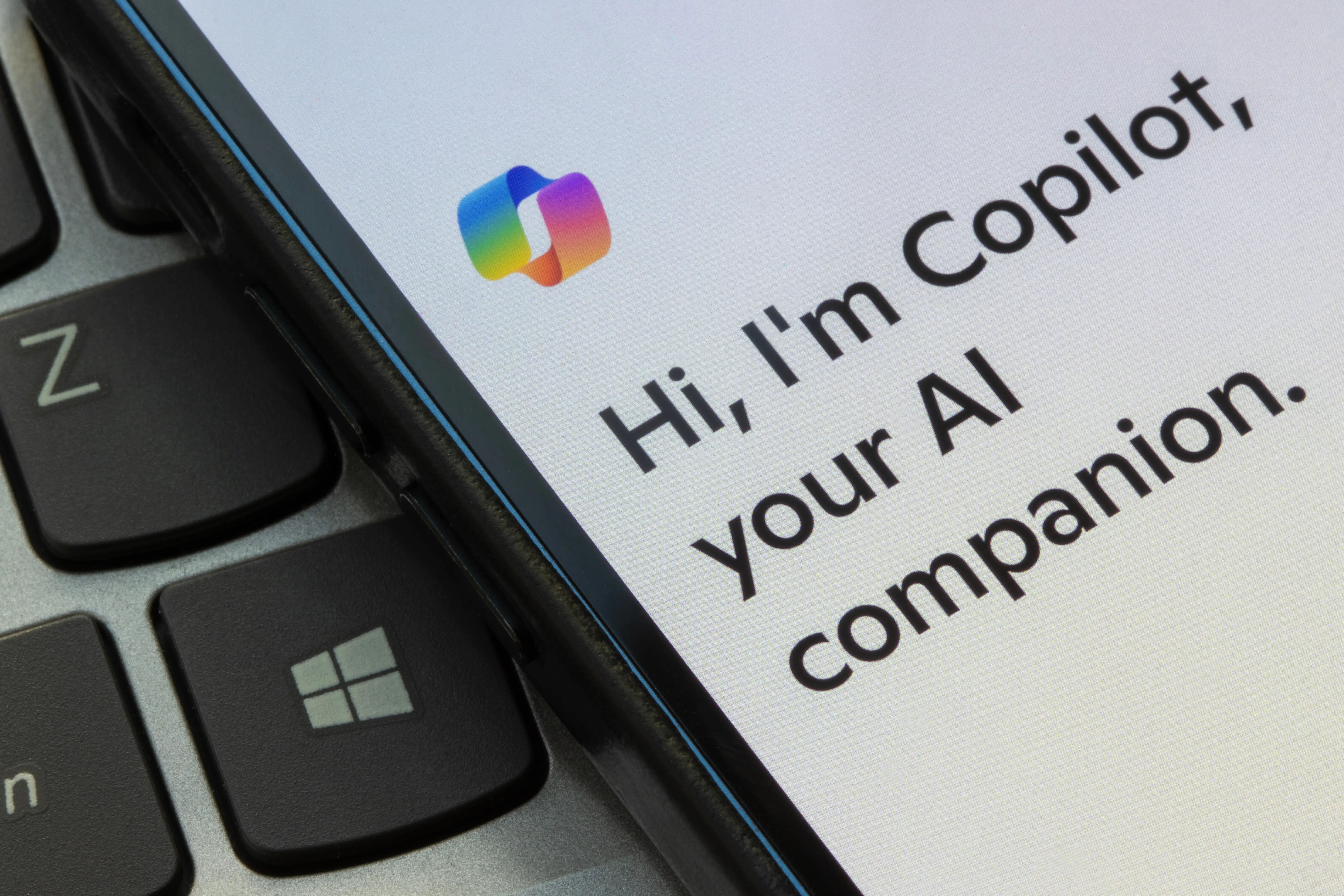
By January 2024, Microsoft had added a dedicated Copilot key to new keyboards and pushed Copilot across Bing, Edge, Teams, and apps like Notepad and Paint. The logic was straightforward: if even a fraction of Office users adopted a $30-per-month AI subscription, AI could become Microsoft’s next major revenue layer.
But the strategy depended on Copilot feeling genuinely useful rather than intrusive. By 2025, it increasingly felt like the latter.
Instead of Copilot feeling like a breakthrough feature that users naturally adopted, it increasingly felt like something being forced into every available surface across Windows and Office, whether the product needed it or not.
Pushing a product nobody asked for
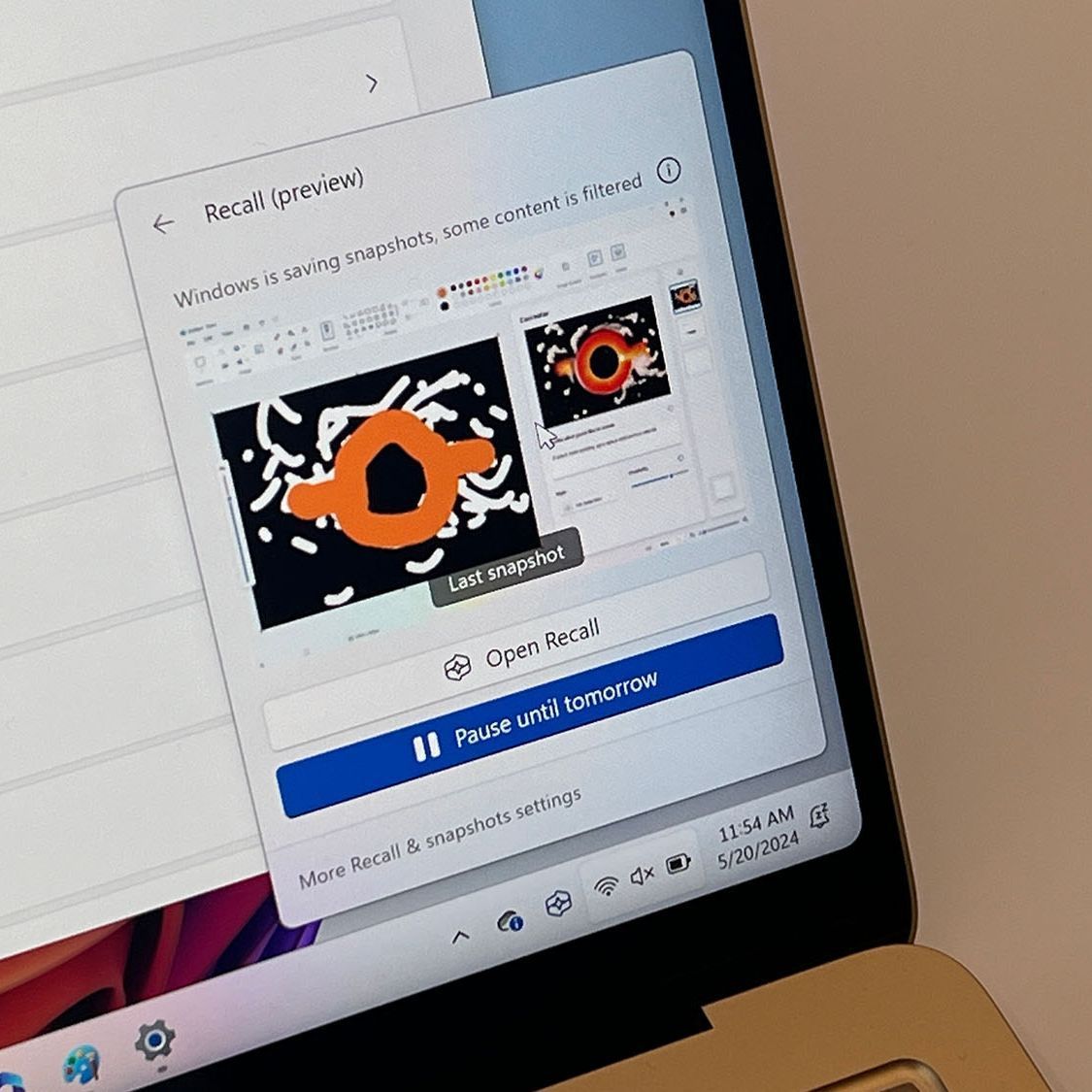
The moment that crystallized the backlash was Recall, a feature Microsoft unveiled alongside a new category of AI-focused hardware called Copilot+ PCs. Recall continuously captured screenshots of a user’s activity so AI could later search through their visual history using natural-language prompts.
The reaction, however, was immediate and sharp. Security researchers argued that the feature effectively created a searchable archive of everything a user had done on their computer. Cybersecurity researcher Kevin Beaumont demonstrated that malware with relatively limited permissions could potentially access the Recall database, exposing passwords, private messages, financial information, and other sensitive data. Microsoft eventually delayed the rollout, redesigned the system, made it opt-in, and kept it in beta far longer than originally planned.
The damage was already done. Recall became the loudest controversy, but hardly the only one.
The broader issue was that Copilot began appearing almost everywhere, including products where users actively valued simplicity. Copilot buttons appeared even in Notepad, an app long valued for its simplicity, while tools like Snipping Tool, Photos, and Widgets were also pulled into Microsoft’s broader AI push.
To many users, Microsoft no longer seemed to be improving products so much as inserting AI into them by default.
That perception hardened further when Pavan Davuluri publicly described Windows evolving into an agentic OS, meaning an operating system capable of autonomously performing tasks on behalf of users. According to Windows Central, the backlash became so intense that Davuluri eventually disabled replies to one of his own posts. Around the same time, the nickname Microslop, internet shorthand mocking low-quality AI-generated output, began spreading through online tech communities as a catch-all critique of Microsoft’s AI-first strategy.
Stay ahead of AI at work.
Cut through the hype. Roko’s Basilisk distills the day’s AI breakthroughs, market moves, and workable workflows into a five-minute brief.
Get one sharp deep dive, fast Quick Hits, and a witty pro tip, plus links that actually matter.
*This is sponsored content
Nadella steps in as Copilot confidence cracks
Internally, confidence grew increasingly shaky. In December 2025, The Information reported that Satya Nadella had emailed engineering managers directly, saying Copilot’s integrations with Gmail and Outlook “don’t really work for the most part” and are “not smart,” comments later covered by The Decoder. By then, Nadella had reportedly taken direct oversight of Copilot’s product direction. One leaked internal remark summarized the mood more bluntly: “There is a delusion on our marketing side where literally everything has been renamed to have Copilot in it.”
The adoption numbers reflected the disconnect between Microsoft’s ambitions and actual user behavior. A 2024 Gartner survey found that while employees who tried Copilot generally liked it, most struggled to integrate it into daily workflows, and only 6% of organizations had expanded beyond pilot deployments. By August 2025, independent analyst Ed Zitron estimated that Microsoft 365 Copilot had roughly 8M paying subscribers, translating into a conversion rate of around 1.8% from Microsoft’s paid users.
By March 2026, Microsoft itself appeared to acknowledge that the strategy had gone too far. The company began quietly rolling back Copilot integrations from products including Notepad, Snipping Tool, Photos, and Widgets, with Davuluri saying Microsoft was becoming “more intentional” about where AI belonged. In perhaps the clearest symbolic retreat, the Copilot branding inside Notepad disappeared entirely, replaced with a far less provocative label: “Writing Tools.” The AI functionality itself remained largely unchanged; only the branding was removed.
AI is growing, just not here
The obvious interpretation of Microsoft’s Copilot struggles is that users are still fundamentally resistant to AI. But the broader market increasingly suggests something more specific: users are resistant to AI that feels unnecessary, intrusive, or poorly matched to the work they actually do.
At almost the exact moment Microsoft was struggling to persuade Office and Windows users to adopt Copilot, other AI companies were growing at extraordinary speed without anything close to Microsoft’s distribution advantage. Anthropic, maker of the Claude family of models, reportedly grew from roughly $1B in annualized revenue in January 2025 to $30B by April 2026, according to reporting from SaaStr. OpenAI reached approximately $25B in annualized revenue over a similar period. Neither company controlled an operating system. Neither owned the dominant office productivity suite, nor had AI buttons been embedded across billions of devices.
What they had instead were products people intentionally opened. Microsoft’s problem was likely never resistance to AI itself, but the assumption that distribution alone would create demand.
At the same time, some of the fastest-growing AI products in the market were succeeding precisely because they were narrow, specialized, and deeply tied to existing workflows.
Anthropic’s fastest-growing offering during the same period was Claude Code, a developer-focused AI tool that reportedly reached $2.5B in annualized revenue by February 2026. Meanwhile, GitHub Copilot, Microsoft’s own coding-focused AI assistant, emerged as the clearest success story in the broader Copilot portfolio, reaching roughly 4.7M paying subscribers.
The pattern across all of them was remarkably consistent. Tools aimed at specific professions, solving concrete problems users already understood, performed far better than generalized AI systems inserted across an entire software ecosystem, simply because the platform owner could place them there.
The awkward position of the company that funded the revolution
That leaves Microsoft in a strangely divided position inside the AI economy it helped finance.
In some parts of the business, the company is benefiting enormously from the AI boom. Microsoft’s Azure cloud division continues to grow rapidly because every major AI company needs vast amounts of compute infrastructure, meaning the servers, networking systems, and GPU clusters required to train and run modern AI models. Whether enterprises ultimately choose OpenAI, Anthropic, or another provider, many still end up renting infrastructure from Microsoft at some point. That business is real, profitable, and expanding quickly.
The consumer and workplace AI story, however, remains less convincing. Twenty million paid Microsoft 365 Copilot seats represent real momentum, but Microsoft still appears far from turning Copilot into a mass-market habit. Against Microsoft’s roughly 440M paid Microsoft 365 users, the conversion rate remains modest, especially given the scale of the company’s AI spending and the aggressiveness of the rollout. More tellingly, the Windows-focused More Personal Computing division continues to stagnate.
The deeper problem, then, is that Microsoft’s AI advantage has become less secure than it once appeared. Its partnership with OpenAI was supposed to give the company an overwhelming lead: Microsoft provided infrastructure and capital, while OpenAI supplied the frontier models powering Copilot and Azure AI services. But as OpenAI evolved into a direct enterprise software competitor and Anthropic emerged as a credible alternative for many enterprise customers, Microsoft increasingly found itself competing against the very companies it had helped build.
The result is an awkward inversion of the original AI narrative. Microsoft is discovering that owning Windows and Office matters less than having an AI product people actively choose to use.
P.S. Want to collaborate?
Share today’s news with someone who would dig it. It really helps us to grow.
Let’s partner up. Looking for some ad inventory? Cool, we’ve got some.
Deeper integrations. If it’s some longer-form storytelling you are after, reply to this email and we can get the ball rolling.
What did you think of today's memo? |
|





.svg)
.svg)