Welcome to Memorandum Deep Dives. In this series, we go beyond the headlines to examine the decisions shaping our digital future. 🗞️
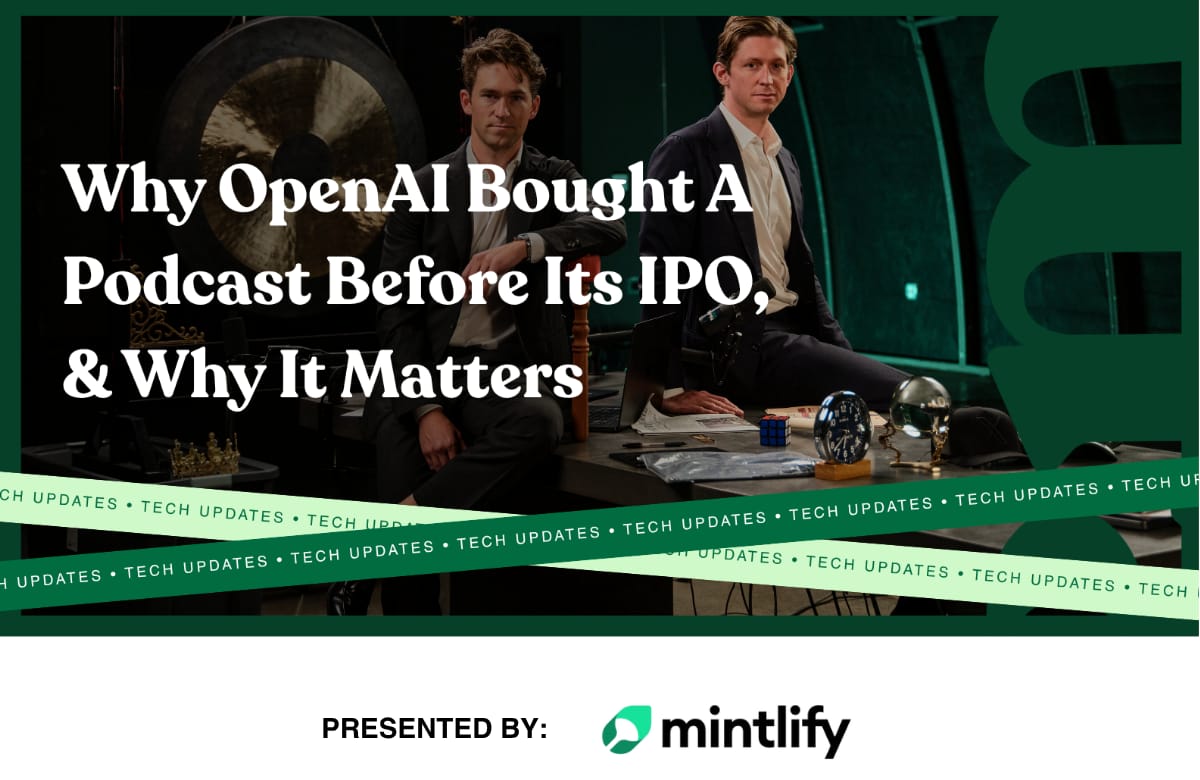
This week, we look at OpenAI's acquisition of TBPN, a daily live tech talk show, announced on the same day the company closed a $122B funding round at an $852B valuation, weeks before a fraud trial and months from a planned $1T IPO.
On the surface, a company buying a podcast for a price in the "low hundreds of millions" looks like a vanity play, a rounding error on a balance sheet of that size. That reading is wrong. This was a political operation, placing a media property inside a strategy office run by a former Clinton White House operative, in a year when 57% of voters view AI's risks as outweighing its benefits.
The real signal lies in where OpenAI has placed its latest acquisition. TBPN reports to the chief global affairs officer, not to a product or content division, which suggests this is about narrative control during the most consequential stretch in the company's history.
In partnership with

AI Agents Are Reading Your Docs. Are You Ready?
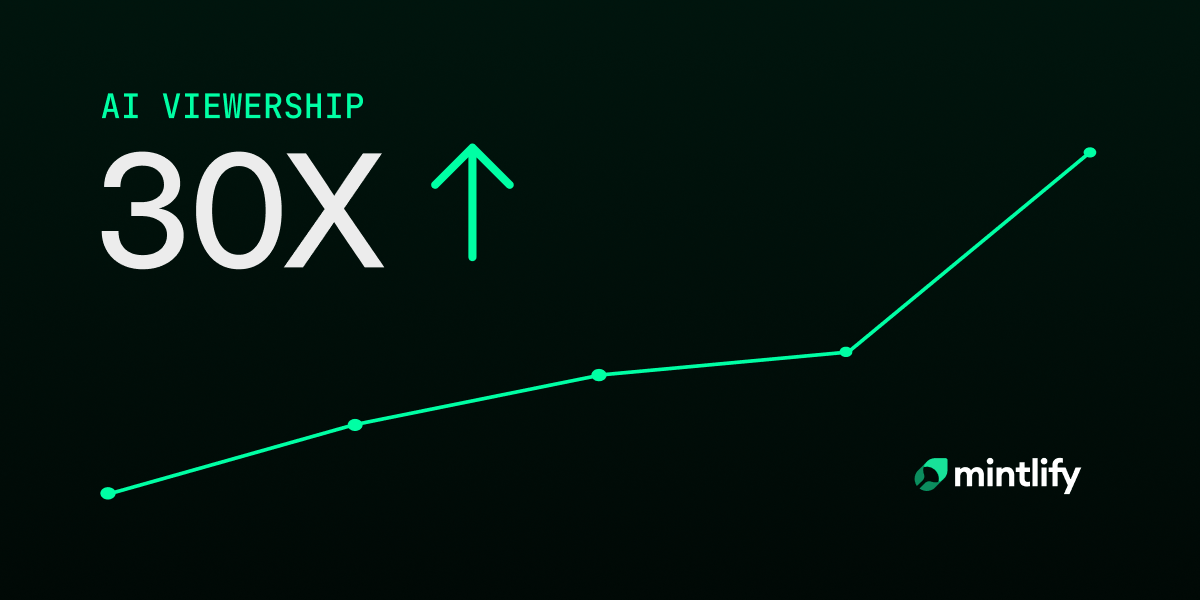
Last month, 48% of visitors to documentation sites across Mintlify were AI agents, not humans.
Claude Code, Cursor, and other coding agents are becoming the actual customers reading your docs. And they read everything.
This changes what good documentation means. Humans skim and forgive gaps. Agents methodically check every endpoint, read every guide, and compare you against alternatives with zero fatigue.
Your docs aren't just helping users anymore. They're your product's first interview with the machines deciding whether to recommend you.
That means: clear schema markup so agents can parse your content, real benchmarks instead of marketing fluff, open endpoints agents can actually test, and honest comparisons that emphasize strengths without hype.
Mintlify powers documentation for over 20,000 companies, reaching 100M+ people every year. We just raised a $45M Series B led by @a16z and @SalesforceVC to build the knowledge layer for the agent era.
Why OpenAI bought a talk show
In 2026, OpenAI is by most measures the most consequential technology company of the current decade. Its chatbot, ChatGPT, has more than 800M weekly users. Its most recent funding round, announced in early April 2026, raised $122B at a valuation of $852B, making it the largest private funding event in Silicon Valley history. The company is targeting a $1T IPO by the end of this year, and yet, for all this momentum, OpenAI faces a problem that no amount of compute can solve: the public does not particularly like it.
According to an NBC News poll from March 2026, 57% of registered voters believe the risks of artificial intelligence outweigh its benefits, with only 26% holding positive views of the technology. For a company preparing to go public at a valuation larger than most national economies, that sentiment gap is a material risk.
The talk show that caught OpenAI's attention
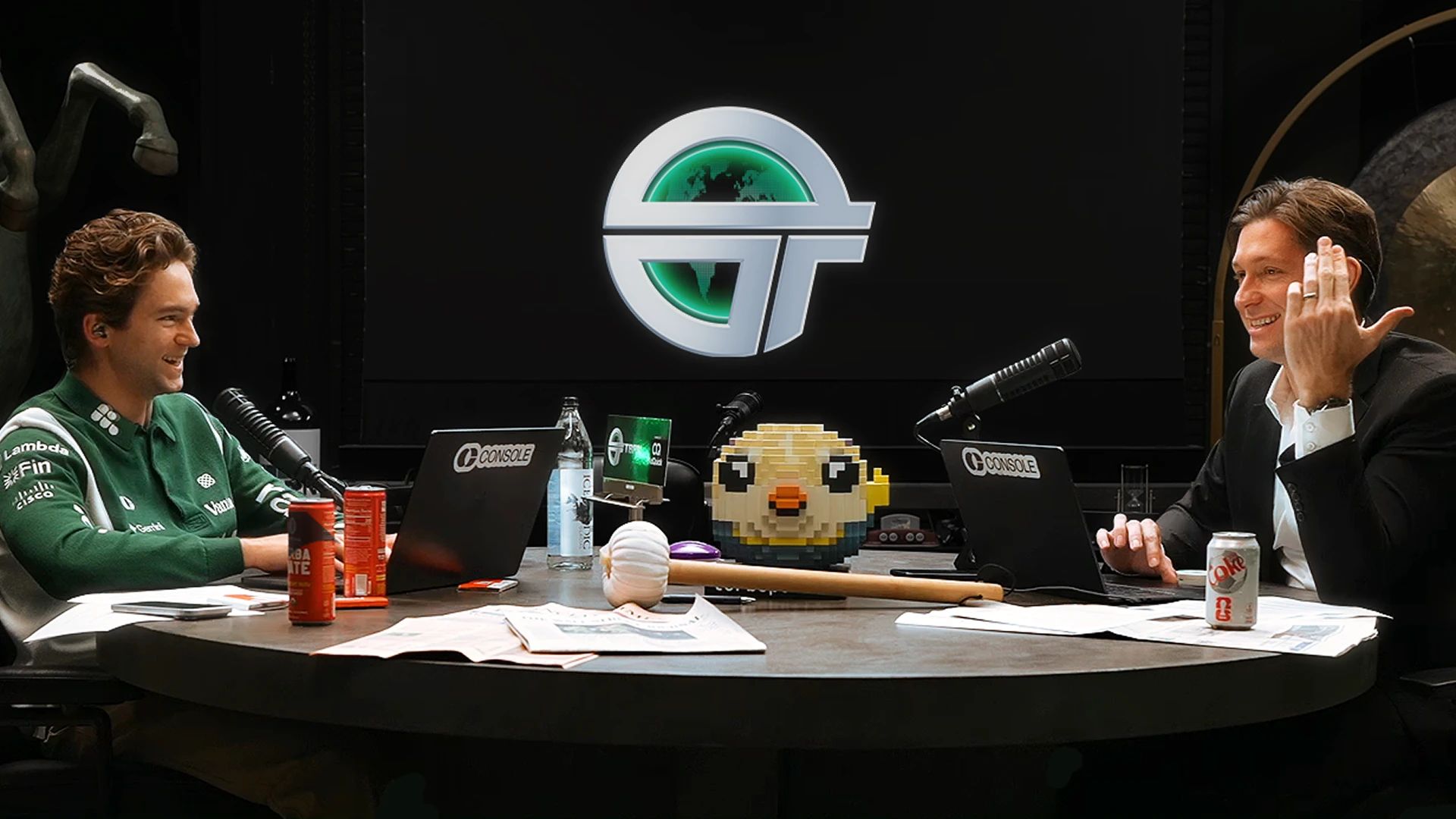
On April 2, 2026, the same day it announced the close of that $122B round, OpenAI acquired TBPN, a daily live tech talk show hosted by former startup founders John Coogan and Jordi Hays. TBPN, which stands for Technology Business Programming Network, launched in October 2024 and grew quickly into what the New York Times called "Silicon Valley's newest obsession." The show streams three hours a day, five days a week, across YouTube, X, Spotify, and Apple Podcasts. It generated roughly $5M in advertising revenue in 2025 and was projected to exceed $30M this year, according to the Wall Street Journal. The Financial Times reported the price in the "low hundreds of millions." For a company valued at $852B, that is pocket change. However, in this story, what matters is not the cost but what the move represents.
TBPN will not report to a product division or a content team. It will sit inside OpenAI's strategy organization, reporting directly to Chris Lehane, the company's chief global affairs officer. Lehane is a longtime Democratic operative who served in the Clinton White House, where Newsweek called him and his partner, Mark Fabiani, the "Masters of Disaster" for their work on crisis response. He later spent years at Airbnb fighting housing regulations and helped build Fairshake, the crypto-industry super PAC that spent hundreds of millions to defeat anti-crypto candidates in the 2024 elections, according to a detailed profile in Transformer. At OpenAI, he has framed the company's policy work as a political campaign, complete with what he calls a "bumper sticker" for AI: "free, fair, and safe." Placing a media property under this office tells you everything that the editorial independence assurances do not.
Why this acquisition matters
OpenAI has promised that TBPN will maintain editorial control over its programming and guests. Fidji Simo, OpenAI's CEO of applications, wrote in the announcement that editorial independence is "foundational to their credibility" and "something we're explicitly protecting."
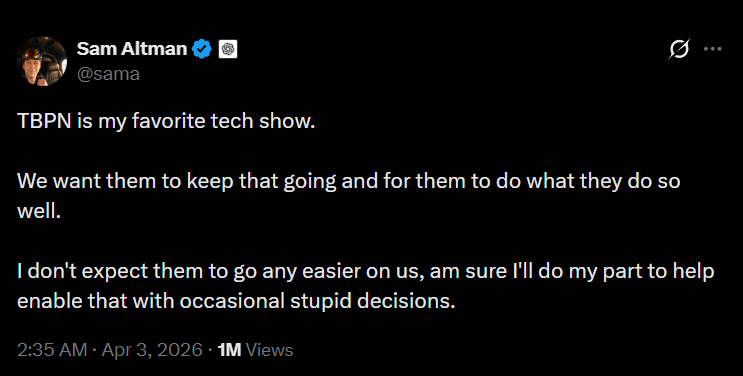
Sam Altman posted on X that he did not expect the hosts to "go any easier on us." But several observers have pointed out that this framing misses the point. Martin Peers of The Information argued that the independence promise is "irrelevant" because TBPN was never adversarial to begin with. The show's format involves celebrating funding rounds by banging a gong, treating executive moves like sports trades, and hosting friendly conversations with the same CEOs who sit on each other's boards.
As Slate put it, the deal represents "a sad trend in tech media, where sycophancy and cozy relationships with the industry offer the best path to stardom and riches."
The timing adds another layer to the acquisition.
On April 27, 2026, jury selection began in Musk v. Altman, a fraud lawsuit filed by Elon Musk against OpenAI, Sam Altman, Greg Brockman, and Microsoft. The case centers on whether OpenAI's leaders misled Musk about preserving the company's nonprofit mission when he donated roughly $38M in early funding. Musk initially sought up to $134B in damages and has since amended his complaint to seek Altman's removal as CEO, the unwinding of the for-profit conversion, and the direction of any winnings to OpenAI's nonprofit arm. For a company weeks away from this trial and months from a trillion-dollar listing, acquiring a media platform with influence among the exact audience that will evaluate both outcomes reads as anything but a calculated play for narrative control.
Stay ahead of AI at work.
Cut through the hype. Roko’s Basilisk distills the day’s AI breakthroughs, market moves, and workable workflows into a five-minute brief.
Get one sharp deep dive, fast Quick Hits, and a witty pro tip, plus links that actually matter.
*This is sponsored content
What this means for the broader tech and media ecosystem
The acquisition of a media company, even if it does not represent traditional media channels, is nothing new for multibillion-dollar companies.
HubSpot acquired The Hustle in 2021 for roughly $27M and has since built a media portfolio with 2.9M YouTube subscribers. Andreessen Horowitz tried to launch its own editorial outlet, Future, in 2021, only to shut it down 18 months later after traffic collapsed and staff departed. Learning from that failure, a16z acquired the Turpentine podcast network in April 2025 and named its founder, Erik Torenberg, a general partner. Plaid acquired This Week in Fintech, a newsletter with 200k subscribers, in March 2026, just one week before the OpenAI deal. Each of these companies promised editorial independence, then placed its acquisition within a marketing or strategy function.
This trend is accelerating because the information landscape itself has shifted. According to a G2 survey from March 2026, 51% of B2B software buyers now begin their research with an AI chatbot rather than a traditional search engine, up from 29% in April 2025. Gartner predicted that traditional search volume would drop 25% by 2026 as chatbots replaced query-based research. When a company both runs the chatbot where people search for answers and owns the media property that shapes what those answers contain, the line between editorial and marketing does not just blur. It disappears.
The Altman pattern
The TBPN deal also fits a broader pattern around Sam Altman himself. He co-founded OpenAI as a nonprofit in 2015, promising to develop artificial general intelligence safely and for the benefit of all humanity. That nonprofit structure gave the project its moral authority and attracted early funding, including Musk's $38M. Within a few years, the company had pivoted to a capped-profit model, then struck a $13B partnership with Microsoft, and is now converting to a full for-profit public benefit corporation. Greg Brockman, OpenAI's co-founder and president, wrote in a 2017 diary entry that was never meant to be public: "Cannot say that we are committed to the non-profit. Don't want to say that we're committed. If three months later we're doing B-Corp, then it was a lie." That page, entered as Exhibit 43 in the court filings, is now central evidence in the fraud trial.
The pattern is consistent: a grand promise of openness, safety, or independence, followed by structural decisions that move in the opposite direction, wrapped in language careful enough to maintain deniability. TBPN fits this arc neatly as the promise of editorial independence is real in the contractual sense. But a media property owned by a company valued at $852B, reporting to a political operative, winding down its advertising business because it no longer needs to make money, and operated by hosts who are now presumably OpenAI shareholders, does not need to be censored to be captured. The incentives are already aligned.
CNN observed that this story dates back a full century, to 1926, when RCA created NBC partly to sell radios. Tech scholar Sara Watson told NPR that the acquisition reflects something simpler: "Popular opinion has shifted to say, 'We're actually quite skeptical of your claims.'" The question the TBPN deal raises is whether a company that started as a nonprofit promise, converted to a profit engine, and is now buying its own media coverage can keep telling the story of AI to the world in a way that anyone outside its orbit will believe.
Altman has a long record of making commitments that sound foundational and then engineering conditions under which they quietly stop mattering. If that pattern holds, TBPN's editorial independence clause may age about as well as OpenAI's original nonprofit charter.
P.S. Want to collaborate?
Share today’s news with someone who would dig it. It really helps us to grow.
Let’s partner up. Looking for some ad inventory? Cool, we’ve got some.
Deeper integrations. If it’s longer-form storytelling you are after, reply to this email, and we can get the ball rolling.
What did you think of today's memo? |
|



.svg)
.svg)