Welcome to Memorandum Deep Dives. In this series, we go beyond the headlines to examine the decisions shaping our digital future. 🗞️
This week, a Beijing startup most people had never heard of released an AI model, and within a day the tremors reached Wall Street. NVIDIA briefly lost its title as the world's most valuable company to Apple, Taiwan Semiconductor Manufacturing Company shed 7% even after posting a 77% jump in quarterly operating profit, and SoftBank slid 9%. The trigger was Kimi K3, built by a three-year-old lab called Moonshot AI.
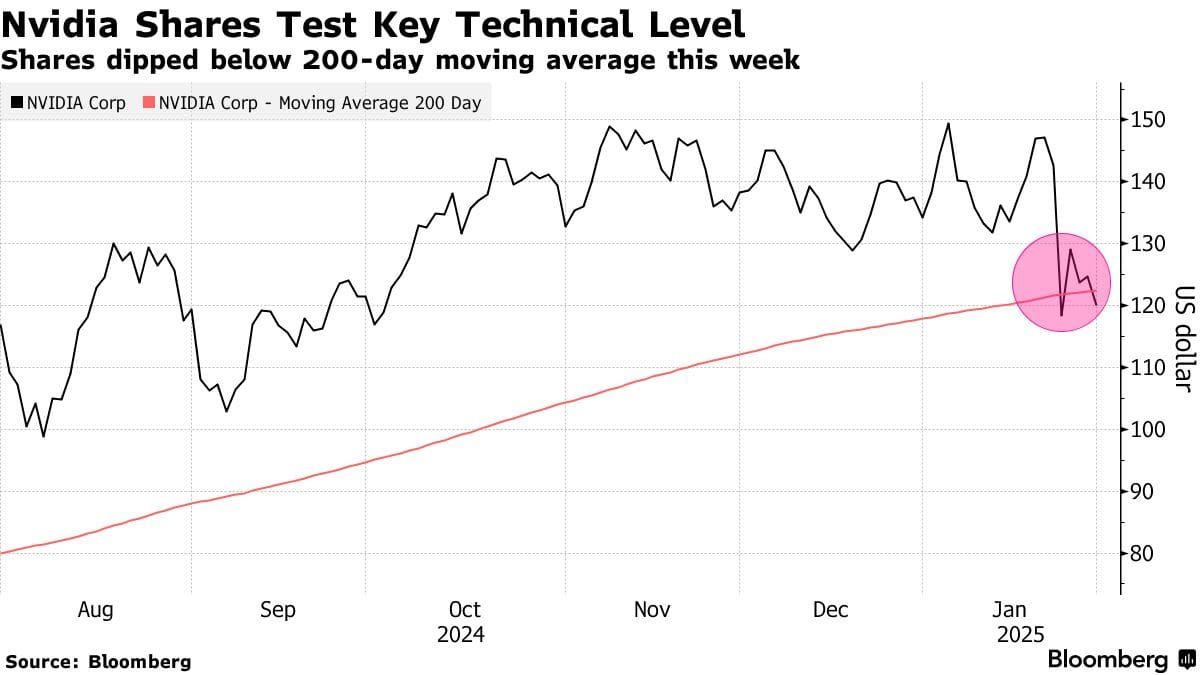
Investors had felt this before. In early 2025, another Chinese lab named DeepSeek erased $589B of NVIDIA's value in a single session, the largest one-day loss in U.S. market history. That episode was filed away as a fluke, a lucky team squeezing a miracle out of restricted hardware. Kimi K3 forced everyone to ask whether the fluke had ever really been one.
The answer runs deeper than any single model or any single company, and it reaches past the benchmark tables and the market charts into an assumption that has quietly organized the entire AI industry for years. What Kimi K3 exposed was not a better chatbot. It was the expiration date on a bet almost everyone in the room had made.
In partnership with

The New Blueprint for AI Powered Support
Most support teams are experimenting with AI. Few are transforming because of it. The gap is where the most consequential decisions in support are being made, and where most teams get stuck. Hear from industry leaders on moving from pilot to production.
Their first after-hours call was a $20,000 job.
Air Texas was paying $2,000 a month for an answering service that couldn't close jobs.
Now no call goes unanswered after 5PM.
The shock that keeps repeating
For most of this decade, the artificial intelligence industry has rested on a single organizing assumption: that frontier AI would remain the product of a handful of American labs. The assumption was never stated as policy, but it was priced into everything. It justified the vast sums flowing into U.S. data centers, it underpinned the valuations of OpenAI and Anthropic, and it shaped Washington's entire approach to China, which treated advanced NVIDIA chips as a chokepoint that would keep Chinese developers permanently a generation behind. Control the hardware, the logic went, and you control who gets to build the future.
That assumption began to unravel on July 16, 2026, when a Beijing startup called Moonshot AI released Kimi K3, a model that, by the company's own benchmarks, comes close to matching the best systems from OpenAI and Anthropic while outperforming most of its other rivals. The release triggered a sharp market reaction, with Taiwan Semiconductor Manufacturing Company's shares falling 7% the following day despite the company reporting a 77% jump in quarterly operating profit, SoftBank, often viewed as a proxy for OpenAI, dropping 9%, and NVIDIA briefly losing its position as the world's most valuable company to Apple.
Investors had already witnessed a similar episode following DeepSeek's breakthrough in early 2025, and the resemblance mattered because Kimi K3 was forcing the industry to revisit a question many had considered settled after that earlier shock: whether DeepSeek had been a singular anomaly or the first sign of a broader shift in where frontier AI could be built.
The first crack in the concentration thesis
The pattern began in January 2025, when a then-obscure lab called DeepSeek released a model that matched American systems on reasoning tasks at a fraction of their reported training cost, using hardware that export controls were supposed to have rendered inadequate. The market's verdict was immediate and historic, as NVIDIA's shares fell 17% in a single day, erasing $589B from its market capitalization in the largest one-day loss in U.S. stock market history.
The episode was traumatic enough to earn its own shorthand, 'the DeepSeek moment,' and the industry spent the following year debating what it had meant. The comfortable interpretation won out. DeepSeek was framed as an exception, a singular team that had squeezed a miracle out of constrained hardware, and the concentration thesis survived with an asterisk attached. American labs kept their premium pricing, capital spending on U.S. infrastructure accelerated rather than slowed, and the chip restrictions stayed in place on the theory that they were working, just more slowly than hoped.
That interpretation required DeepSeek to remain alone, and it has not. In April 2026, DeepSeek returned with V4, offering frontier-level performance at rock-bottom prices and running on Huawei-made processors, removing even the dependence on NVIDIA that the original model had retained. In June, another Chinese startup, Z.ai, released its GLM-5.2 model to considerable attention.
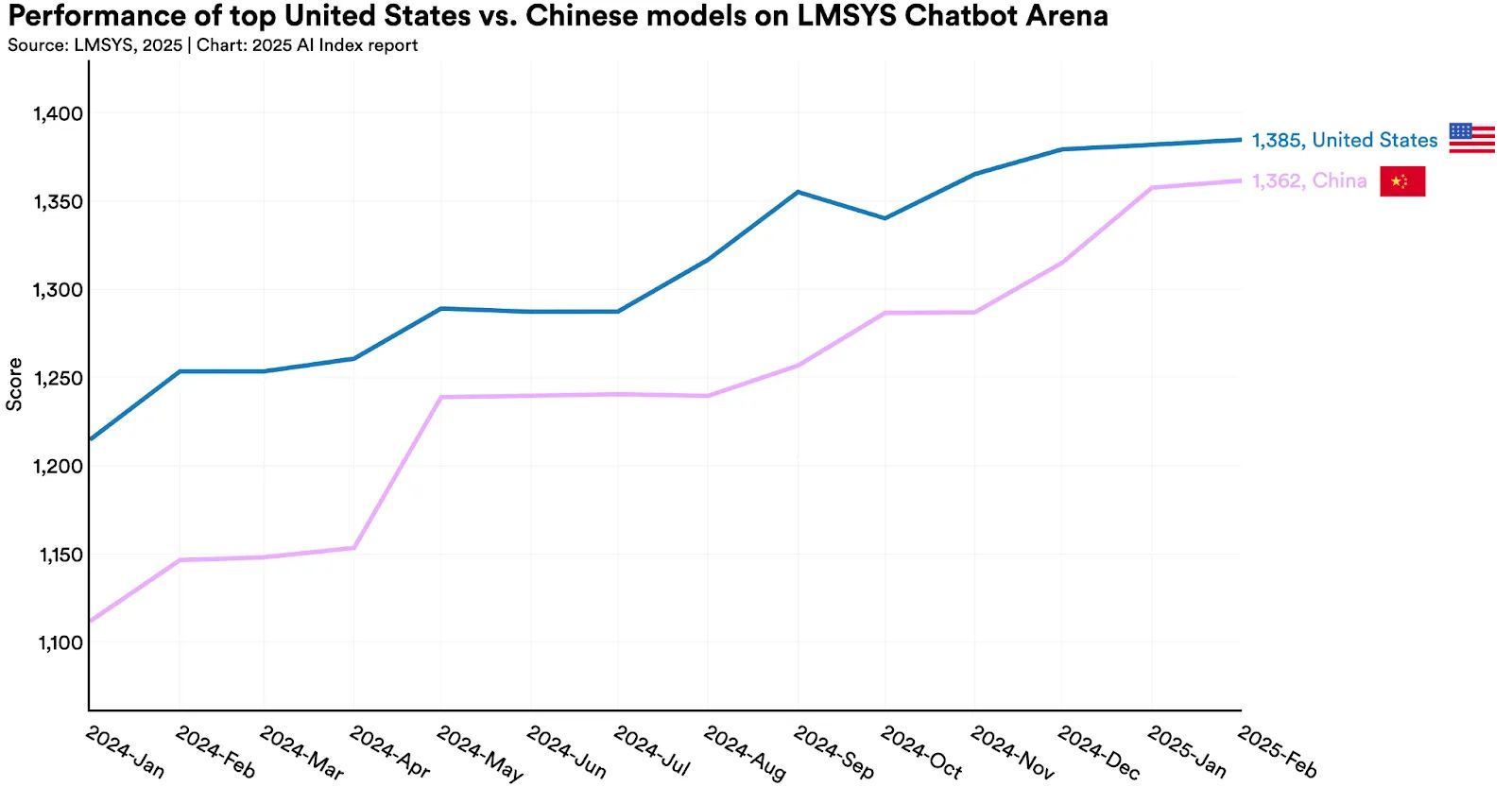
With Moonshot's release of Kimi K3, another Chinese company has joined the list of labs producing models that approach the frontier of AI capability, extending a pattern that has become increasingly difficult to ignore. Over the past 18 months, DeepSeek, Z.ai, and now Moonshot have each introduced systems that have narrowed the gap with leading American models, despite operating under the same export controls intended to slow China's progress.
The significance lies less in any individual breakthrough than in the sequence itself. Each model has come from a different company, built on different research choices, backed by different investors, and aimed at different markets, yet each has pushed the frontier forward. One breakthrough under export controls can be dismissed as an anomaly. A succession of increasingly capable models emerging from multiple companies points to an ecosystem that is learning, compounding, and advancing on its own momentum. And once the story shifts to the ecosystem rather than any individual company, Moonshot's rise begins to look like evidence of a bigger change in China's AI industry.
The evidence keeps changing companies
Founded by Yang Zhilin just three years ago, Moonshot has already survived a near-death experience, having lost significant ground to DeepSeek in 2025, when its Kimi chatbot slid from third to seventh in monthly active users in China, before clawing its way back. The company is backed by the country's commercial giants, including Alibaba, Tencent, and Meituan, and its trajectory has been dizzying: valued at just over $4B in December, it closed a round valuing it above $20B in May, and by June it was seeking a new round at $30B.
A country that can produce a company like this, watch it get knocked down by a domestic rival, and then watch it return to the frontier 18 months later appears to have something more durable than a run of luck: a functioning industrial base for AI, one that no longer requires access to the best American hardware to produce competitive results.
The clearest sign of that industrial depth is that Chinese AI companies are increasingly competing with one another rather than simply chasing American leaders. The tell is in how the losses were distributed when K3 launched. Alongside the American selloff, Z.ai's stock plunged 28%, and fellow Chinese model maker MiniMax fell 16%. Chinese labs are now each other's fiercest competitors, fighting over position in a race that was supposed to have only American contestants.
Competition that intense, sustained across multiple firms, tends to produce exactly what it has produced everywhere else in industrial history: falling prices, faster iteration, and a widening pool of capable producers. Those dynamics rarely stay confined to research labs, and they are already showing up in products, pricing, and customer behavior.
Hire smarter with Athyna, save up to 70% on salary costs.
Athyna connects you with top LATAM AI talent, fast!
*This is sponsored content
Where the customers are going
The commercial consequences of successive, increasingly capable Chinese AI models were visible even before the geopolitical debate caught up. American labs still hold the absolute performance lead, and Moonshot concedes that K3 sits below Anthropic's and OpenAI's flagships. However, most business tasks do not require the best model in existence, and for customer support, document processing, and routine coding work, a system that is nearly as capable at a fraction of the price wins the deployment decision.
Beyond the battle over pricing, American labs face a second, quieter challenge: ownership. While the most capable models developed in the U.S. remain proprietary, many Chinese labs release the weights and the underlying parameters of their models for anyone to download and customize, and Moonshot has committed to doing the same with K3. A business running an open Chinese model on its own servers pays the model's creator nothing and asks for no one's permission, quietly eroding the metered-access business model that American labs depend on.
The result is a market splitting into tiers, with American labs defending a premium segment while Chinese labs absorb the volume beneath it. Taken together, those trends point toward a market that is becoming harder to dominate from any single country or business model.
The industry that comes next
This is what a multipolar AI industry looks like in practice, and it is worth being precise about what has changed and what has not. American labs still build the most capable systems, and nothing in the past 18 months suggests that lead is about to disappear.
What has collapsed is the belief that sat underneath that lead, the idea that capability leadership would automatically translate into market control, and that the rest of the world would remain a customer rather than become a competitor. Chinese labs have now repeatedly reached the frontier, with different economics, strategies, and companies each time, which means the interesting question is no longer whether they can catch up. It is how an industry organizes itself when advanced AI is produced on multiple continents, under multiple political systems, and at multiple price points, with no single actor able to set the terms for everyone else.
The chip restrictions were built on the premise that whoever controlled the hardware would control who got to build the future. Eighteen months of evidence suggests the future found other ways to get built. The most advanced systems still carry American names, and they may for years to come, but the assumption that this settles the race has quietly expired. The labs in San Francisco are now competing in a market they no longer define, against rivals who play by different rules and profit from different math, and the open question is whether being the best still counts as winning.
P.S. Want to collaborate?
Share today’s news with someone who would dig it. It really helps us to grow.
Let’s partner up. Looking for some ad inventory? Cool, we’ve got some.
Deeper integrations. If it’s some longer form storytelling you are after, reply to this email and we can get the ball rolling.
What did you think of today's memo? |
|









.svg)
.svg)