Welcome to Memorandum Deep Dives. In this series, we go beyond the headlines to examine the decisions shaping our digital future. 🗞️
This week, three of the internet's biggest platforms made three unrelated announcements on the same day, and none of them mentioned each other. But read side by side, they trace the outline of a much bigger shift already underway in how creative work gets made, distributed, and paid for.
The trigger is simple enough to state and hard to sit with: the cost of producing a song, a video, a game, or an image is now close to zero. That single fact is rewriting incentives across music, film, and gaming all at once, and the platforms sitting on top of that shift are responding in ways that look, on the surface, contradictory.
What ties X's crackdown on content thieves, Roblox's new AI game-builder, and Netflix's embrace of generative tools together is a question none of them can fully answer on their own: once anyone can make anything, what's actually worth paying for?
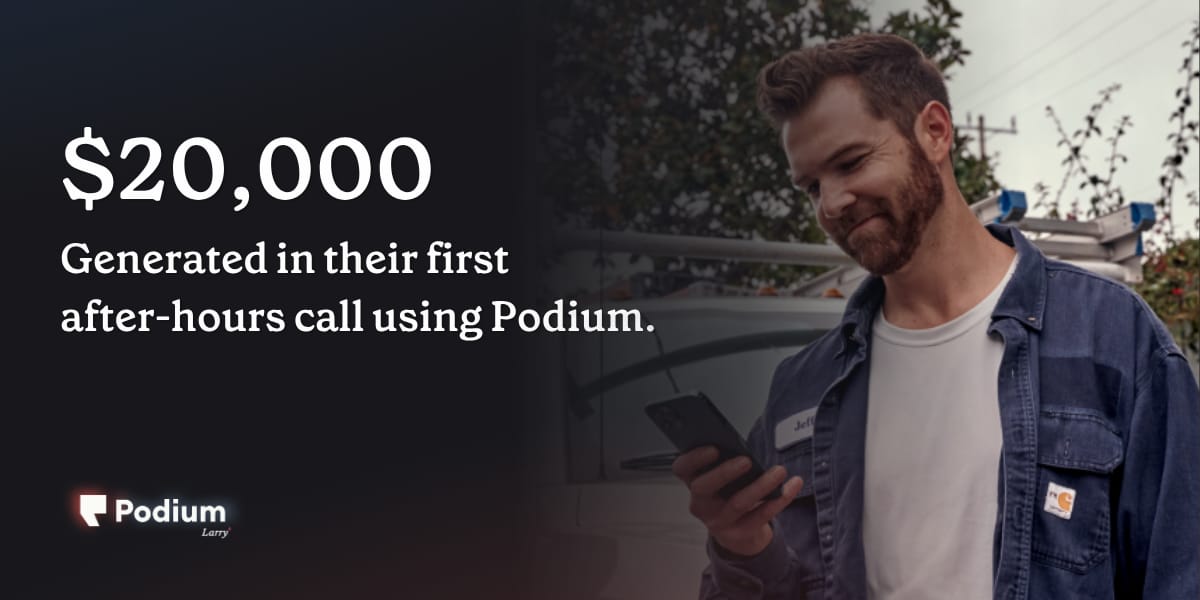
Their first after-hours call was a $20,000 job.
Air Texas was paying $2,000 a month for an answering service that couldn't close jobs.
Now no call goes unanswered after 5PM.
What Replaces Roundup?
The next agricultural transition may not be bigger tractors. It may be autonomous robots replacing herbicides entirely. Greenfield Robotics is building commercial systems designed for that future.
Greenfield Robotics is Testing The Waters under tier 2 of Regulation A. No money or other consideration is being solicited, and if sent in response will not be accepted. No offer to buy the securities can be accepted and no part of the purchase price can be received until the offering statement filed by the company with the SEC has been qualified by the SEC. Any such offer may be withdrawn or revoked, without obligation or commitment of any kind, at any time before notice of acceptance given after the date of qualification. An indication of interest involves no obligation or commitment of any kind. “Reserving” shares is simply an indication of interest. There is no binding commitment for investors that reserve shares in this manner to ultimately invest and purchase the shares reserved of the company, or to purchase any shares of the company whatsoever.
Water, canvases and the price of scarcity
One of the oldest rules in economics is that a thing is worth whatever its scarcity and its demand will together bear. Water makes the point cleanly. Beside a clean river, it is worth almost nothing, because anyone can bend down and take as much as they want. Bottle that same water and carry it into a desert, and it can be worth more than gold. The value was never in the water. It lived in how hard it was to reach the water and how many people wanted it.
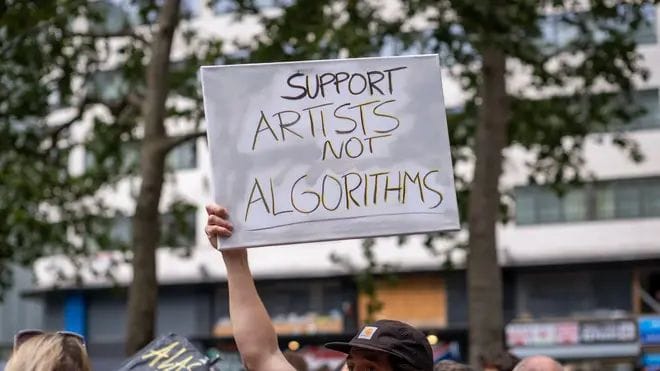
That logic has quietly priced human creative work for centuries, and when it meets originality, it compounds. A single canvas can sell for millions because there is exactly one of it, and no amount of admiration will conjure a second. The moment a work can be reproduced endlessly at no meaningful cost, its scarcity evaporates, and its price follows the scarcity down. That is the pressure now bearing on the creative economy, and the force applying it is generative AI, which has driven the cost of producing a publishable song, video, image, or game close to zero.
The same week, three different answers
In a single stretch of July 2026, that pressure surfaced across three of the largest platforms at once, each responding in a different direction. On July 16, X said the newest version of its Grok model could detect duplicated content at three times the rate of the previous version, and that people who lightly edit or watermark stolen posts to pass them off as their own would have their monetized impressions redirected to the original creator. The company said it had found 1.5M stolen posts in its latest enforcement cycle and would return more than $1M in payouts to the people whose work was taken.
The same day, Roblox went the other way and made creation easier. Its new tool, Build, lets a user describe a game in plain language and generates a playable draft complete with mechanics, environment, and sound, with a public test set to begin in New Zealand on July 28, 2026. And on the same July 16, Netflix told investors that generative AI had touched roughly 300 of its titles this year, pointing to a documentary with 17 minutes of AI-enhanced footage that co-chief executive Ted Sarandos said had been produced "twice as fast and at half the cost," against a content budget running near $20B.
Value moves from making to proving
Read together, the three moves describe a single shift. When the marginal cost of an additional unit of content falls to almost nothing, the value stops living in the making and relocates to something harder to fake, which is proof that a human made it. And to understand how AI is impacting the creative industry, all one needs to do is look at the sheer volumes.
According to Deezer, the platform receives around 75k fully AI-generated tracks every day, roughly 44% of everything uploaded to the platform, up from about 10k a day at the start of 2025. Spotify, for its part, removed more than 75M spam tracks in the year to September 2025. The web itself is filling the same way: a study from Stanford, Imperial College London, and the Internet Archive, not yet peer reviewed, estimated that about 35% of newly published websites by mid-2025 were AI-generated or AI-assisted, from a base of essentially zero before late 2022.
The result of this inflow is that listeners and viewers can no longer tell the difference between human-created and AI-generated work. In a Deezer survey reported by TechCrunch, 97% of listeners could not tell the difference between fully AI-generated music and human-made music.
And once the human ear stops working as a filter, the only thing left that carries a premium is a credible external stamp certifying origin, and that stamp is exactly what every platform in this story is now scrambling to build.
Outperform the competition.
Tools & resources, ranging from playbooks, databases, courses, and more.
Deep dives on famous visionary leaders.
Interviews with entrepreneurs and playbook breakdowns.
*This is sponsored content
The cure and the disease share a balance sheet
The irony of the changes brought into the creative industry by AI is that the industry sounding the alarm about cheap content is also, in large part, the industry producing and profiting from it.
Netflix is embracing the same drop in production costs that Spotify and Deezer are trying to contain. For Netflix, cheaper AI-generated content helps reduce production expenses. For music platforms, cheaper AI-generated uploads threaten to overwhelm catalogs and dilute royalty payments. Deezer has gone a step further by turning detection into a business, licensing its AI music identification technology to other platforms and rights organizations. The company tracking the flood is now selling the tools to manage it.
That arrangement is not necessarily cynical, but it does concentrate power. When the same platforms that flooded the commons also own the machinery that certifies what is real, authenticity stops being a quality the audience can perceive and becomes a label the platform issues, withholds, and prices.
The risks of that model have already become visible. In March 2026, OpenAI abruptly shut down its consumer video app, Sora, following backlash over the volume of low-quality content circulating on the platform. The episode demonstrated how quickly generative systems can create moderation problems at a scale that even their creators struggle to manage. Yet the economic incentives behind these systems remain largely unchanged, which helps explain why companies continue to invest heavily in them despite the complications they introduce.
Why the payout math guarantees the flood
The deeper reason the flood of AI-generated content is unlikely to subside is that the payment systems beneath the modern creator economy were designed for a world in which content was expensive to produce and relatively scarce. Streaming royalties pay per stream, advertising programs pay per impression, and creator funds often reward uploads and engagement. When the cost of producing a song, video, image, or game approaches zero, any synthetic work that clears the distribution threshold can capture revenue that those systems were originally designed to allocate to a much smaller pool of creators.
The economics are already visible in the music industry. According to Deezer, AI-generated tracks account for only 1% to 3% of total streams on the platform, yet as much as 85% of those streams are flagged as fraudulent attempts to collect royalties. As long as the cost of generating content remains negligible and the potential payout remains positive, the incentive to produce content at an industrial scale persists.
Detection technologies offer only a partial solution. Researchers involved in the Stanford, Imperial College London, and Internet Archive study note that identifying machine-generated content becomes increasingly difficult for shorter works and may become less reliable as models improve. Faced with that challenge, platforms such as Roblox and YouTube have increasingly relied on ranking systems that prioritize engagement signals and suppress low-performing content regardless of whether it was created by a human or a machine. While this approach reduces reliance on detection tools, it also grants greater authority to platform algorithms that determine what audiences ultimately see. Regulation, meanwhile, continues to move at a far slower pace than the technologies reshaping the market, leaving many of the practical rules governing visibility, attribution, and monetization to be written directly into platform enforcement systems and revised without public scrutiny.
Who owns the stamp of real
Zoom out, and the stakes reach past music and film. If proof of human origin becomes a paid tier or a marketed badge, the internet splits into a cheap, synthetic layer and a smaller, verified layer, with unequal access to each. The loop even reaches back onto the technology driving it, since a web that is already one-third machine-made raises the risk of model collapse, the degradation that sets in when new models train on the output of old ones.
The desert has grown to cover the whole internet, and the scarce thing is no longer the water but the certificate saying it is safe to drink. For now, the platforms are printing those certificates themselves, on presses they also rent to the people bottling everything in sight. What remains open is whether authenticity can stay something an audience recognizes on its own, or whether it settles into being one more product sold back to us by the same platforms that made it scarce.
P.S. Want to collaborate?
Share today’s news with someone who would dig it. It really helps us to grow.
Let’s partner up. Looking for some ad inventory? Cool, we’ve got some.
Deeper integrations. If it’s some longer form storytelling you are after, reply to this email and we can get the ball rolling.
What did you think of today's memo? |
|





.svg)
.svg)