Welcome to Memorandum Deep Dives. In this series, we go beyond the headlines to examine the decisions shaping our digital future. 🗞️
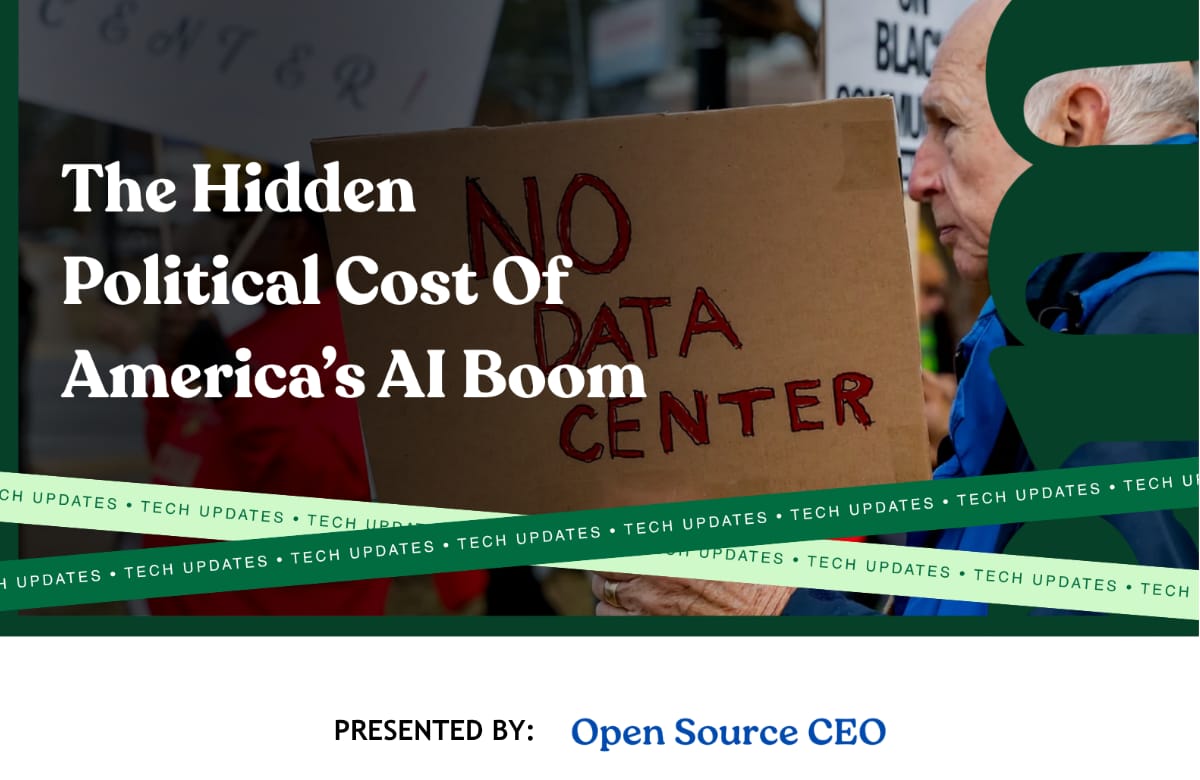
This week, we're heading to Defiance, Ohio, a city of 17k people surrounded by soybean fields. On November 3, residents will vote on whether to ban all but the smallest data centers, even though no company has announced plans to build one there.
For years, the big worry about AI and elections was deepfakes: fake videos and audio so convincing that voters would stop trusting anything they saw. That flood turned out to be smaller than expected. Something else has been building instead, in town halls and campaign ads across the Midwest.
This year, voters, governors, and nearly the entire House have shifted in the same direction, while the White House has largely held its ground. Below, we trace what changed, why it cuts across party lines, and why a vote on a building that doesn't exist could matter far beyond one small Ohio city.
Goodies delivered straight into your inbox.
Meet your next hire in as little as five days.
The AI fight moved from voters' screens to their power bills
Ever since generative AI models that produce text, images, and video went mainstream, there has been talk that the technology would have far-reaching consequences, including for politics. At the time, the popular consensus was that AI would flood the information ecosystem with so much misinformation and disinformation that voters would struggle to trust the sources they rely on, from newspapers and television to the internet and social media. However, over the past year, a very different picture has emerged of how AI is shaping politics, and it has less to do with what the technology generates than with the technology itself: how it is built, and what it takes to keep it running.
The early fear was widely shared, since before the 2024 election 57% of Americans worried about AI fakes about candidates. Yet the fakes that researchers have since been able to find and measure played a smaller part than expected. Meta’s review after the election found that AI-generated content accounted for less than 1% of the misinformation its fact-checkers flagged. Researchers at the Knight First Amendment Institute, a free-speech research center at Columbia University, reached a similar conclusion after reviewing 78 deepfakes, the AI-made videos and recordings of real people. Both studies can only count what was caught, so they cannot rule out persuasion nobody detected. Deepfakes are still turning up in this year’s campaigns, although a researcher told NPR that most AI campaign ads now resemble parody more than deception.
While the fakes have stayed at the edges of this year’s campaigns, voters have started reacting to the physical side of AI. Companies are building data centers, the warehouses of computers that train and run AI systems, in towns across the U.S. Each of those buildings needs land, tax breaks, and electricity from the same grid that powers the homes around it. The reaction became visible on August 31, 2026, when a Bowling Green State University poll found 71% of Ohioans backing a temporary ban on new data centers. On the same day, President Donald Trump posted that communities turning those projects away want to end up “backwards and poor,” which put the White House against a large majority of voters in a state where both parties are fighting over a Senate seat.
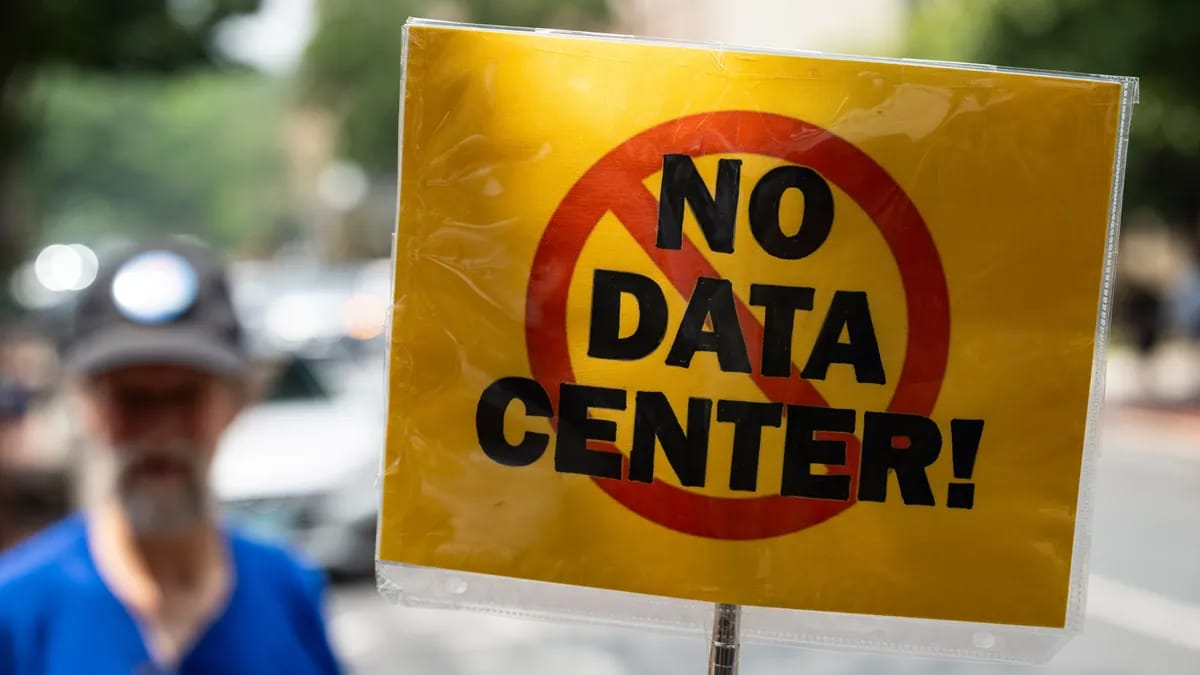
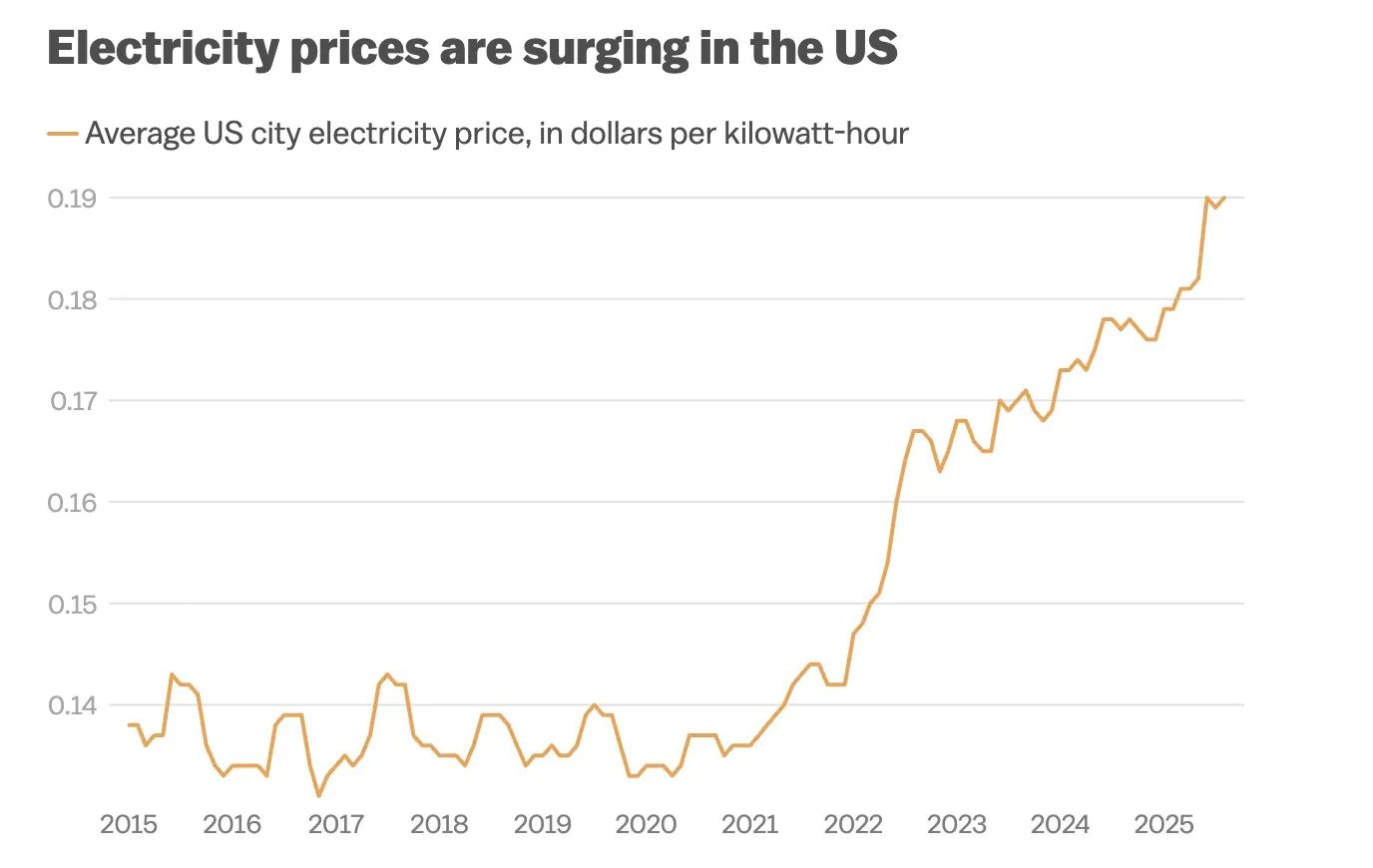
The reaction is sharpest in Defiance, Ohio, where residents gathered signatures for a ballot measure banning all but the smallest data centers. The city also froze new approvals for six months, even though no company has proposed building one there. The reason for voting against a building that does not exist is not hard to find, since local FirstEnergy bills rose 10% to 15% over the year to June. The November 3 vote is aimed at a cost residents already pay rather than at a building they can see.
Defiance shows in miniature how AI has entered American politics: through the buildings it runs on, which a voter can judge by their cost without holding any settled view of the software inside them. Because a fight over bills and land cuts across party lines, the shift is a bigger event than any single race, and it has already pulled much of Trump’s own party away from him.
Who pays when a data center plugs into the grid
The journey starts with power, since a large AI data center runs around the clock and uses as much electricity as 100k households, the AP reports. The House bill passed this month defines a ‘large load’ as any customer drawing 100 megawatts or more, and a customer that size is too big for the wires that already serve a town. Supplying it therefore means the local utility and the regional grid operator have to add power plants and transmission lines, the high-voltage cables that carry electricity over long distances. In 13 states across the Mid-Atlantic and Midwest, that operator is PJM Interconnection. Its market watchdog, Monitoring Analytics, attributes $23B in grid costs to data centers, costs that are passed on to consumers.
How those costs are divided is decided mostly by state regulators. Each state’s utility commission approves the rates a utility charges and decides how the cost of new plants and lines is split among customers. Because that division is a state matter, an analyst told CNBC that states must approve any such rule making developers pay, and that the White House lacks jurisdiction. The same arrangement sometimes allows voters to reach a decision directly. In Georgia, where commissioners are elected, Democrats flipped two commission seats in 2025 in races where rising rates and data center opposition both played a part.
When a commission spreads the cost across every customer, a practice known as ‘cost shifting’, each household ends up paying for part of an upgrade built for somebody else. The arrangement works much like a new neighbor whose delivery trucks force the town to widen the road, with the repaving bill split among every house on the street. The household never sees the upgrade itself, only a higher rate. Residential electricity prices rose 6% nationally in 2025, while the increase in Defiance ran well above that.
The developer, for its part, pays for the electricity it uses at the rate the commission approves, but whether it also pays for the plants and lines built around it varies by state. Neither federal response so far settles that question. Trump’s Ratepayer Protection Pledge, signed by OpenAI and other companies in March, is a commitment to keep electricity costs down. The Ratepayer Protection Act would only require states to consider making large loads pay their own grid costs.
Before any power flows, states have usually added a second cost of their own, because they attract developers with sales-tax exemptions and property-tax abatements that waive taxes the companies would otherwise owe. In Ohio, that came to more than $2B in forgone sales tax in 2024 and 2025. An activist told Reuters that the disclosure turned scattered zoning fights into a statewide issue. The companies answer that they bring investment in return, with Amazon citing nearly $40B invested in Ohio. But in the picture of the widened road, the town has now waived the neighbor’s taxes and paid to widen his road.
Followed to the end, the chain leaves a household in Defiance paying for data centers it may never see, while the developer’s share depends on rules that are still being written. Because those rules are written in state capitals, the politics of the buildings have developed on a separate track from the politics of AI itself.
250,000 professionals read it before their first meeting.
Bay Area Times covers AI, startups, business, and the innovation economy in a format built for people with no time to spare.
One visual per story, concise analysis under it, and you are done in three minutes. Free, Monday to Friday, and read by founders, operators, and investors across the tech ecosystem.
*This is sponsored content
The buildings are governed locally while the software is governed nationally
The federal government drew that line itself when Trump’s December 2025 executive order directed the Justice Department to challenge state laws regulating AI while exempting state rules on data center infrastructure. Under the order, the software is pulled toward federal control while the buildings stay in local hands.
That leaves the White House free to argue about what AI should be allowed to do, as Trump did on September 14 when he dismissed fears about AI safety as a “HOAX.” It has far less say over where a data center goes or who pays for its power lines, a question on which voters have already made up their minds.
Republicans have followed voters away from the president’s position
Voters made up their minds first. In March, Gallup found that 71% of Americans opposed a local data center, above the 63% high it has recorded for a local nuclear plant. That opinion has since turned into organized resistance. Data Center Watch, a project that tracks local opposition, counted 75 projects worth about $130B blocked or delayed in the first quarter of 2026.
The partisan picture is therefore messier than a Republican president facing voters and Democrats. Voters moved first, and both parties followed, while Trump has moved the least, with his pledge as his main concession. Democrats have not settled on one answer either. Bernie Sanders and Alexandria Ocasio-Cortez filed a bill for a federal moratorium, while Virginia’s Democratic governor, Abigail Spanberger, rejected the idea of a federal moratorium. A party changing its position is still different from voters changing their ballots, and that gap is where the strongest objection begins.
Strong feelings about data centers have not yet become a voting issue
That objection holds that AI is not shaping politics at all, and that data centers are simply the newest face of cost-of-living anger. The strongest evidence for it comes from a New York Times and Siena College poll this month. It found 61% of voters opposed to data centers, yet fewer than 1% named AI or data centers as their top issue. The paper’s chief political analyst concluded from those numbers that voters “don’t quite know what to do with this issue yet.” Andy Masley, a researcher who reviewed several polls, adds that opposition tracks local harms like noise and water rather than views on AI or party loyalty.
Masley’s finding supports reading the backlash as a reaction to infrastructure alone. A Milltown Partners survey complicates that reading, because it found that only 8% of data center opponents know of one near their home. If most opponents have never lived beside a data center, the buildings may be standing in for a wider unease about AI. In that case, the line between the technology and its infrastructure blurs for voters even where it holds in law.
The objection therefore holds for elections, because no poll can yet show a data center message winning a race. It weakens on the broader question of what AI is doing to politics, because politicians have already changed their positions and their votes before a single ballot is counted.
Defiance will show whether resentment turns into votes
When analysts first pictured AI changing politics, they imagined voters unsure what to believe on their screens. The voters who have actually shown up are households in towns like Defiance that know exactly what their power bills say. Their ballot measure asks residents to ban a building nobody has offered to put there, which makes it a vote on who widens the road and who pays for it. The measure shares the November 3 ballot with Brown’s race against Husted and Kaptur’s fight to keep her seat.
Washington faces its own deadline in the meantime, since the Senate has roughly three weeks to act on the bill before its recess. Whatever Defiance decides, both parties have learned that voters judge AI by what it takes to build and run it. The open question is whether the industry can keep building at the pace it planned on those terms.
P.S. Want to collaborate?
Share today’s news with someone who would dig it. It really helps us to grow.
Let’s partner up. Looking for some ad inventory? Cool, we’ve got some.
Deeper integrations. If it’s some longer-form storytelling you are after, reply to this email, and we can get the ball rolling.
What did you think of today's memo? |
|







.svg)
.svg)