Welcome to Memorandum Deep Dives. In this series, we go beyond the headlines to examine the decisions shaping our digital future. 🗞️
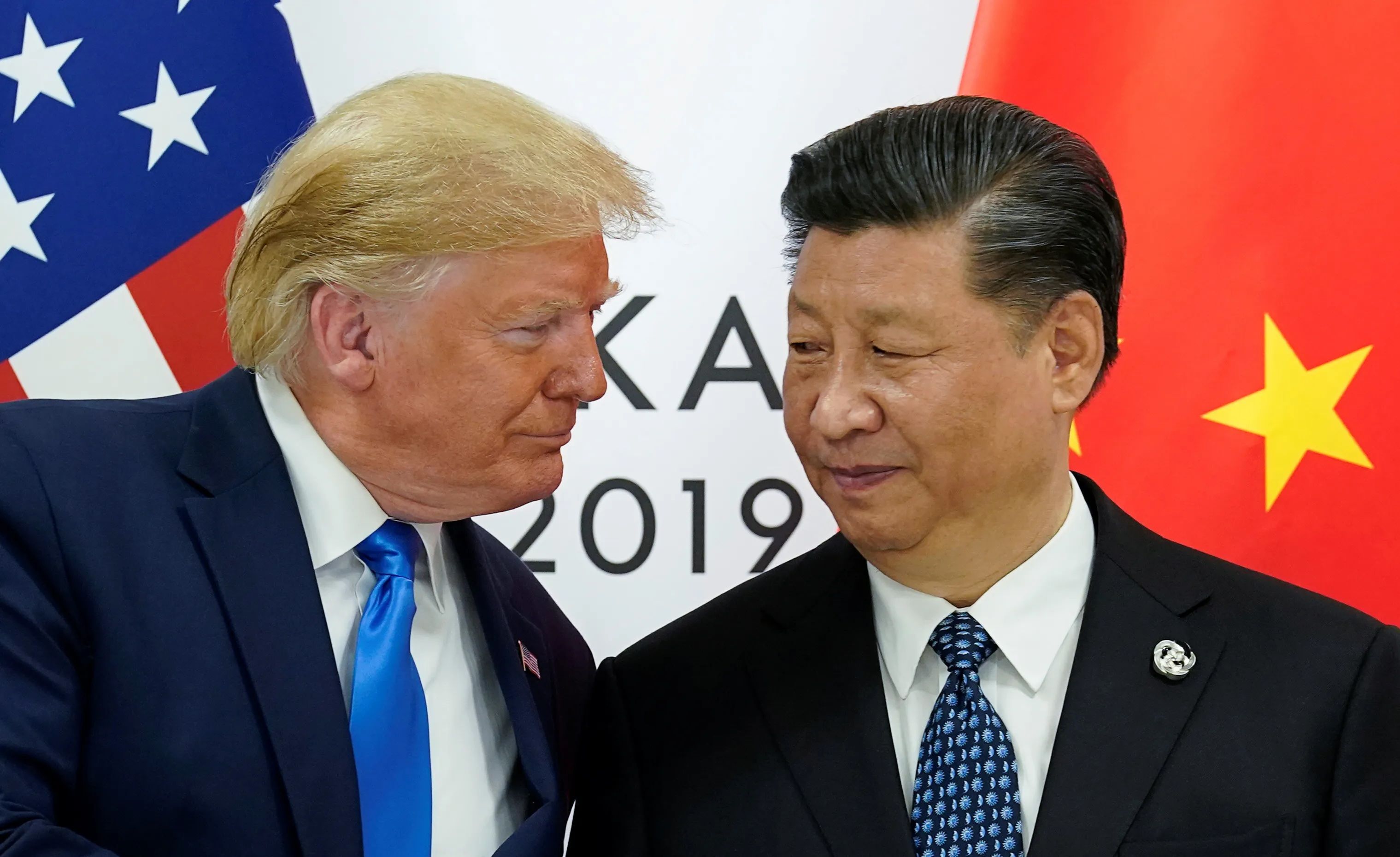
This week, we are looking at a letter that has not been sent. It was drafted inside the U.S. State Department, addressed to 35 governments, and reviewed by Reuters on August 14, 2026. The message is short enough to fit on a postcard: you cannot sit inside Washington's AI coalition and Beijing's at the same time.
Washington calls its coalition Pax Silica. Beijing's version, signed into existence in Shanghai in July, is the World Artificial Intelligence Cooperation Organization. Both say they want AI to serve human development. Both are quietly assembling the kind of infrastructure that becomes very expensive to walk away from once you are inside it, from chip supply and cloud contracts to the standards and licenses written around them.
That leaves a question nobody has answered. What happens to every country that is neither Washington nor Beijing, and that cannot afford to sit out a technology it needs more urgently than either of them? There is a precedent for this, and it is older than the internet. Whether it can be rebuilt at the speed this race is moving is a different question entirely.
In partnership with

Get certified in digital marketing — for free.
Most marketers learn digital marketing by doing it — trial, error, and hoping it sticks. But when your pipeline depends on it, there's no room for guesswork.
HubSpot Academy's Digital Marketing Certification covers everything that moves the needle: SEO that actually gets you found, email strategies that convert, social media and paid ads that reach the right audience, and AI tools that make your team faster without adding headcount.
3 hours and 24 minutes. 10 lessons. 30 videos. Free.
Join 200,000+ certified professionals who have built sharper strategies — and the skills to prove ROI to leadership — with HubSpot Academy.
Meet your next hire in as little as five days.
A lesson from the last Cold War
A remarkable human ability is to come together to achieve a decided-upon goal while preserving their individual, personal, and collective beliefs. The recorded history of humans is a testament to what a collective can achieve when they decide what they want, come together to work for it, and put aside petty differences while they work towards the goal. Take, for instance, the Allied group that fought against the forces of Nazism during the Second World War. The countries that came together to bring an end to the atrocities being committed by the Nazis came from different backgrounds, had differing social, political, and religious beliefs, and yet worked together to achieve the goal of defeating a fascist regime.
However, the cooperation could not survive once the war ended, and what replaced the shared goals were differing political and economic ideologies destroying each other to the extent that that phase of history came to be known as the Cold War. But that was not the end, and soon a group of nations decided that cooperation, rather than distrust, was the only way forward, and that joining either camp at the height of the Cold War would only create more distrust between the West and the Soviet bloc. That realization led to the establishment of a new movement that sought to prevent newly independent countries from being pulled into either bloc. The Non-Aligned Movement did not drive the détente that later emerged between Washington and Moscow, which depended primarily on direct U.S.-Soviet negotiations. But it gave countries outside the two blocs a collective diplomatic voice, promoted peaceful coexistence and disarmament, and created alternative channels for managing tensions.
From Cold War non-alignment to AI
In 2026, amid a fragmented geopolitical landscape, the movement's lesson becomes especially important when considering the direction the two major participants in the AI race are taking. And the clearest example of how this fragmentation is playing out in the world of technology emerged on August 14, 2026, when Reuters reported that the U.S. State Department had drafted a letter to 35 governments, warning them that they cannot belong to Washington's AI coalition and Beijing's at the same time.
A letter of that kind marks the point at which two commercial offers begin to turn into two territories. Washington runs Pax Silica, which the State Department launched in December 2025 to cover minerals, energy, chips, and computing infrastructure. Membership now includes a pilot service through roughly 270 diplomatic posts that helps members buy American equipment. Beijing runs the World Artificial Intelligence Cooperation Organization, which Al Jazeera reported was founded in Shanghai in July with 29 members drawn largely from developing countries. Both sides say they are working towards a similar goal: to build AI systems that would help human development. However, the mistrust between them is pushing them to build two different versions of the technology, and now the broader world is being asked to choose either one or be left to fend for itself.
For countries outside the sphere of influence of either nation, there does not, at least as of now, appear to be a third option akin to the NAM that helped nations stay outside the influence of the West and the Soviet bloc. And this lack of options matters now because in AI, everything is happening at a very rapid pace. Which means choices made now, including standards, cloud contracts, chip supply, model licenses, talent pipelines, and the regulations written around all of them, knit together within a few years. A country that adopts one stack fully will find the cost of leaving it measured in rebuilt systems rather than in signatures.
What non-alignment really meant
For many, the phrase non-alignment carries an unhelpful memory because it sounds like standing aside from somebody else's argument. Applied here, it would mean close to the opposite, since no country in the middle can afford to sit out a technology it needs more urgently than either superpower does. What the original movement actually did was refuse to let its future be settled elsewhere, and it drew on finance and technology from both camps in the process. The modern version of that is strategic autonomy, which means working with American firms and Chinese developers wherever it pays, and collectively agreeing on the terms that govern the work. The parallel with the Cold War is straightforward. NAM was an attempt to ensure that the geopolitical rivalry between Washington and Moscow did not determine the future of countries caught between them. An AI-era version would seek to ensure that the technological rivalry between Washington and Beijing does not determine theirs.
Those terms are specific rather than rhetorical. They cover who may hold a country's data and where it sits, what a fair price for computing power looks like, whether models arrive open enough to be retrained locally, how safety obligations travel across borders, and how the money AI generates reaches the places whose data and minerals feed it. None of that requires a bloc, an ideology, or an enemy in the room. It requires a common position held by enough countries that a supplier cannot simply move down the list to the next one.
However, while the logic of a common position is easy enough to state, the record so far offers little support for it. Canada's Prime Minister Mark Carney called for a "third path" at Davos in January 2026, and seven months of speeches have produced no institution. Every arrangement on the books was struck one country at a time, on terms set by the seller. Kazakhstan joined both coalitions in quick succession, which is exactly the hedge the draft letter would close, and it did so bilaterally rather than as part of anything larger.
Stay ahead of AI at work.
Cut through the hype. Roko’s Basilisk distills the day’s AI breakthroughs, market moves, and workable workflows into a five-minute brief.
Get one sharp deep dive, fast Quick Hits, and a witty pro tip, plus links that actually matter.
*This is sponsored content
Why a third position is difficult
The second objection is that leaving one camp does not deliver a country to an equal alternative. China cannot currently sell the top-of-the-range model because American export controls cap its own chip supply, so it sells software and training instead. Al Jazeera has also reported that Beijing has barred exports of dual-use technology and critical minerals to American firms, which is the same instinct pointed the other way. The available facts establish two suppliers narrowing their terms at once, although they do not yet show a third position forming to meet them.
The strongest case for a common position has little to do with the rivalry and everything to do with what these countries need the technology for. A frontier race asks which model scores highest on a test. A health ministry asks whether a tool works in a clinic with unreliable power and a nurse who speaks Bemba. Brookings has argued that African countries should sequence rather than rush, building data, power, and skills in order so that AI arrives on terms set by their own development priorities rather than being absorbed as designed elsewhere.
Sequencing only works if the inputs are reachable, and most of them currently are not. Researchers at Oxford examining rentable cloud computing power found it concentrated in about 30 countries, leaving much of the world with none available for hire. Open models close part of that gap, since a system anyone can download and adapt will run on modest hardware, and CNBC reported that Chinese open models accounted for 41% of downloads on the largest public library over the past year. Whether that door stays open is a question about terms, and terms are precisely what a common position exists to settle.
Who would lead an AI non-aligned movement?
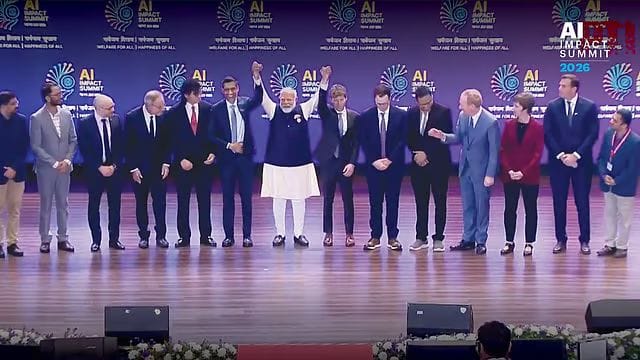
The question of who leads an effort like this has a fairly obvious first answer. India convened the first global AI summit ever held in the developing world, and 91 governments endorsed the declaration that came out of it, Washington and Beijing among them. That document put affordable access to foundational AI resources at its center, which is the third position written down in plain language. India also signed the American declaration on the closing day of the same summit.
Those two moves belong to a single strategy rather than canceling each other out. A country that takes the American supply line while gathering 91 signatures behind a rule on access is doing what strategic autonomy actually looks like in practice. What it has not done is convert the signatures into an obligation, because the declaration binds nobody and asks nothing of anyone. That gap is where the entire remaining task sits, and India appears to be the country best placed to close it.
However, the task will not be easy. Closing the gap would change what the Global South is in this argument. At present, it is terrain, courted by both sides and organized by neither, which is why Beijing aimed its new body at developing countries and why Washington's letter is addressed to 35 capitals at once. A group holding minerals, electricity, market access, and the authority to say where systems may be deployed would stop being terrain and become a party to the negotiation. The United Nations already runs the only forum where that majority is seated by default, and the dialogue reconvenes in New York in May of next year.
The window is closing
The history of the Non-Aligned Movement offers a useful reminder that cooperation does not require countries to agree on everything. The Allies did not erase their differences to defeat Nazism, and the countries that founded NAM did not erase theirs to resist being pulled into the Cold War. They simply recognized that some interests were important enough to pursue together.
AI may now require the same kind of thinking. Countries do not need to choose between Washington and Beijing, nor do they need to build a third superpower. They need to ensure that their technological future is not decided for them. An AI-era Non-Aligned Movement would give them a way to work with both sides when necessary, compete when useful, and negotiate collectively when their interests are shared.
The window to build such a movement, however, will not remain open indefinitely. The longer countries negotiate individually, the more their infrastructure, standards, and technology stacks will lock them into one camp or the other. The question, therefore, becomes whether they can build one before choosing a side becomes their only choice.
P.S. Want to collaborate?
Share today’s news with someone who would dig it. It really helps us to grow.
Let’s partner up. Looking for some ad inventory? Cool, we’ve got some.
Deeper integrations. If it’s some longer-form storytelling you are after, reply to this email, and we can get the ball rolling.
What did you think of today's memo? |
|






.svg)
.svg)