Welcome to Memorandum Deep Dives. In this series, we go beyond the headlines to examine the decisions shaping our digital future. 🗞️
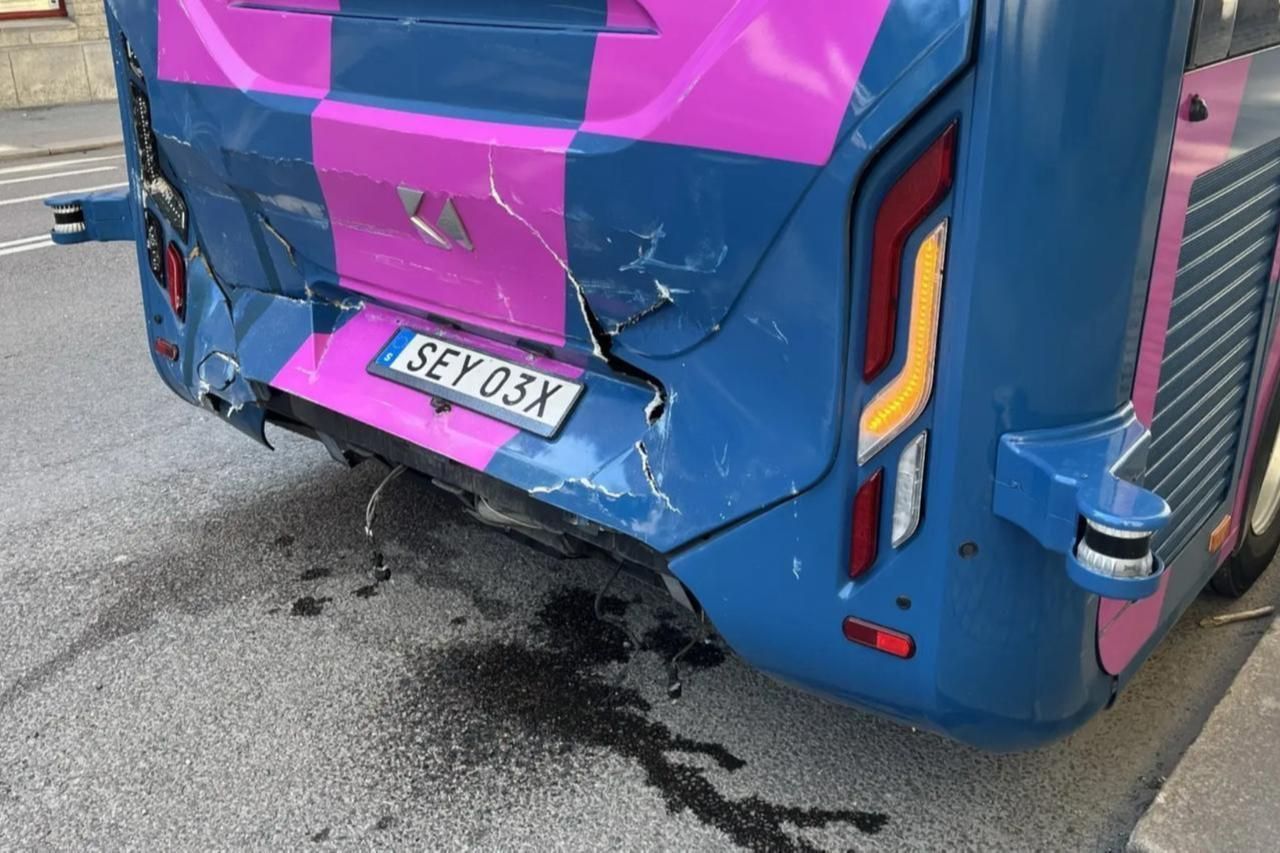
This week, a self-driving bus in Gothenburg, Sweden, carried paying passengers for the first time, but the run lasted barely an hour. It braked sharply in traffic, a tram on fixed rails behind it could not stop, and the two collided. No one was hurt, but the bus was pulled from service the same morning, before its first day of passenger operation was over.
The easy reading is that one launch went wrong, a single bad morning in a single city, the kind of isolated setback every new technology absorbs on its way to maturity. The autonomous vehicle industry has leaned on that framing for close to two decades, treating each deployment as a milestone and each incident as an anomaly that the next software version will quietly resolve.
But the Gothenburg crash fits a pattern that is older and more revealing than any one company would like to admit. It points to a question the industry has spent years circling without answering, one that determines whether full self-driving is genuinely close or has merely sounded close for a very long time. The answer turns out to have less to do with the software than most people assume.
Build what’s next in AI.
Thousands of AI roles are currently open at companies such as Anthropic, OpenAI, Mistral, ElevenLabs, Perplexity, Midjourney, Google, and Harvey.
The Athyna AI Job Board scans them in the background, matches them to your profile, and pings you when something hits a 75% matching index.
Self-driving cars work, until the real world shows up
For roughly two decades, the autonomous vehicle industry has operated on a rolling promise: full self-driving is almost here. Every deployment gets framed as a milestone, every expansion as proof of progress, and every incident as an isolated anomaly rather than a pattern.
One such incident occurred on May 25, 2026, when a self-driving bus in Gothenburg, Sweden, operated by the regional transport authority Västtrafik in partnership with the Turkish manufacturer Karsan and the autonomous software firm ADASTEC, pulled away from its stop for the first time to carry paying passengers. Within an hour, it braked sharply in central Gothenburg, and a tram following behind could not stop in time. The rear of the bus carried a warning sticker that read: “Keep distance. The bus may brake sharply.” Yet the tram, running on fixed rails with a stopping distance no software update can change, had no way to act on that information. Although no injuries were reported, the trial was suspended immediately.
The real world assumes a human behind the wheel, interpreting context and adapting continuously in ways that are hard to formalize. Autonomous systems instead process sensor inputs, match them to trained models, and act on probabilistic outputs. When conditions fall outside the models’ range, the resulting gaps can range from minor errors to serious failures.
A promise two decades in the making
This gap between the model and the real world is not new. In fact, it has defined the self-driving industry from its earliest days, which effectively began with the DARPA Grand Challenges of 2004 and 2005, when U.S. military-backed competitions pushed researchers to build cars capable of navigating terrain autonomously. In 2004, none of the vehicles completed the course, while a year later, Stanford’s “Stanley” successfully finished a 132-mile desert route.
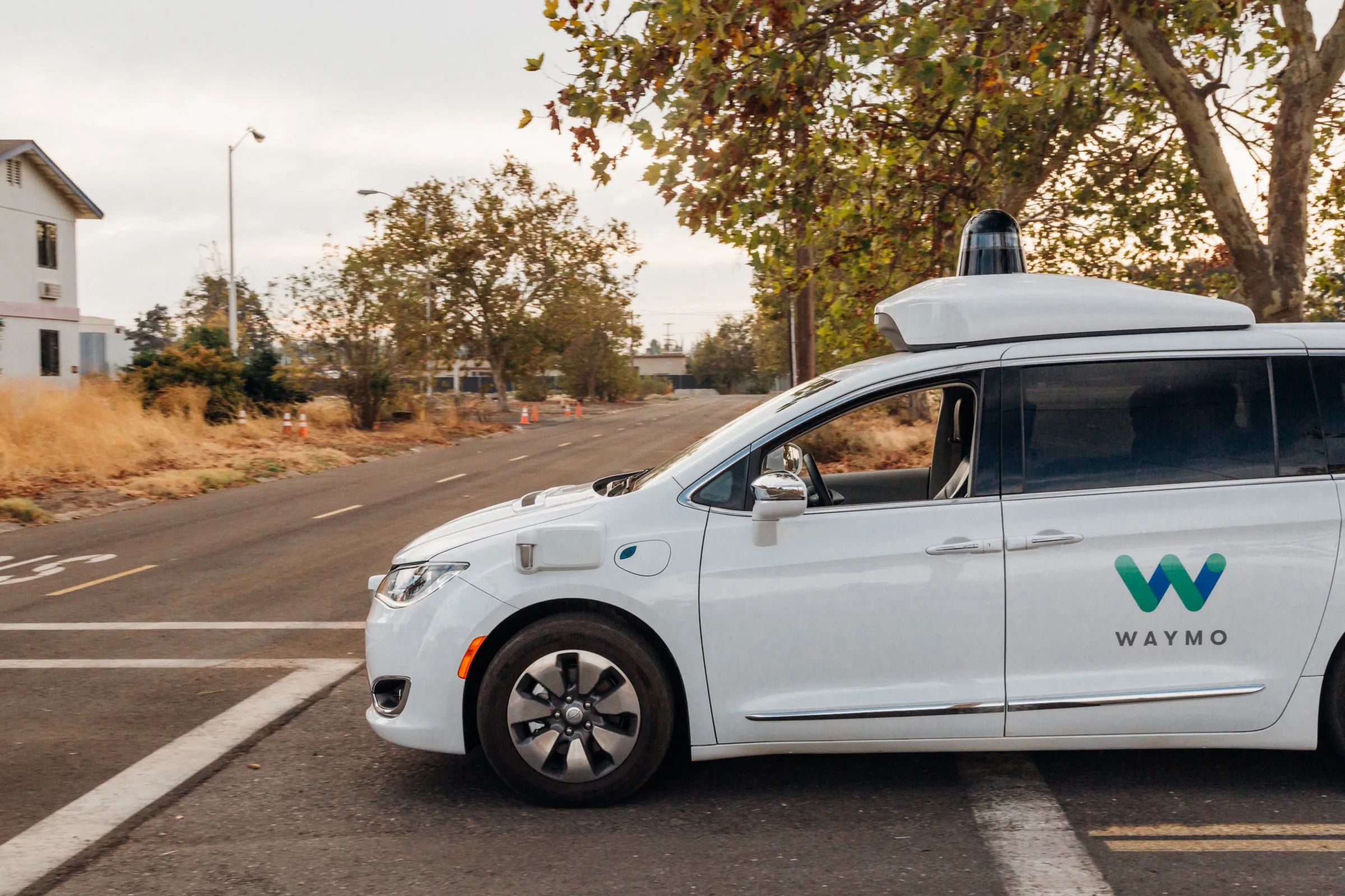
Google entered the field in 2009 with its self-driving car project, bringing Silicon Valley scale, money, and ambition into the race. Yet even as that project evolved into Waymo and eventually launched commercial driverless rides in Phoenix in 2020, the broader promise of fully autonomous driving remained strangely familiar: always close enough to sound inevitable, but somehow still years away.
That pattern reflects the difficulty of scaling systems that perform well in mapped and carefully controlled environments into the far messier conditions of everyday urban life.
According to Waymo’s own safety data, its vehicles are involved in far fewer serious injury crashes than comparable human-driven ride-hailing services, outperforming them by more than 80%. This is a genuinely significant achievement and strong evidence that autonomous driving systems can operate safely under the right circumstances. Yet those circumstances are highly specific because Waymo currently operates in a relatively small number of American cities that have been mapped in extraordinary detail and carefully selected to suit its technology's capabilities.
The larger unresolved question is whether autonomous driving can remain reliable beyond tightly controlled conditions, or whether the complexity and unpredictability of open-world driving impose limits that engineering alone cannot overcome. That question tends to surface whenever companies push their timelines forward, prompting the question of why they keep doing so. To understand this, one needs to examine the incentive structures carefully.
The incentives behind the optimism
One of the most prominent names in autonomous driving tech, Waymo, is effectively a long-term research bet by Alphabet, which insulates it from the kind of quarterly revenue pressure that shapes decisions at most technology companies. Its expansion record is conservative: new cities get safety drivers before driverless operations begin, and the company’s public posture has consistently prioritized caution over scale. That approach has made Waymo the closest thing the industry has to a credible proof of concept. Still, it has also cost somewhere in the neighborhood of $10B over 15 years without generating returns sufficient to support a standalone business.
In contrast, Tesla’s Full Self-Driving system operates as a subscription product that also serves as a large-scale real-world data-collection system, with improvements driven by usage across its consumer fleet. And while the data makes the system better over time, it is collected from vehicles driven by people. The company acknowledges the limits of its technology, which is classified as Level 2 under the Society of Automotive Engineers’ framework, meaning it remains a driver-assistance system despite marketing that can imply greater autonomy.
Companies like Karsan and ADASTEC represent a third category: smaller players competing for municipal transport contracts in a market where successful public deployments are a significant commercial signal. According to Karsan’s official communications, the company has been expanding its autonomous program across Europe, with operations in Norway, France, Romania, Finland, and Turkey, and is now entering the Gothenburg market. The incentive to make the launch work and frame it as a milestone was structural, not a product of bad faith.
When the real world breaks the model
Those commercial pressures run headlong into what the technology cannot yet reliably do, and the sensor stack on a modern autonomous vehicle illustrates that tension directly.
A typical Level 4 system combines LiDAR (laser-based 3D mapping), radar, cameras, and GPS through sensor fusion, where the vehicle’s AI brain reconciles all inputs simultaneously and makes thousands of micro-decisions per second. The problem is that real streets constantly generate conditions outside that design envelope. Heavy rain degrades LiDAR. Bright sun creates glare that confuses cameras. Construction zones alter the mapped reality on which a vehicle was trained. Even a child running into the road does not behave like the pedestrian models in a training dataset. All this creates the kind of unpredictability that can affect even the best systems, even when trained on the latest data.
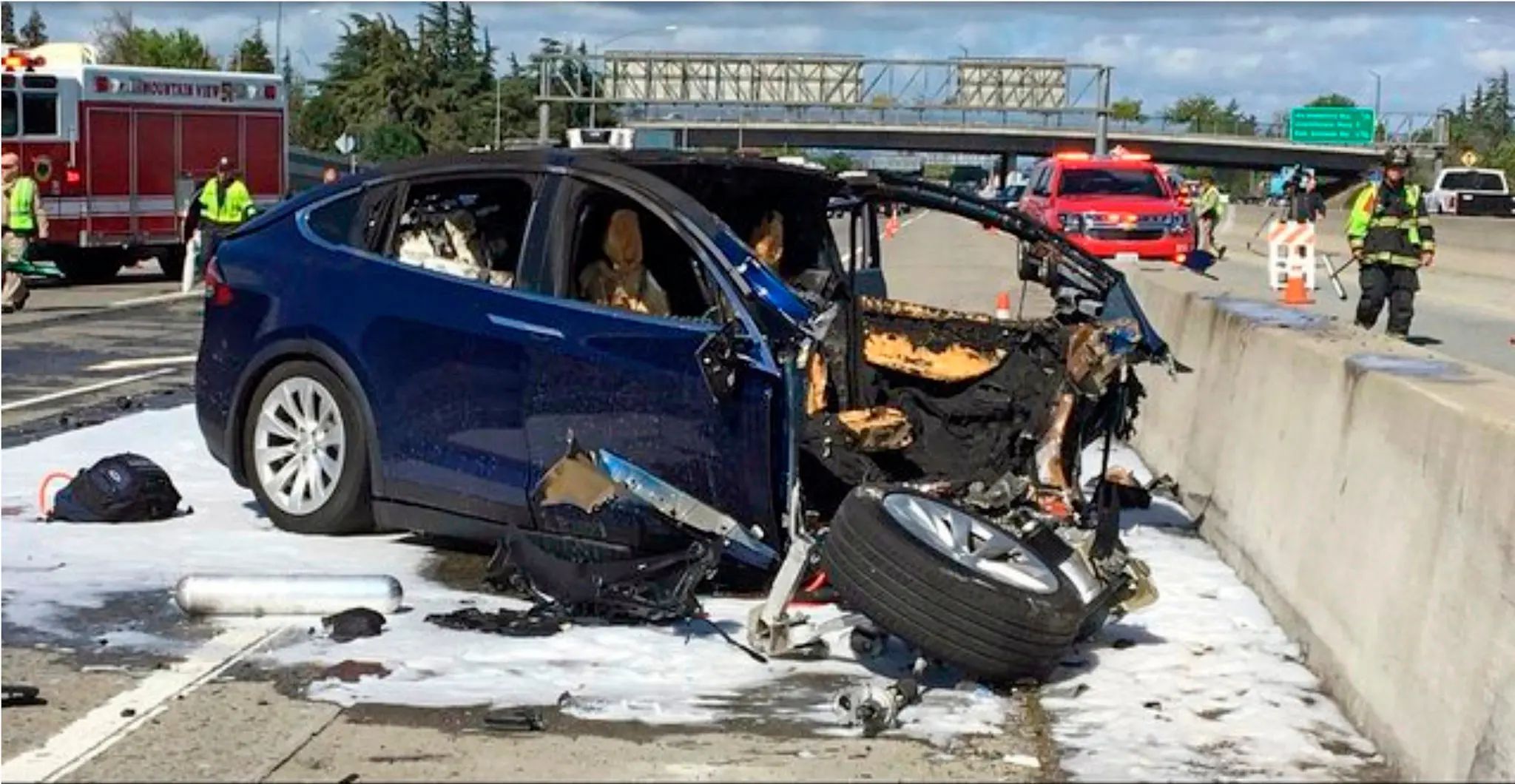
According to a 2023 NHTSA investigation into Waymo’s fifth-generation software, several incidents involved “collisions with clearly visible objects that a competent driver would be expected to avoid.” The Cruise collapse made the same point at greater cost. In October 2023, as reported by Fortune, a Cruise robotaxi dragged a pedestrian 20 feet after a separate human-driven car struck her and threw her into the vehicle’s path. The Cruise system’s cameras detected her legs beneath the vehicle but did not classify or track her as a person requiring an emergency stop. GM ultimately spent more than $10B on Cruise before shutting its robotaxi operations entirely, following a Justice Department investigation and a federal fine for filing an incomplete crash report.
Stay ahead of AI at work.
Cut through the hype. Roko’s Basilisk distills the day’s AI breakthroughs, market moves, and workable workflows into a five-minute brief.
Get one sharp deep dive, fast Quick Hits, and a witty pro tip, plus links that actually matter.
*This is sponsored content
Rules that are still catching up
This brings us to the regulatory environment, which, in several cases, has made it easier to keep pushing rather than pause and reckon with what the incidents reveal.
According to CNBC, the US Department of Transportation moved to eliminate mandatory reporting for non-injury crashes involving Level 2 systems, a rollback that safety advocates argue reduces the data available to identify systemic problems before they become fatal ones. However, even the regulatory outlook is not uniform worldwide.
The EU AI Act classifies autonomous driving as high-risk under its official framework, which implies stricter documentation requirements but leaves implementation to member states. The UK passed the Automated Vehicles Act 2024, one of the more complete legal frameworks anywhere, but its secondary regulations are still being written.
Sweden approved the Gothenburg trial through a city-by-city authorization process, allowing the autonomous bus to begin operating even though its braking behavior was not fully communicated to the tram operator’s systems in advance. The incident reflects a broader problem that has persisted for years in autonomous vehicle deployments: the technology is advancing faster than the rules, standards, and coordination systems needed to integrate it safely into existing transport networks.
However, even if regulators decide to tighten the rules, they face a difficult balancing act that extends far beyond any single country. Moving too slowly risks ceding ground to Chinese competitors deploying autonomous systems at scale with strong state backing, while also delaying a technology that could reduce road deaths if it matures successfully. Yet moving too quickly creates a different danger, because incidents like Gothenburg, and at times something much worse, become the way critical safety gaps are exposed in the real world.
That tension has no simple solution, which is partly why the industry keeps circling back to the same conclusion: the problem is not just the software inside the vehicle but also the surrounding infrastructure, regulations, and transport systems in which the technology must operate.
The infrastructure problem no software can solve
For now, the industry’s answer to the infrastructure incompatibility problem is, broadly, to redesign the infrastructure itself: dedicated AV lanes, smart traffic signals, vehicle-to-infrastructure communication systems that would allow a self-driving bus to broadcast its braking intentions to the tram behind it. That vision is coherent, and the technology for it exists in prototype.
But what it requires is retrofitting the road and rail networks built over the past century across thousands of cities, at a cost and on a timeline that no product roadmap has honestly quantified.
The deeper complication is that any redesigned infrastructure has to accommodate both autonomous vehicles and human drivers for as long as humans want to drive, which, given that driving carries genuine cultural meaning in many parts of the world, may be a very long time.
A road network that works for both is not simply twice as complicated. It requires two fundamentally different decision-making models, one based on instinct and social negotiation, the other on sensor data and probability, to predict and respond to each other continuously. The Gothenburg warning sticker was not an engineering failure. It was an acknowledgment, printed on paper and affixed to a bumper, that the two systems had not yet found a way to communicate. The distance between that sticker and a city that works for both is not measured in software versions. It is measured in decades.
P.S. Want to collaborate?
Share today’s news with someone who would dig it. It really helps us to grow.
Let’s partner up. Looking for some ad inventory? Cool, we’ve got some.
Deeper integrations. If it’s some longer-form storytelling you are after, reply to this email, and we can get the ball rolling.
What did you think of today's memo? |
|






.svg)
.svg)