Welcome to Memorandum Deep Dives. In this series, we go beyond the headlines to examine the decisions shaping our digital future. 🗞️
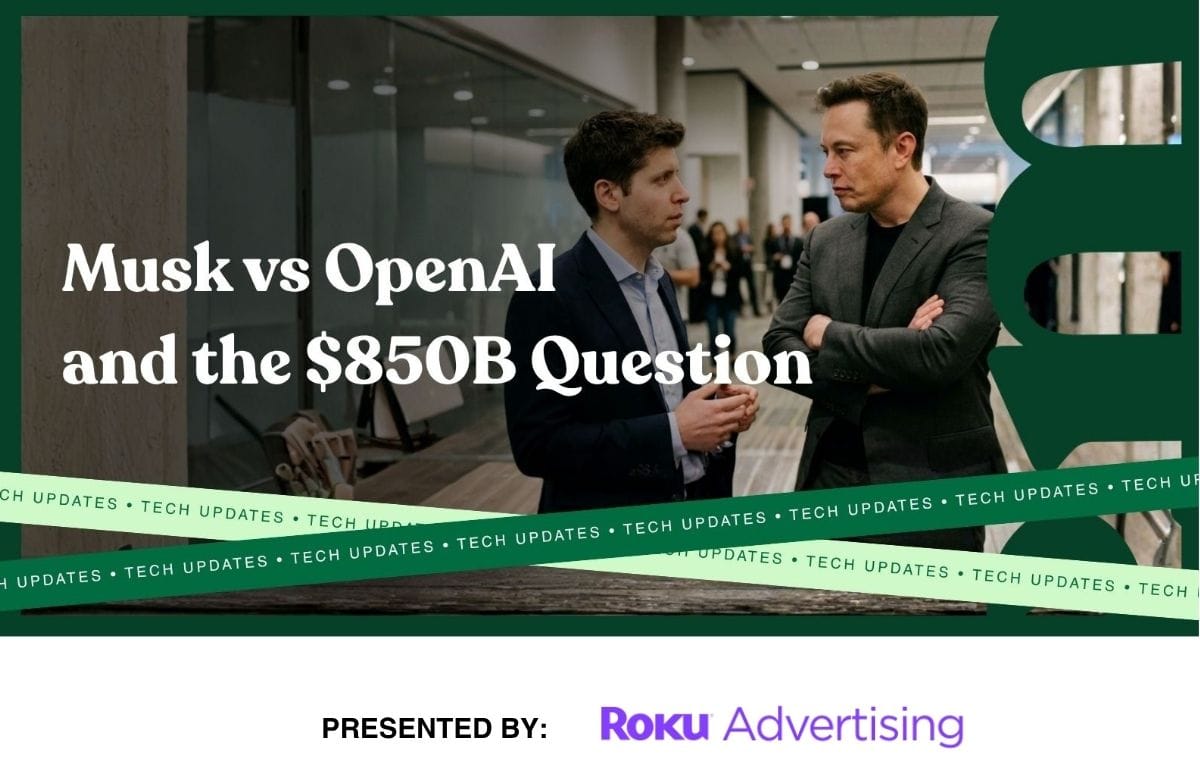
This week, we turn to the legal battle between Elon Musk and OpenAI, a trial now in its second week in Oakland that is stress-testing whether a nonprofit’s conversion into an $850B for-profit company can survive judicial scrutiny.
On the surface, the case appears to be a personal grudge match between a spurned donor and his former allies. That reading, however, is incomplete as it goes beyond Musk’s $44M donation or his rivalry with Sam Altman. It marks the first serious courtroom examination of whether collecting billions under a public-benefit charter is lawful, restructuring into a capped-profit corporation and, eventually, into a full public-benefit corporation constitutes a breach of charitable trust.
The proceedings provide the public with firsthand information about what goes on among some of the world’s most powerful tech executives. At the same time, they’re exposing the structural fragility of the governance foundations underlying the most valuable AI companies. And the verdict could unsettle tens of billions in commitments from Microsoft, Amazon, SoftBank, and NVIDIA, while reshaping the competitive positioning of rivals like Anthropic and xAI.
In partnership with

Blu Dot surpasses 2,000% ROAS with self-serve CTV ads
Home furniture brand Blu Dot blew up on CTV with help from Roku Ads Manager. Here’s how:
After a test campaign reached 211,000 households and achieved 1,010% ROAS, the brand went all in to promote its annual sales event. It removed age and income constraints to expand reach and shifted budget to custom audiences and retargeting, where intent was strongest.
The results speak for themselves. As Blu Dot increased their investment by 10x, ROAS jumped to 2,308% and more page-view conversions surpassed 50,000.
“For CTV campaigns, Roku has been a top performer,” said Claire Folkestad, Paid Media Strategist, Blu Dot. “Comping to our other platforms, we have seen really strong ROAS… and highly efficient CPMs, lower than any other CTV partner we've worked with.”
Using Roku Ads Manager, the campaign moved from a pilot to a permanent performance engine for the brand.
Mission vs Profit in AI
Few cases in the history of corporate America have attracted the level of interest and scrutiny as the current legal battle between Elon Musk and OpenAI. On the surface, the case is a legal tussle between former allies. Still, beyond the surface, it is turning out to be the first serious legal examination of the legality of OpenAI’s transition from a nonprofit that collected donations under an explicit public-benefit mission, attracted world-class talent on that basis, and then restructured into a for-profit company valued at $850B.
The trial, now in its second week at a federal courthouse in Oakland, California, has already surfaced the kind of material that rarely sees daylight: private journal entries, personal text messages, internal emails about corporate strategy, and financial disclosures that put hard numbers on what was once a nonprofit mission to benefit humanity.
Inside the courtroom
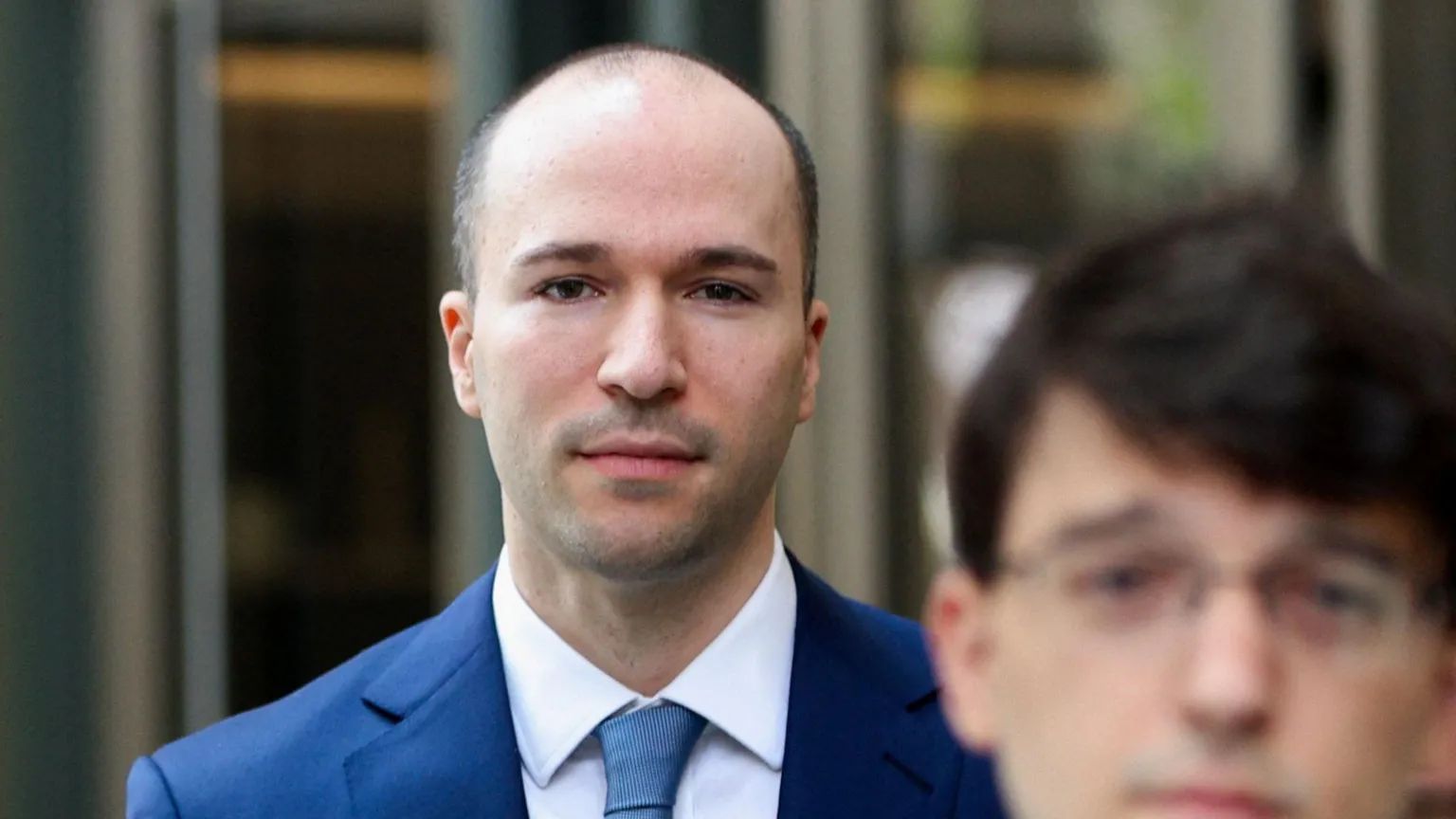
On May 5, Greg Brockman, co-founder and former president of OpenAI, took the stand. He told the jury that his personal stake in OpenAI is now worth nearly $30B, a figure that quietly underscored how far the organization has traveled from its nonprofit origins.
Marc Toberoff, representing Elon Musk, then led Brockman through excerpts from his 2017 journal, using Brockman’s own words to suggest an early preoccupation with personal wealth. In one entry, Brockman had written, “Financially, what will take me to $1B?” In another, he appeared to concede that restructuring OpenAI without Musk would be “morally bankrupt.” Brockman pushed back on the characterization in court, describing the entries as moments of frustration rather than statements of intent. This incident reflects the spotlight on tech executives who rarely face such rigorous scrutiny.
The week prior, Musk himself had spent three days on the stand, offering a version of events that was at once revealing and self-serving. He told the jury he “was a fool” for donating $44M to what he believed was a nonprofit, only to see it evolve into a company now valued at roughly $850B. Yet under cross-examination, Musk conceded that his own AI venture, xAI, “partly” distills OpenAI’s models to build its technology. This remark reportedly drew audible reactions in the courtroom and has raised many questions around the competitive landscape surrounding the broader AI industry.
In response to Musk’s statements, OpenAI’s lead counsel, William Savitt, introduced internal documents suggesting that Musk himself had advocated for a for-profit transition as early as 2017 and 2018, provided he retained control over the resulting entity. That detail complicates the moral framing Musk has attempted to construct, recasting the dispute less as a principled break and more as a conflict over governance and power.
Even before the trial began, the animosity between the two camps had surfaced in unusually direct terms. Just days before jury selection, Musk texted Brockman to explore the possibility of a settlement. When Brockman suggested that both sides simply drop their claims, Musk responded with a warning: “By the end of this week, you and Sam will be the most hated men in America. If you insist, so that it will be.”
From idealism to an $850B company
Taken together, the disclosures sketch a complex origin story that does not fit either side’s narrative. A story in which ideals, ambition, and control were entangled from the outset, and where the distance between founding principles and present reality is now being litigated as much through personal history as through legal argument.
That origin story of this legal dispute begins in late 2015, when OpenAI was established as a 501(c)(3) nonprofit with a charter committing it to developing ‘open source technology for the public benefit.’ The founding documents explicitly stated the organization was ‘not organized for the private gain of any person’.
At the time, Musk provided roughly $44M in early funding and helped recruit key researchers. In 2018, he left the board after disagreements about the company’s direction, including a failed attempt to merge it with Tesla.
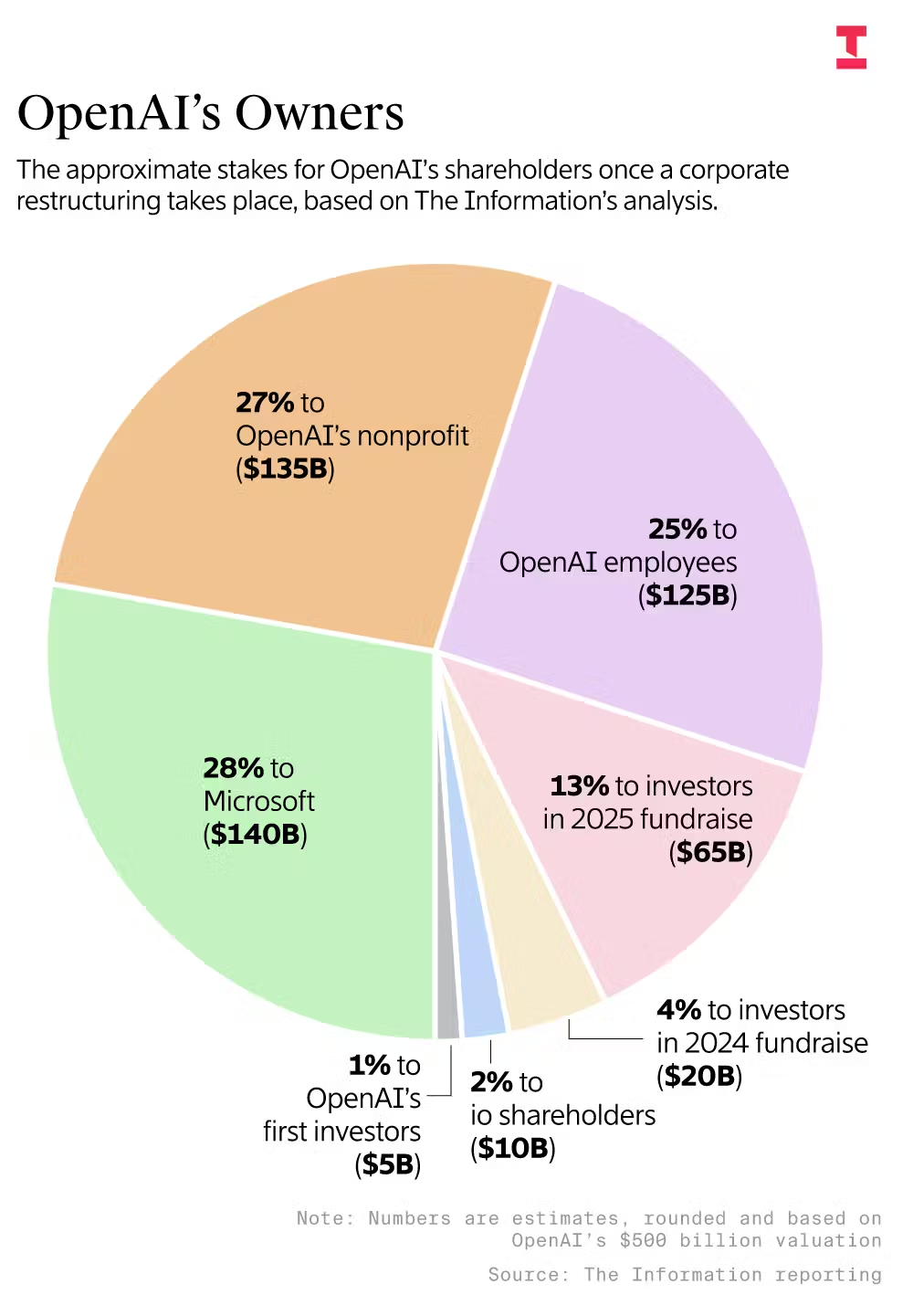
What followed was a steady structural drift toward commercialization for the non-profit entity. A ‘capped-profit’ subsidiary (a structure that limits investor returns to a set multiple of their original investment) arrived in 2019. And when ChatGPT exploded in late 2022 after Microsoft put in $10B, OpenAI began looking to commercialize its products. By October 2025, OpenAI had completed a full conversion into a public benefit corporation, with California Attorney General Rob Bonta signing off on a deal that gave the original nonprofit a 26% stake worth roughly $130B.
At each step during the transition, the organization moved further from the nonprofit identity that had defined its founding, and closer to the kind of capital-intensive, investor-backed enterprise it was created to counterbalance.
Hire smarter with Athyna, save up to 70% on salary costs.
Athyna connects you with top LATAM AI talent, fast
*This is sponsored content
What Musk wants, and what’s at stake
Unhappy with the transition, Musk first filed suit in February 2024, withdrew it that June, and refiled an expanded federal complaint in August, adding Microsoft as a co-defendant. In his legal filings, Musk presented 26 claims; however, only two survive to trial. These are breaches of charitable trust and unjust enrichment.
As part of these claims, Musk is asking the court to impose remedies that would effectively dismantle OpenAI’s current structure. These include forcing the organization to return as much as $134B to its nonprofit foundation, removing both Sam Altman and Greg Brockman from their leadership roles, and unwinding the transition to a for-profit model altogether.
Musk has also stated that he would not seek any personal financial gain from such an outcome, framing the case as an attempt to restore OpenAI’s original mission rather than to extract value from it.
OpenAI, however, has dismissed the claims outright. And during the trial, the company’s lead counsel, William Savitt, told the jury that Musk “was never committed to OpenAI being a nonprofit”, arguing instead that he is now turning to the courts to constrain a rival he once sought to control.
The trial is expected to run through May 21; after that, the proceedings would move to a remedies phase if the jury finds wrongdoing.
However, this is where the story gets even more interesting, as the jury’s role is ultimately advisory, with the final decision resting with Yvonne Gonzalez Rogers, who will determine whether and what consequences follow.
Beyond the verdict
Beyond the immediate business consequences for OpenAI, which has been exploring an IPO, a ruling that its 2025 conversion was unlawful could ripple outward, unsettling tens of billions of dollars in investor commitments from backers such as Microsoft, Amazon, SoftBank, and NVIDIA. This could reshape competitive dynamics across the AI industry, which is already under growing scrutiny from knowledge worker organizations, civil rights groups, and activists worldwide.
Even if OpenAI wins, the trial has already revealed a deeper structural weakness in how AI companies are set up. If a single early donor can drag a company now worth nearly $1T into federal court, even after regulators approved its transition, it’s likely other companies with similar structures will eventually face the same kind of challenge.
What this means is that regardless of the outcome of this legal battle, the competitive landscape is watching. And as MIT Technology Review noted in its pre-trial coverage, the outcome of the trial could upend the AI race.
Anthropic, which is structured as a public benefit corporation rather than a converted nonprofit, could emerge as an indirect beneficiary if the court penalizes OpenAI’s specific transition path. Meanwhile, xAI, Elon Musk’s venture, now folded into SpaceX at a reported $250B valuation, stands to gain most from any outcome that slows OpenAI’s momentum.
The legal questions that will decide the case
While tech executives argue their case in court, the real burden falls on the judge and jury, who must determine whether Elon Musk’s donations constituted a legally enforceable charitable trust imposing fiduciary obligations or were simply unrestricted gifts, limiting his ability to challenge OpenAI’s direction. The distinction is crucial, especially given that although OpenAI’s charter invoked public-benefit language, it never established a formal trust structure.
Timing may prove just as decisive. Lawyers for Microsoft have pointed to a 2020 post in which Musk remarked that “OpenAI is essentially captured by Microsoft,” arguing that he was aware of the company’s commercial trajectory years before bringing the case. If the court accepts that argument, the claims could weaken on statute-of-limitations grounds alone.
Then there is Musk’s own record. Internal documents introduced by William Savitt suggest that Musk supported a for-profit restructuring as early as 2017 and 2018, so long as he retained control. If that interpretation holds, it complicates his position that the eventual transition represented a betrayal of OpenAI’s founding principles.
If this case ultimately turns on narrow questions of charitable trust and timing, the broader issues it has surfaced will remain unresolved. What the trial has already made clear is that the governance structures behind companies like OpenAI were never built to withstand this level of capital, competition, and scrutiny.
Whether Yvonne Gonzalez Rogers rules for Elon Musk or for OpenAI, the deeper tension between public-benefit ideals and private control is now out in the open, and far harder for the rest of the industry to ignore.
P.S. Want to collaborate?
Share today’s news with someone who would dig it. It really helps us to grow.
Let’s partner up. Looking for some ad inventory? Cool, we’ve got some.
Deeper integrations. If it’s some longer form storytelling you are after, reply to this email and we can get the ball rolling.
What did you think of today's memo? |
|





.svg)
.svg)