Welcome to Memorandum Deep Dives. In this series, we go beyond the headlines to examine the decisions shaping our digital future. 🗞️
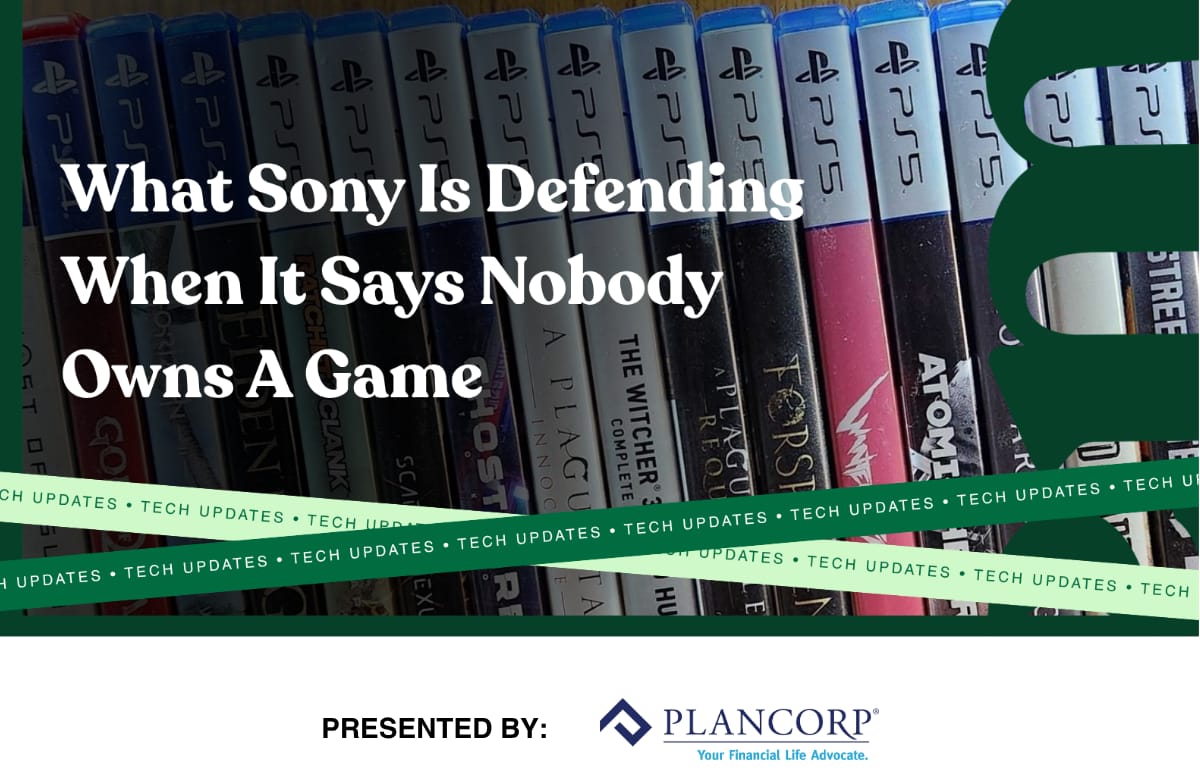
This week, Sony's lawyers filed a sentence that traveled further than any of them intended. In response to a proposed class action in the Northern District of California, the company told a federal judge that, in the digital age, it is not plausible that reasonable consumers ever believed they were acquiring ownership of a digital game. The proof Sony offered was two purchases of the same title, 11 days apart, by two of the four men suing it.
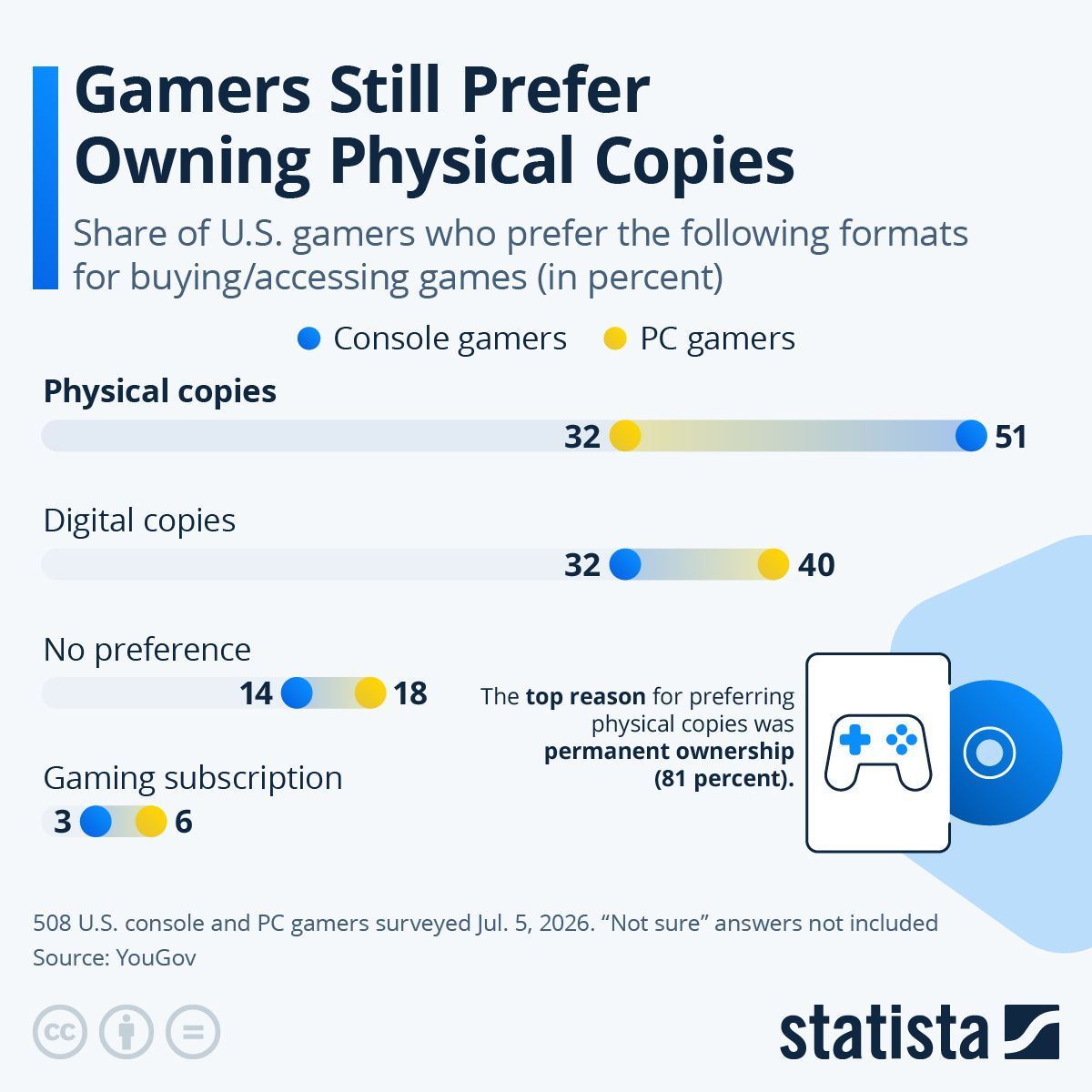
The timing is what makes the filing land the way it does. Two weeks after the complaint was filed, Sony announced that physical disc production for new PlayStation games would end in January 2028. A YouGov survey published a few weeks later found 51% of console gamers still prefer discs or cartridges, compared with 32% who prefer digital, and 57% oppose the end of physical releases outright. The company is retiring the format players say they want and simultaneously arguing that nobody was ever confused about what would replace it.
Judge Vince Chhabria hears Sony's first motion on October 1, 2026, and that motion is not about ownership at all. Underneath the sentence everyone quoted sits a much older distinction that Sony's own argument runs straight through, plus a clause in the California statute that would have let every storefront avoid this fight entirely. Neither has drawn much attention. Both decide what the word on the button is actually worth.
The Biggest Financial Mistakes Don't Always Show Up on Statements.
Portfolios get most of the attention, but financial decisions rarely happen in isolation.
Investments, taxes, retirement planning, and other choices often affect one another.
We've distilled more than 40 years of planning experience into a complimentary Financial Analysis that can help you identify opportunities and better understand how the pieces fit together.
Meet your next hire in as little as five days.
When a game fits in a paper bag
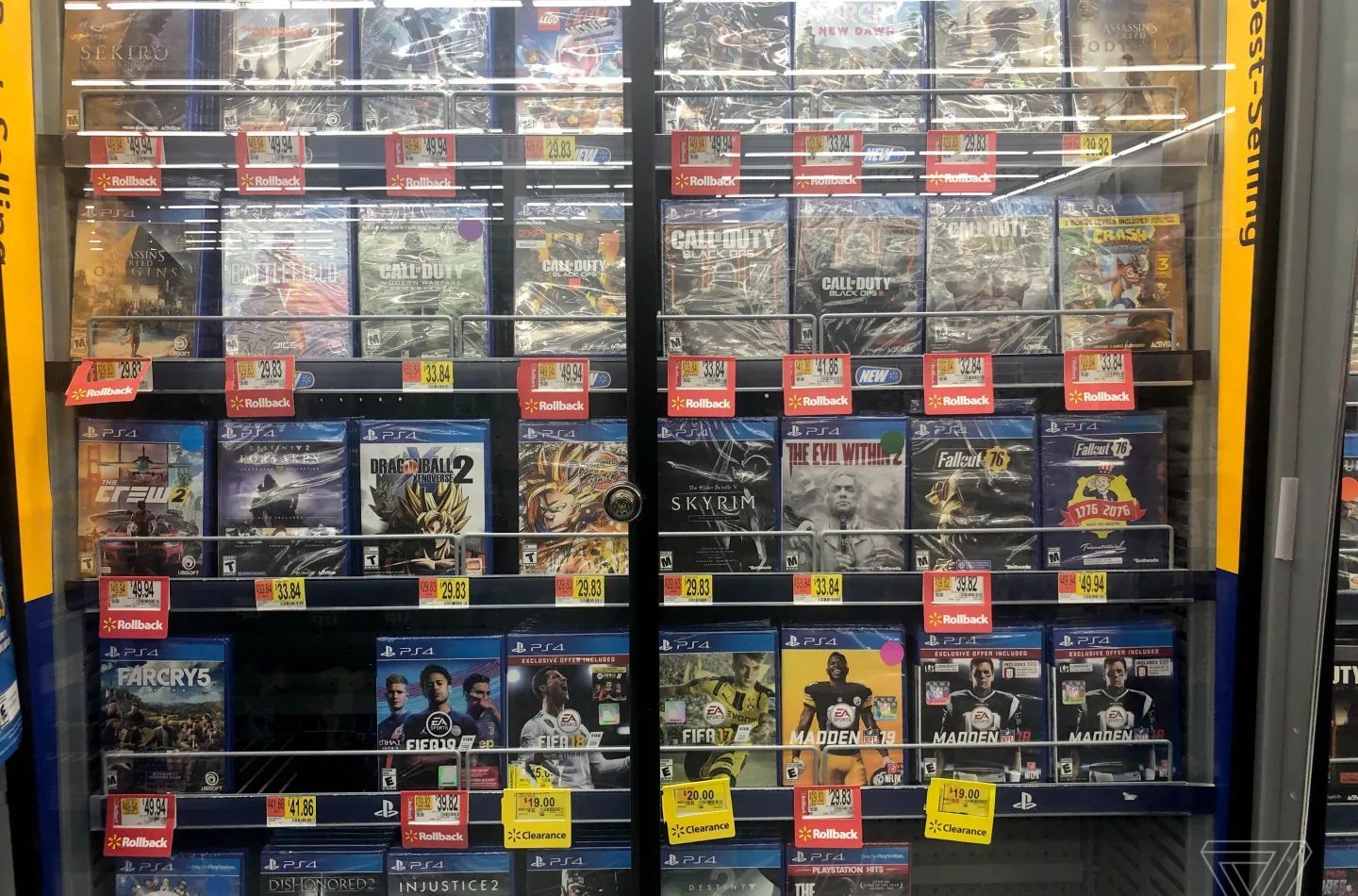
In the early to mid-1990s, when the games industry was still finding its footing as a global business, playing a game meant a trip to a store and a cartridge in a paper bag. The other half of that world arrived with summer vacation, when you borrowed the games your friends had finished and handed over your own in exchange. You came back a week later with a new world explored, a new villain beaten, and a story about how you got through it.
All of that changed once games stopped arriving on discs, since physical exchange gave way to servers and storefronts where the copy never leaves the company that sold it. In 2026, Sony's lawyers put an end to that long transition in plain words, telling a federal court that a player buying a digital game never owned anything at all. The claim sounds outrageous, but it points to something real, because when the copy stays on Sony's servers, the words on the store page are the only thing telling a buyer what they are getting.
Two purchases 11 days apart started the case
Jason Mendoza bought Resident Evil Requiem through the PlayStation Store on February 14, 2026, and Edward Heycock bought the same game 11 days later for $69.99. Both men live in California, and both pressed a button that said Buy Now, which is the only part of the transaction now in dispute. They joined two other California residents to file the complaint in the Northern District of California on June 18, 2026.
The four are not asking a judge to declare that players own their games. They say Sony's store promises a purchase and delivers a license, which Sony can restrict, suspend, or switch off, and that the store never told them so in a way anyone would notice. The case matters because it is the first serious test of that gap for games, and because the answer applies to every storefront that sells a download with the word buy on the button.
Sony's answer moved the burden onto the buyer
Sony responded on August 21, 2026, and the answer went considerably further than the case required. The gaming newsletter Game File reported the filing first, and one line from it ran for days across the gaming press. Sony's lawyers wrote that "in the digital age, it is not plausible to allege that reasonable consumers believed they were obtaining 'ownership' of a digital game." Sony's proof was the pair of purchases in its own case file, since Heycock could not have bought the game in late February if Mendoza had genuinely owned it 11 days earlier.
That sentence matters more than the coincidence it rests on, because of where it puts the responsibility. Sony never claims in the filing that its checkout explained the deal clearly enough. Sony claims instead that shoppers should have worked the deal out for themselves, which turns the wording on the page into a courtesy rather than an obligation. A store that wins on that reasoning never has to improve its wording, since every customer is assumed to already know what the store chose not to say.
Owning a copy has never meant owning the work
Sony's proof also breaks down to a point that is older than video games, because owning a copy of something has never meant owning the thing that was copied. A person who buys a hardback novel owns that hardback and can lend it, resell it, or leave it to their children. They cannot print more copies to sell because the author keeps the copyright. Millions of people own a copy of the same book on the same afternoon, and one purchase takes nothing away from the next buyer.
The swap that went around the neighborhood every summer ran on that rule, since the cartridge in the bag was one copy of a game that always belonged to the studio. Sony's filing treats the two ideas as one because it argues that Heycock's purchase proves Mendoza owned nothing. That would only be true if buying one copy meant buying the rights to the whole game, and nobody in the case has claimed anything of the sort.
Sony never needed the argument because the law was already on its side. Courts treated software as licensed rather than sold long before digital stores existed, and the Ninth Circuit set the test that binds this California court when it decided Vernor v. Autodesk in 2010. Sony passes that test comfortably, so the company could have stopped there and said nothing about what players believe.
California has already decided that assuming is not enough
Assembly Bill 2426 came into force on January 1, 2025, and it answers Sony's argument directly. The law bars an online store from using the word buy unless the store first tells the shopper plainly that the purchase is a license. Legislators wrote it because they decided that assuming shoppers already understand the deal is not good enough, which is the exact assumption Sony is now defending in court.
The law also says how the telling has to be done, and that clause will probably decide the case. The warning has to be, in the law's words, distinct and separate from everything else the buyer agrees to. A shopper reads a line that stands on its own and skips a line buried in the terms. Valve fixed its store within weeks of the bill passing in September 2024, adding a line to the Steam shopping cart that says a purchase grants a license. Sony read the same rule and left the PlayStation Store checkout alone, which is why Sony is in court, and Valve is not.
Sony was not even the first storefront sued over the rule, because a California resident took Amazon to court over Prime Video in August 2025. Amazon replied that no shopper could show a Buy button had misled them, and that reply became the industry's standard answer. No judge has ruled yet on how separate the warning has to be. The case will turn on where a line of text sits on a screen, even though Sony's headline claim was about ownership.
The license is the most valuable thing Sony sells
Sony fought this hard for a reason, and the reason sits in its own filings with U.S. securities regulators. For the year ended March 31, 2026, Sony reported that its Game and Network Services division brought in about 4.7T yen, making games the largest business it runs. Digital software and add-on content generated roughly 2.4T yen of that by Sony's own count, while hardware and packaged software fell to about 1.4T yen and has shrunk for three straight years.
The two numbers are moving in opposite directions, so Sony sells more licenses every year and fewer physical objects. Sony describes that business to bond investors as a consistent and predictable revenue base, and the description fits. A digital sale carries no factory, no shipping, no retailer margin, and no secondhand copy turning up two months later at half the price. The license is the legal reason the secondhand copy never appears, since a game that cannot be resold or lent can only ever be bought from the store that sold it first.
Sony sets the price, keeps the customer inside its store, and decides what the customer ends up holding. Every part of that arrangement pays better than the old one, which is why Sony's filing is worth reading as a description of where the company wants the market to go. That setup had one competitor for decades, and the competitor was the disc.
Stay ahead of AI at work.
Cut through the hype. Roko’s Basilisk distills the day’s AI breakthroughs, market moves, and workable workflows into a five-minute brief.
Get one sharp deep dive, fast Quick Hits, and a witty pro tip, plus links that actually matter.
*This is sponsored content
The disc was the answer to all of this
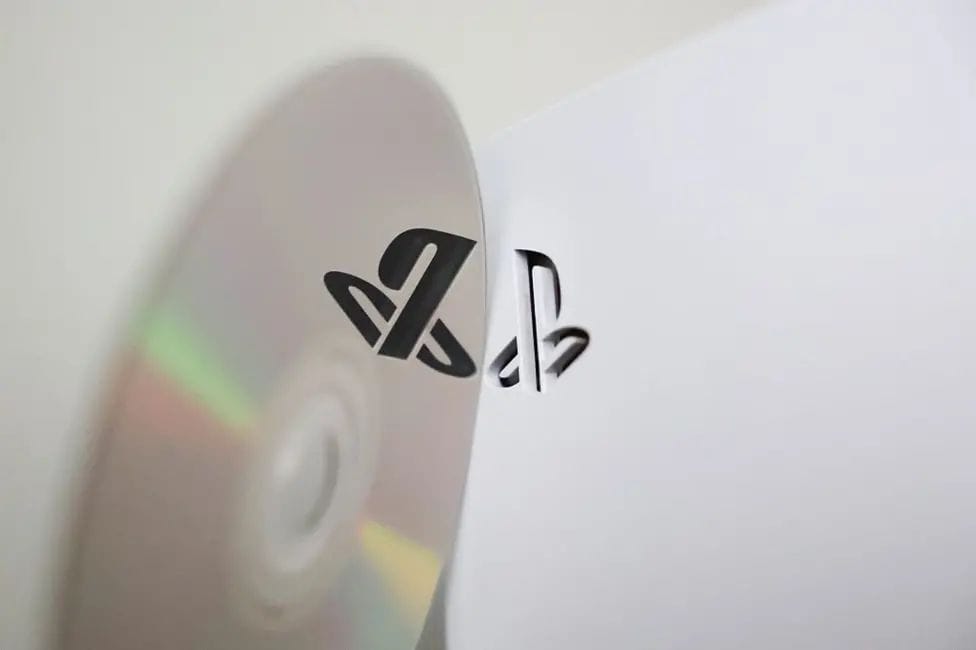
Players never had to think about any of this while games came on plastic, because a change in terms or a store closure left the disc on the shelf still working. Two weeks after the complaint was filed, on July 1, 2026, Sony announced that disc production for all new PlayStation games would end in January 2028, after which new releases would go out through the store only. Games already on disc keep working, and Sony called the decision a natural direction that follows what its customers prefer.
That claim about customer preference holds up to a point, since most players already choose the download over the trip to the shop. Players who choose digital when it is convenient are not the same as players who want digital as the only option, and the polling shows the gap. A YouGov survey published on July 22, 2026, found 51% of console gamers still prefer discs or cartridges, against 32% who prefer digital, and nearly three in five gamers opposed the end of disc releases altogether. Among the gamers opposed to the change, 65% said a guarantee of permanent access would make them more comfortable with it.
That last figure cuts against both sides at once, since it undercuts Sony's claim that it is following its customers, who are asking for a guarantee Sony has not offered them. The number also helps Sony in court, because players who worry their games could vanish clearly understand that they hold a license. Players know the word license, but very few have watched a company use the power that word gives it.
A deletion notice dated this week
Sony's terms say access to purchased content is revocable, and Sony's own website shows what that means in practice. A legal notice posted for UK customers says that from September 1, 2026, because of content licensing agreements, previously purchased StudioCanal titles will be removed from video libraries. Beneath the notice sits a list of 551 films that includes Terminator 2 and Apocalypse Now, and Cybernews reported that Sony offered no refunds to the people who had paid for them.
Those removals involve movies rather than games, and Sony licensed that video from outside studios instead of holding the rights itself, so nobody should read the notice as a warning about game libraries. The notice still proves something smaller and useful, because Sony's terms say access can be taken away and Sony has now taken it away on a set date. The California case could have tested whether the same power reaches games, except that Sony has asked for the case to be moved out of court altogether.
Sony's first request was to leave the courtroom
Sony's August filing led with a request that has nothing to do with ownership, since the company asked the judge to move the whole dispute into private arbitration and pause the case. Arbitration replaces a judge and jury with a paid neutral, and PlayStation's terms of service require it alongside a waiver that forces claims to be brought one at a time. A player can escape that waiver only by writing to Sony within 30 days of accepting the terms, which almost nobody does, so a proposed class of millions would shrink to four private claims.
Sony's own terms leave the plaintiffs one thread to pull, since the entire arbitration agreement collapses if the class waiver is found unenforceable, and Judge Vince Chhabria hears that argument on October 1, 2026. The ownership question only reaches a courtroom if Sony loses that motion, so the sentence everyone quoted may never be tested at all.
The law offered a way out
One clause in the California law changes how the whole argument looks, and almost nobody has reported it. The law does not apply to a digital good that the seller cannot revoke after the sale, and it defines that as including a permanent offline download that the buyer can use without an internet connection. California wrote an escape route into its own disclosure rule because a store that genuinely sells a permanent copy has nothing misleading to disclose in the first place.
No major console storefront took that route, and every company put its effort into the wording of warning labels instead. California handed the platforms a way to sell a copy that players keep, and every one of them said no, so players got a better warning label instead of a better deal.
Sony has now done two things in the space of two months. It told a court that no reasonable person buying a digital game thinks they own it, and it set a date to stop making the version of the game that a player could own. Most players polled were already against the second decision, and the first one told them what the company thinks they should have understood all along. Player pressure has moved Sony before, since the company announced the removal of purchased Discovery shows in December 2023 and then renegotiated with Warner Bros. once the complaints started.
Sony's lawyers are right about one thing: players have learned that a digital game comes with permission to play. What the argument leaves out is who taught them that lesson and who benefits from it. The same companies that built the digital storefronts wrote the licenses that replaced ownership, and are now removing the discs that gave players something they could keep, lend or resell. The result is a quiet change in the meaning of the word "buy": players still pay the price of ownership, but increasingly receive only permission in return. The cartridge that went around the neighborhood every summer was never the game itself, but it gave its owner something Sony's digital store no longer offers: a copy that remained theirs.
P.S. Want to collaborate?
Share today’s news with someone who would dig it. It really helps us to grow.
Let’s partner up. Looking for some ad inventory? Cool, we’ve got some.
Deeper integrations. If it’s some longer-form storytelling you are after, reply to this email, and we can get the ball rolling.
What did you think of today's memo? |
|




.svg)
.svg)