Welcome to Memorandum Deep Dives. In this series, we go beyond the headlines to examine the decisions shaping our digital future. 🗞️
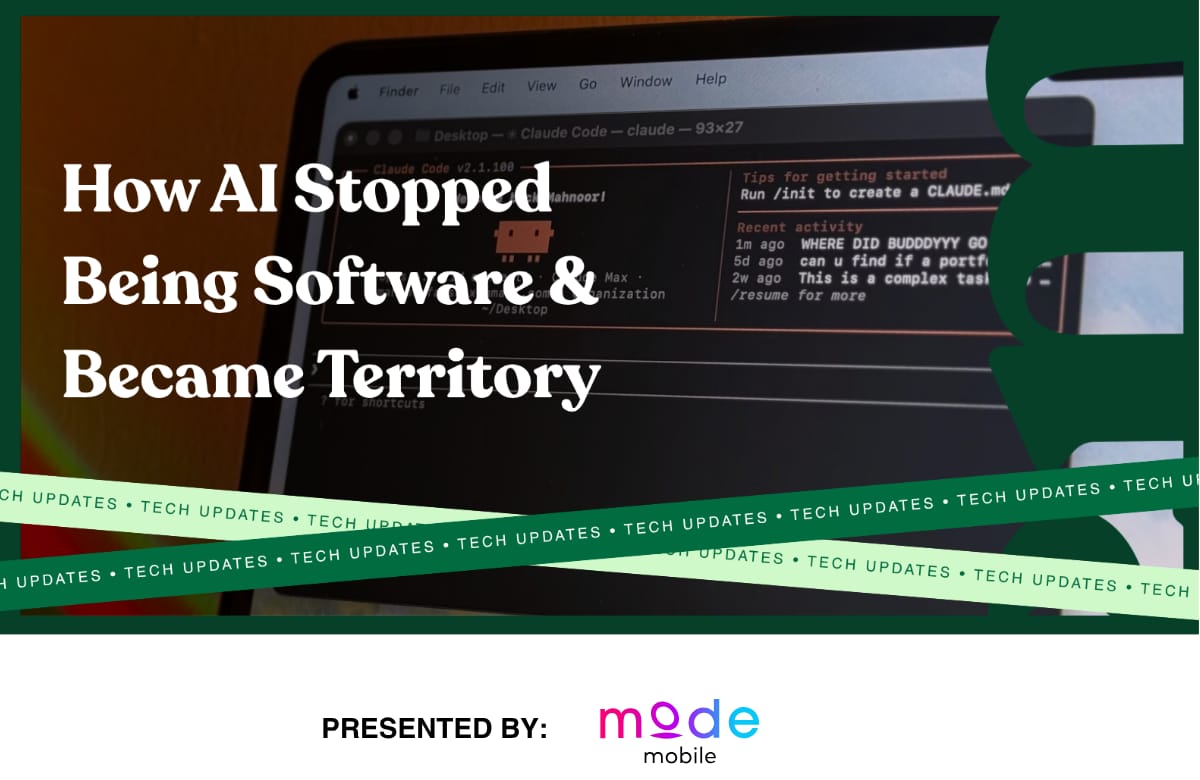
This week, we're looking at how a single apostrophe set off one of the most consequential AI controversies of the year. On June 30, a pseudonymous developer pulled apart Anthropic's Claude Code and found something no release note had ever mentioned: hidden logic that quietly checked whether users appeared to be operating from China, then signaled the answer back to the company through characters no human eye could catch.
The discovery did not stay niche for long. Within days, Alibaba had declared the tool off-limits for its workforce, Chinese security firms had weighed in, and a quiet reverse-engineering post had become the latest flashpoint in a feud that already included accusations of industrial-scale model theft and a letter to the U.S. Senate. And that was only half the story, because weeks earlier, Anthropic's own government had forced its newest models offline for the entire world.
Three actors, three defensive moves, one turbulent month. Each episode has its own tidy explanation, and each explanation holds up on its own terms. But read them side by side and a pattern starts to surface, one that says less about any single company and more about where frontier AI is heading next.
The smartphone opportunity most investors haven’t seen yet.
While most investors chase yesterday’s winners, early opportunities often emerge before Wall Street takes notice.
Mode Mobile is transforming smartphones into earning devices while building a fast-growing technology platform.
Pre-IPO shares are available for $0.52, with bonus shares for qualifying investments.
Learn more today before this opportunity potentially reaches the public markets.
The apostrophe that gave the game away
When you install software on your computer, you expect it to know certain things about your system. It needs to identify your operating system, processor, permissions, and sometimes even your location to function properly. You probably do not expect it to quietly determine what country you appear to be operating from and then embed that information in a way that is invisible to you but readable by its creator.
That is the controversy that engulfed Anthropic's Claude Code this summer. On June 30, 2026, a pseudonymous developer published a teardown of the AI coding assistant, revealing code that checked whether a user's system clock was set to a Chinese timezone and whether their internet traffic appeared to be routing through domains associated with Chinese companies and AI labs. When those conditions were met, the software neither alerted the user nor blocked access. Instead, it subtly modified its own system prompt by changing the date format and replacing a standard apostrophe with a visually identical Unicode character. The technique, known as steganography, hid the signal in plain sight while making it readable to Anthropic's servers.
As the findings spread across online developer communities, Anthropic did not dispute that the mechanism existed. Thariq Shihipar, an engineer on the Claude Code team, described it as "an experiment we launched in March" intended to identify unauthorized resellers and reduce the risk of model distillation, adding that the code removing the feature was merged on July 1, just one day after the teardown was published.
That explanation answered the immediate technical question, but it did little to contain the fallout. Within days, what had begun as a niche reverse-engineering discovery had evolved into a broader corporate dispute. Alibaba classified Claude Code as high-risk software following an internal security review, banned employees from using it for work beginning July 10, and directed developers to its in-house coding platform, Qoder. According to The Information, employees were also instructed to uninstall Anthropic's models from their machines, turning an obscure software experiment into the latest flashpoint in the increasingly fraught relationship between Western and Chinese AI companies.
Three weeks of escalation
Neither the hidden code nor Alibaba's ban arrived in a vacuum. By the time the teardown surfaced, Anthropic and some of China's biggest AI companies were already locked in an escalating dispute over one of the industry's most contentious practices: model distillation.
Three weeks earlier, Anthropic had told the U.S. Senate Banking Committee that operators affiliated with Alibaba and its Qwen AI lab had carried out what it described as the largest known distillation attack against the company. According to Anthropic, roughly 25k fraudulent accounts generated 28.8M conversations with Claude between April 22 and June 5, 2026. Distillation, the process of using a frontier model's responses to train a smaller or cheaper competitor, has become one of AI's defining battlegrounds because it allows rivals to replicate years of costly research without building an equally capable model from scratch.
Anthropic argued that the Alibaba-linked campaign represented an industrial-scale effort to do exactly that. The company had already made similar allegations in February against operators connected to DeepSeek, Moonshot, and MiniMax. Alibaba has not publicly responded to the specific accusations.
The stranger twist is that the harshest access restriction of the quarter came from Anthropic's own government. On June 12, 2026, three days after the launch of Claude Fable 5 and Mythos 5, the Commerce Department issued an export control directive requiring the company to suspend access "by any foreign national, whether inside or outside the United States," including Anthropic's own non-citizen employees. With no practical way to verify the nationality of every user across global cloud infrastructure, Anthropic switched the models off for everyone, a 19-day worldwide shutdown triggered by a jailbreak technique reported by Amazon researchers. The controls were lifted on June 30, with Fable 5 returning globally and Mythos 5 restored first to roughly 100 vetted American organizations. Anthropic complied while publicly disputing the order, warning that the same standard applied across the industry would essentially halt all new frontier model deployments.
What one month of incidents reveals
Taken separately, each episode has a tidy explanation. Anthropic was protecting intellectual property from what it considers theft. Alibaba was protecting its development environment from software it no longer trusted. Washington was containing a dual-use capability it feared could aid attackers. Taken together, they describe a single underlying shift.
Within one month, an American AI lab embedded nationality detection inside its flagship product, a Chinese conglomerate treated an American developer tool as an intelligence threat, and the U.S. government treated a commercial AI model as a controlled export. Every major actor in the story has begun behaving as though access to machine intelligence is territory to be defended, and the defenses are no longer being built at the edges of the network; rather, they are being built into the software itself.
Outperform the competition.
Tools & resources, ranging from playbooks, databases, courses, and more.
Deep dives on famous visionary leaders.
Interviews with entrepreneurs and playbook breakdowns.
*This is sponsored content
The border now runs through the product
What makes these events noteworthy is not simply that governments are imposing new restrictions on AI, but that the restrictions are beginning to migrate into the products themselves. For decades, strategically important technologies such as advanced semiconductors, telecommunications equipment, and encryption software have been controlled primarily through export licensing, customs enforcement, and procurement rules. Governments decided who could access the technology, companies complied with those decisions, and once a product reached its customer, it generally behaved the same regardless of where it was being used.
The Claude Code episode points to a different model, one in which the software itself participates in enforcing geopolitical boundaries. Rather than relying exclusively on external controls, the application contained logic that attempted to determine whether it appeared to be operating in China and, when those conditions were met, embedded a hidden signal that Anthropic's systems could interpret. The altered date format and visually identical apostrophe were trivial technical changes, yet together they amounted to a silent nationality check performed within the product itself, designed by a private company, disclosed to no one, and uncovered only because someone chose to reverse-engineer the application.
Whether Anthropic's justification ultimately persuades customers is secondary to what the episode reveals about the industry's direction. Alibaba's characterization of the mechanism as a backdoor undoubtedly serves its own commercial and strategic interests, and nothing in the publicly available analysis suggests that the hidden code exfiltrated files or collected sensitive user data. Even so, the discovery inevitably alters the trust relationship between AI companies and their customers because the mechanism was both real and deliberately obscured inside software to which developers grant extensive access on their machines. Once users know that an AI product can quietly classify them according to geopolitical criteria, the question naturally extends beyond what this particular feature did to what future versions of similar software might be capable of doing.
The same uncertainty surfaced from the opposite direction only weeks earlier, when Anthropic temporarily withdrew access to its newest frontier models in response to a Commerce Department directive, demonstrating that the availability of advanced AI can now be shaped as much by geopolitical decisions as by commercial agreements or technical limitations. Considered alongside the Claude Code controversy and Alibaba's response, the incident suggests that AI is undergoing the same transformation that energy infrastructure, telecommunications networks, and semiconductor manufacturing experienced before it: products that were once treated primarily as commercial technologies are increasingly being governed as strategic assets whose behavior, availability, and even design are shaped by national interests.
Why can the perimeter not hold cleanly?
The difficulty is that exclusion and commerce pull against each other, and the seams show everywhere. Anthropic's models are officially unavailable in China, yet the company alleges tens of millions of exchanges flowed to a single Chinese lab through fraudulent accounts, indicating the perimeter leaks at an industrial scale and that enforcement becomes a permanent chase through proxies and offshore corporate structures. Closing those gaps requires ever more granular telemetry about who users are and where they sit, which is precisely the kind of monitoring that generated the backlash, so each tightening of the border erodes more of the trust the product depends on.
The legal scaffolding is equally unfinished: adversarial distillation has no settled definition in law, which is why Anthropic's accusation went to a Senate committee rather than a courtroom. And the export control episode showed that the regulatory tools being used were built for physical goods, then applied to a model that runs on cloud infrastructure across dozens of jurisdictions simultaneously, with results so blunt that the product had to be taken offline for everyone.
The bigger question
For most of the internet era, software was expected to be politically indifferent. A word processor did not care which passport its user carried, a browser did not quietly classify its customers by nationality, and an operating system did not change its behavior because two governments had fallen into dispute. The past month suggests that frontier AI is beginning to abandon that tradition. Models are becoming strategic assets, and strategic assets are governed differently from ordinary software.
The Claude Code incident may eventually fade into the long history of obscure engineering decisions, but the direction it points is unlikely to. The next generation of AI products will increasingly be designed not only to answer questions or write code, but also to determine who is permitted to receive those answers in the first place. When that happens, the most consequential feature of an AI system may no longer be its intelligence. It may be the border it carries within it.
P.S. Want to collaborate?
Share today’s news with someone who would dig it. It really helps us to grow.
Let’s partner up. Looking for some ad inventory? Cool, we’ve got some.
Deeper integrations. If it’s some longer form storytelling you are after, reply to this email and we can get the ball rolling.
What did you think of today's memo? |
|







.svg)
.svg)