Welcome to Memorandum Deep Dives. In this series, we go beyond the headlines to examine the decisions shaping our digital future. 🗞️
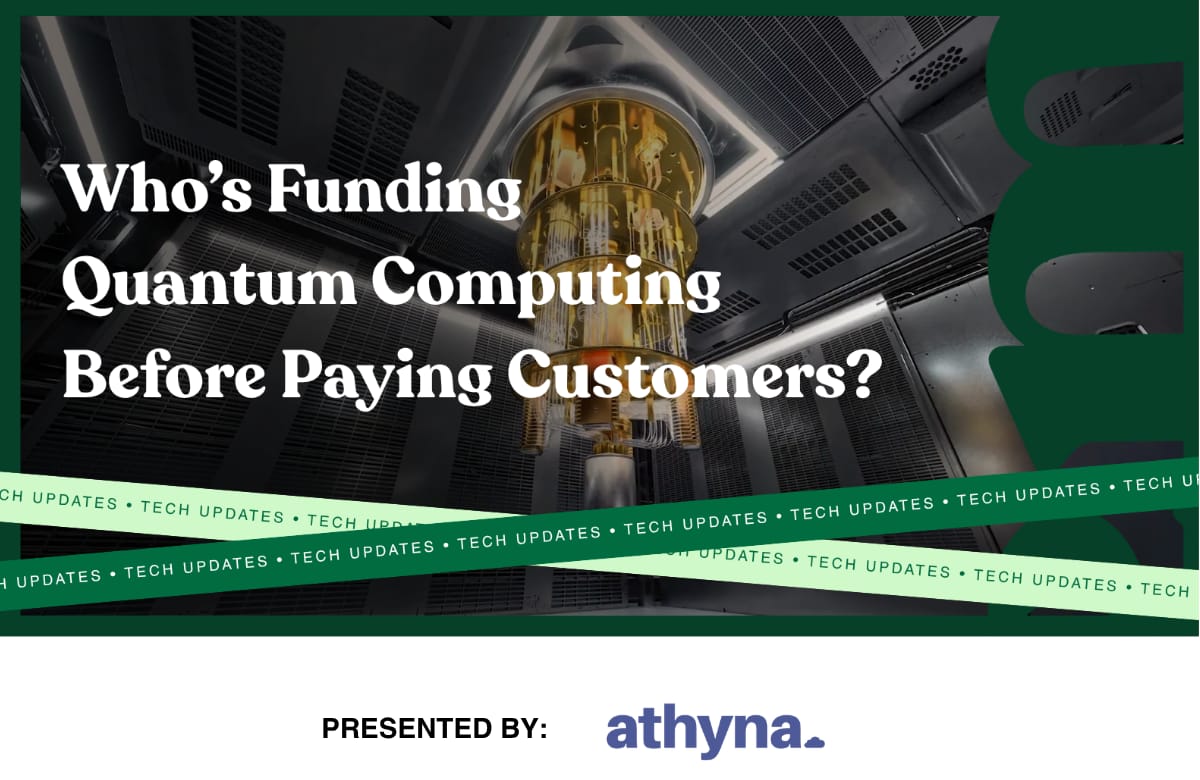
This week, we look at the money flowing into quantum computing before the machines are ready to earn it. On September 28, 2026, Bank of America told clients to buy IonQ shares with a $60 price target, a call that rests largely on the Superion 256, a computer IonQ has yet to deliver to a single customer.
IonQ is hardly the only quantum company valued on what it might become. Quantinuum went public in June and closed its first day worth $15.7B, more than 500 times the revenue it reported for 2025. Investors placed similar bets on AI for years, and those bets paid off once ChatGPT turned research into something anyone could use.
Quantum computing has not had that moment yet, and nobody knows which problems its machines will solve well enough for a business to pay for the answer. So where is the money coming from in the meantime, and what does that say about how close the payoff really is?
We build the tasks your model fails.
PhD researchers and domain experts author verified, containerized tasks in the Terminal-Bench and GDPval mold, spanning coding, finance, accounting, engineering, and more.
On our harder tasks, frontier models score 0 out of 5.
Framer: The AI canvas for the web.
Framer is the AI website builder for teams that care about every detail. Agents work directly in the canvas, helping design pages, manage CMS content, write copy, add SEO, and audit sites.
Build faster: Create, refine, and publish production-ready pages in minutes.
Scale confidently: Manage content, localization, and metadata across your site.
Stay in control: Review every change, collaborate in real time, and publish when ready.
Trusted by teams at Miro and Perplexity.
Investors are paying today for quantum’s future
On September 28, 2026, Bank of America told its clients to buy shares in IonQ, the largest listed pure-play quantum company by revenue. Research analyst Vivek Arya set a $60 price target, and his case rests on a machine nobody has used yet, the Superion 256, which IonQ plans to start delivering to customers in the second quarter of 2027. The same note lists delays in machine delivery and slow commercial adoption among the risks to that forecast, so the bank is recommending a company today on the strength of computers that have not been built. (Bank of America's investment banking arm, BofA Securities, advised IonQ on the SkyWater acquisition discussed below.)
IonQ is far from the only quantum company priced on the future. Quantinuum, another maker of quantum computers, went public in June and closed its first day at $15.7B, even though it reported $30.9M of revenue for 2025 against a net loss of $192.6M. That is more than $500 of market value for every dollar of revenue the company took in the year before, a price investors pay only when they expect a business to grow far larger. Quantum computers have not yet done anything useful that a conventional computer cannot do, so the money flowing into these companies is buying a technology before anyone has seen it pay off.
Investors have made this kind of bet before, when money flowed into AI research for years before the technology reached a mass audience. Then, in November 2022, OpenAI released ChatGPT, and an ordinary person could type a question and watch a machine answer it. That launch turned years of research into a product people could use, and it gave the early investors the moment they had been paying for.
Quantum investors are waiting for a moment of their own, though they are waiting with less to go on. AI models were already writing and translating text before ChatGPT made them famous, so the early investors could see roughly what the finished product would do. Quantum investors cannot, because nobody yet knows which problems a finished quantum computer will solve well enough for a business to pay for the answer.
While they wait, governments and investors are building a bridge of money to customers who have not yet arrived. The companies on that bridge look bigger than their quantum businesses really are, because their revenue includes side businesses and public money alongside quantum computing. That mix makes it hard to see how many private customers are paying for quantum computation at all, and the answer decides whether the bridge leads anywhere.
Quantum computers are still being built
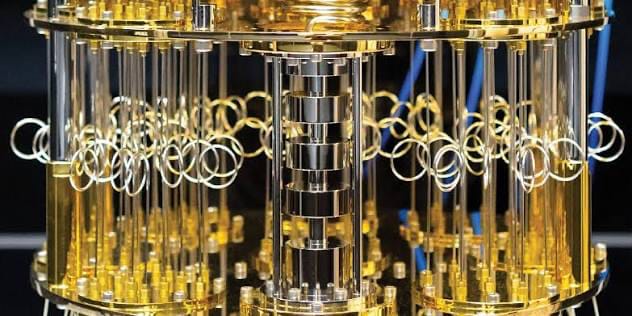
A quantum computer works differently from the laptop or phone you use every day. An ordinary computer stores information in bits, each either a zero or a one, while a quantum computer uses qubits, which can hold a blend of both at once. That property is what could let a quantum computer take shortcuts on certain kinds of calculations that would take an ordinary machine far too long.
The same property makes qubits fragile, since the slightest disturbance can knock them out of their state, and each one, whether a single atom or a tiny circuit, makes frequent mistakes. Engineers deal with those mistakes the way an office deals with unreliable note-takers. The office asks several people to record the same meeting and keeps the version most of them agree on, so one careless note-taker no longer spoils the record.
Quantum engineers do the same with qubits, grouping many unreliable ones so that together they behave like one reliable unit, a technique called error correction. A machine with enough of those reliable groups to run a long calculation without the answer falling apart is called fault-tolerant, and that is what the calculations behind quantum computing's promise require.
No company has shown a fault-tolerant machine yet, and Quantinuum has promised a machine called Apollo for 2029. Much of the price investors paid for Quantinuum’s shares depends on expectations that Apollo will arrive on time and work as promised.
A finished machine would still leave open the question of what it is for, and Google's own quantum researchers made that point in a November 2025 paper on quantum applications. No quantum computer has yet shown a clear win over the best conventional method on a problem that matters in the real world. The most promising uses are narrow ones, such as simulating molecules or breaking the codes that protect digital information, and the Google team argues that the work of connecting quantum advantage to real-world use cases is badly under-resourced. The money rests on the assumption that useful applications will appear once the hardware exists, and the people building the hardware are the ones saying that assumption needs work.
ChatGPT gave people something to try on its first day, while a working quantum computer would still give most people nothing they could try or recognize as useful. Until those uses are found, the companies need money to keep building, and they have found it in places other than private customers paying for computation.
Outperform the competition.
Tools & resources, ranging from playbooks to databases, courses, and more.
Deep dives on famous visionary leaders.
Interviews with entrepreneurs and playbook breakdowns.
*This is sponsored content
Side businesses and public money make the companies look bigger
IonQ, the company Bank of America recommended, shows how a quantum company can grow while its quantum computers wait for customers. Alongside those computers, IonQ earns money from networking and sensing equipment, products it can sell today. In July, it went further and bought SkyWater, a conventional chip factory that still serves defense customers and commercial ones. The purchase raised its 2026 forecast from a midpoint of $285M to $455M, because IonQ can now count the factory's sales as its own.
The growth figures investors see therefore need careful reading, since Bank of America expects IonQ's sales to grow 69% a year through 2030. That headline number covers IonQ's sales as a whole, so part of the growth could come from businesses that would exist whether or not a quantum computer ever proves useful. The bank's own math makes the distinction, valuing the quantum side at 7.0 times sales and the foundry at 2.0 times, but a shareholder reading the growth rate alone would see one business where there are two.
The word commercial needs the same care, because IonQ’s second-quarter results define commercial revenue as money from any customer other than the U.S. government. A contract with a university research lab or a foreign government therefore sits on the same line as a sale to a private business. A reader who sees IonQ’s commercial revenue rising cannot tell how much of it comes from companies paying their own money for quantum computation.
Governments are also paying directly, and McKinsey found in its 2026 survey that public bodies are more likely than private companies to buy quantum machines outright. Most private companies rent time on the machines through cloud services instead. In May, Washington offered to go further, when the Commerce Department signed letters with nine companies promising $2.013B under the CHIPS and Science Act in return for a minority stake in each. Quantinuum, whose valuation opens this story, is in line for $100M of it. The letters are promises to negotiate rather than final deals, but they show taxpayer money moving from funding research toward owning part of the companies doing it.
Side businesses, university contracts, and government money therefore help explain why quantum companies look like growing businesses. None of them shows private companies paying for quantum computation, which is the one kind of customer that would prove the technology can stand on its own. The money keeps coming all the same, because the companies argue that those customers are already on their way.
The companies say private customers are on their way
The companies' first piece of evidence is the orders they have already taken. IonQ says the amount of work customers have ordered but not yet received nearly quadrupled last quarter. When buyers commit money before delivery, it usually means demand is building. McKinsey, the consulting firm, backs this view and calls this year a commercial tipping point for quantum, and its survey found that most of the quantum computing use it tracked happens at private companies. (McKinsey sells quantum advisory services to the companies and customers it surveys.)
Quantinuum is also selling its newest machine in a familiar way, through Oracle’s cloud as a service. Businesses will be able to rent time on it when they need it, much as they already pay for AI models. That kind of pay-as-you-go selling helped turn AI from a research project into a business. In the companies’ view, government money is a bridge that private customers will soon cross, as it was for other strategic technologies.
The argument is strongest on interest, since private companies are clearly trying the machines out. It is weaker on money, since McKinsey counted how many organizations use quantum computers rather than how much they pay, so a company running a small trial counts the same as one spending heavily. IonQ's order figures have a similar problem, because its 'commercial' customers include universities and foreign governments. Quantinuum's own numbers cut against the tipping-point framing more directly: revenue fell 73% to $5.24M in the first quarter of 2026, and bookings dropped to $1.3M from $1.9M a year earlier. Its filing also lists failure to achieve advantage among the risks to the business, which means its machines might never pull clearly ahead of conventional computers.
Private customers are the missing piece
Bank of America’s recommendation, like the early bets on AI, is a wager that the day the technology reaches paying customers is coming. AI reached that day when ChatGPT turned a research project into something ordinary people used, and the investors who had waited were rewarded. Quantum computing has not reached that day, and until it does, governments and investors will keep carrying the companies across the gap.
IonQ's next quarterly report, covering the three months to September 30 and due in early November, is the next place to look for customers reaching the other side. Those customers would show up as private companies paying for computation, rather than as grants or government contracts. The first real test comes in the second quarter of 2027, when IonQ expects to put Superion 256 in customers' hands, and the larger one in 2029, when Quantinuum's Apollo is due. The open question is how much longer governments and investors will keep extending the bridge if the customers have not arrived by then.
P.S. Want to collaborate?
Share today’s news with someone who would dig it. It really helps us to grow.
Let’s partner up. Looking for some ad inventory? Cool, we’ve got some.
Deeper integrations. If it’s some longer form storytelling you are after, reply to this email and we can get the ball rolling.
What did you think of today's memo? |
|







.svg)
.svg)