Welcome to Memorandum Deep Dives. In this series, we go beyond the headlines to examine the decisions shaping our digital future. 🗞️
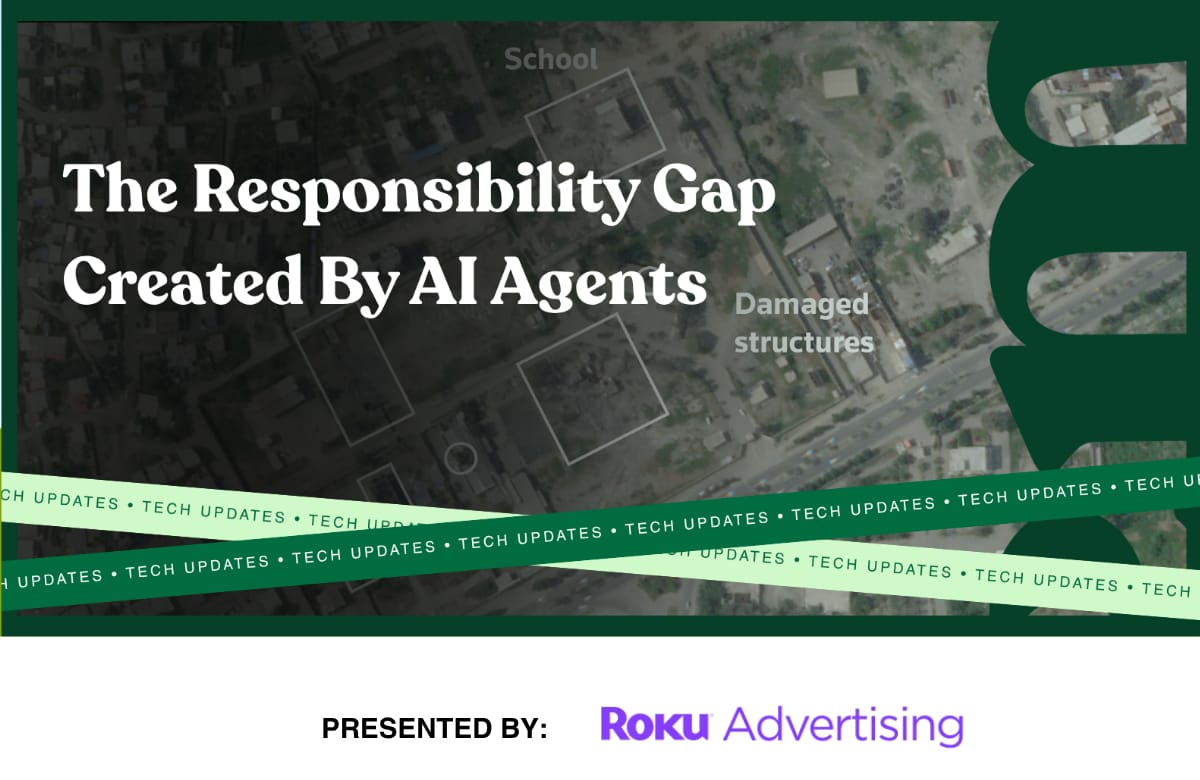
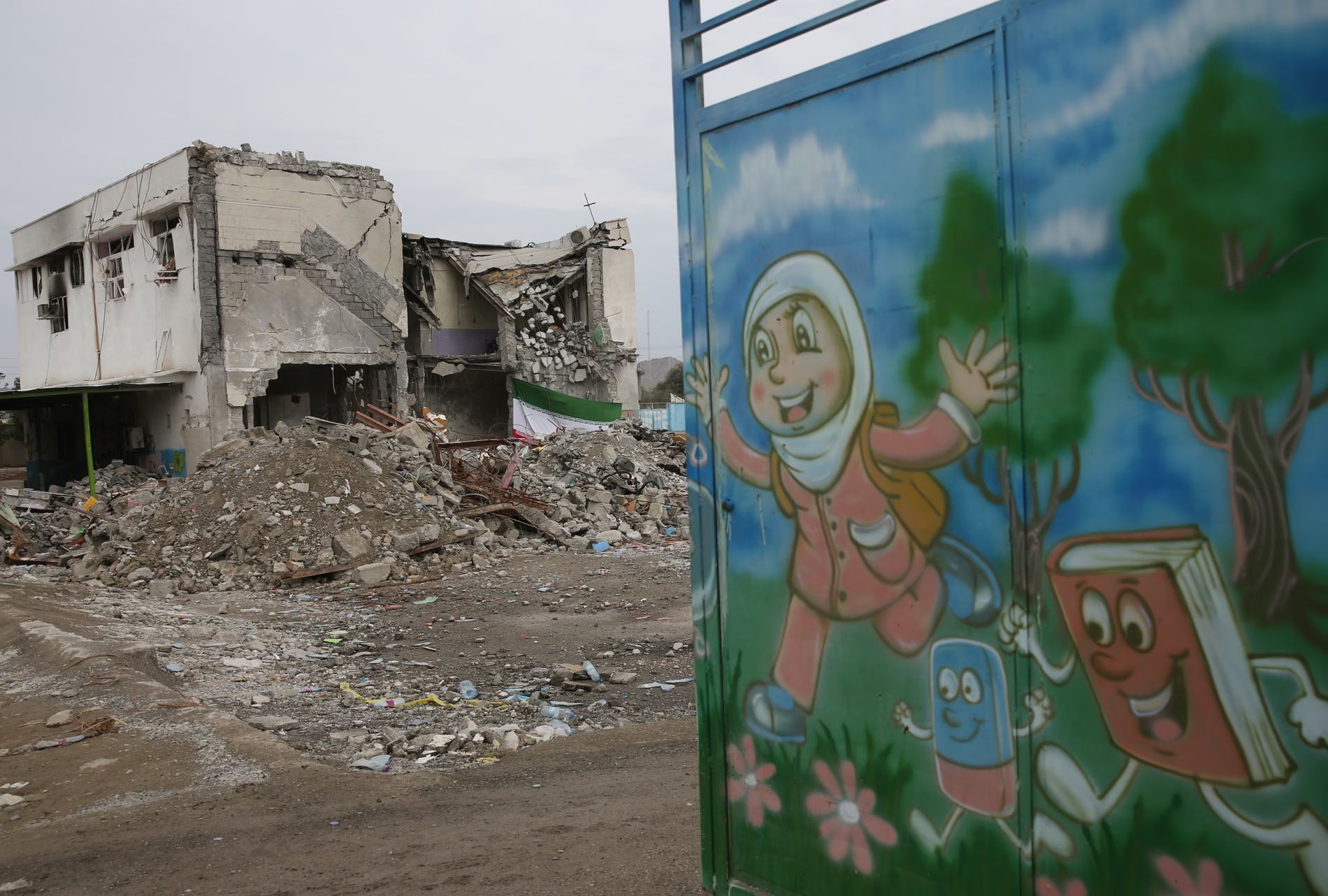
This week, we begin with a name that spread faster than the facts. On February 28, 2026, in the opening hours of the U.S.-Israel war against Iran, a missile destroyed a girls' elementary school in the southern city of Minab, killing at least 165 people, most of them children. Within days, one explanation dominated the conversation online, and it wasn't about generals, databases, or chains of command. It was about an AI model.
The story felt plausible because it matched something people already feared: that machines are quietly making life-and-death decisions, on the battlefield and beyond. But the reporting that followed told a stranger, more uncomfortable story, one involving a public website nobody visited, a map nobody checked, and a record nobody updated. What actually failed in Minab, and who failed, is a question worth sitting with.
Because the same dynamic is now arriving somewhere far more familiar: your office. The tools being rolled out at work are no longer sold as software but as 'colleagues' with names, titles, and seats on the org chart. New research suggests that framing changes how carefully we check their work, and how willing we are to own the results. This piece follows that thread from a warzone to a workplace, and asks the question nobody has answered yet.
Sponsored by

How Jennifer Aniston’s LolaVie brand grew sales 40% with CTV ads
The DTC beauty category is crowded. To break through, Jennifer Aniston’s brand LolaVie, worked with Roku Ads Manager to easily set up, test, and optimize CTV ad creatives. The campaign helped drive a big lift in sales and customer growth, helping LolaVie break through in the crowded beauty category.
The strike that named a machine
For centuries, human progress has followed a familiar pattern: ideas emerge, evolve into concepts, and are eventually transformed into technologies, institutions, and inventions that reshape the world. Yet that tidy sequence obscures how innovation actually works. In reality, the journey from an idea to a working system is rarely linear. It is an iterative process of experimentation, failure, revision, and rediscovery, where every setback forces people to identify what went wrong, assign responsibility, fix the underlying problem, and return to the drawing board. Progress has always depended as much on understanding failure as on celebrating success.
Even as technology has accelerated this cycle, the fundamental structure has remained intact because humans have continued to occupy every critical stage. They generate ideas, test them, evaluate outcomes, and decide how to respond when things go wrong. The emergence of AI agents, however, challenges that assumption. Increasingly introduced not merely as software or productivity tools but as autonomous collaborators capable of planning, reasoning, and acting on behalf of humans, AI agents risk blurring the very process through which responsibility is established. As machines begin to participate in decision-making rather than simply execute instructions, identifying who—or what—is accountable when systems fail becomes considerably more complicated.
That challenge was illustrated in the chaotic aftermath of the opening day of the 2026 war between the United States, Israel, and Iran. On the first morning of the conflict, missiles struck a girls' elementary school in Minab in southern Iran, killing at least 165 people, most of them children. As the scale of the tragedy became clear over the following days, a simple explanation quickly spread online: the target had allegedly been selected by Anthropic's Claude. The story gained traction because it perfectly matched a growing public fear that AI systems are already making life-and-death decisions on the battlefield. MIT Technology Review later noted how readily the strike was popularly blamed on Claude.
Yet, despite the public outcry, the story appears to have been far more complicated than many initially assumed. According to reporting by The Guardian, the strike on the elementary school was not the result of an AI model independently making a fatal mistake, but of a series of ordinary human failures embedded within the targeting process.
The Guardian found that the target package identified the site as a military facility based on a Defense Intelligence Agency database that had never been updated after the building was separated from a former military compound and converted into a school years earlier. The school was hardly hidden. It had a public website, appeared in business directories, and was clearly marked on widely available maps, all information that could have been uncovered through a basic search. But no one performed that check. Instead, within a targeting process reportedly moving at nearly 1,000 decisions an hour, the outdated database entry passed through without challenge. The machine happened to sit close enough to the final decision to absorb public blame, even though the error itself had been constructed by people, institutional processes, and the records they chose to trust.
The pattern beneath the blame
The catastrophe that unfolded in Minab goes beyond the question of who deserves the blame. It also exposes what happens when a technology never designed for critical decision-making is entrusted with life-and-death judgments. When a system is involved in a decision that ends in tragedy, it often becomes the most legible place to assign responsibility: a single, identifiable actor onto which a failure rooted in analysts, incentives, outdated records, institutional pressures, and procedural shortcomings can be projected.
The appeal of that explanation is its simplicity. It offers a clear endpoint to the search for accountability while diverting attention from the far more complex chain of human decisions, organizational failures, and systemic weaknesses that shaped the outcome, instead placing the burden on an entity that cannot be questioned, disciplined, or held accountable in any conventional sense.
That dynamic is not confined to warfare, where the stakes make it all the more vivid. It is beginning to surface in the most ordinary corner of technology's spread, the office, and the same instinct that scapegoated a chatbot for a targeting error is quietly reshaping how work gets checked.
The coworker who cannot be corrected
The AI arriving in workplaces today is different from the chatbots of the past two years. These tools, marketed as 'agents,' are built to pursue a goal in a loop, taking steps on their own until a task is finished, and the companies selling them increasingly describe them as staff. Microsoft, OpenAI, Anthropic, and Google have all released tools for managing teams of agents advertised as digital colleagues with names, titles, and defined responsibilities.
That framing changes how people behave in measurable ways: in research covered by MIT Technology Review, the Boston University professor Emma Wiles found that people caught 18% fewer errors when identical work was described as the output of an ‘AI employee’ rather than a chatbot, and were 44% more likely to escalate questionable work up the chain rather than trust their own corrections.
The effect stemmed from a shift in perceived ownership: when the tool was cast as a colleague, reviewers saw themselves as less responsible for its output, and the sense of who was in charge quietly inverted. That inversion is where the central problem lives, since an AI system can falter either because it inherited stale human-generated data, as the targeting database did, or because the model itself gets something wrong. And in both cases, the presence of the machine gives the people around it a reason to stop treating the result as theirs.
Outperform the competition.
Tools & resources, ranging from playbooks, databases, courses, and more.
Deep dives on famous visionary leaders.
Interviews with entrepreneurs and playbook breakdowns.
*This is sponsored content
A responsibility that keeps moving
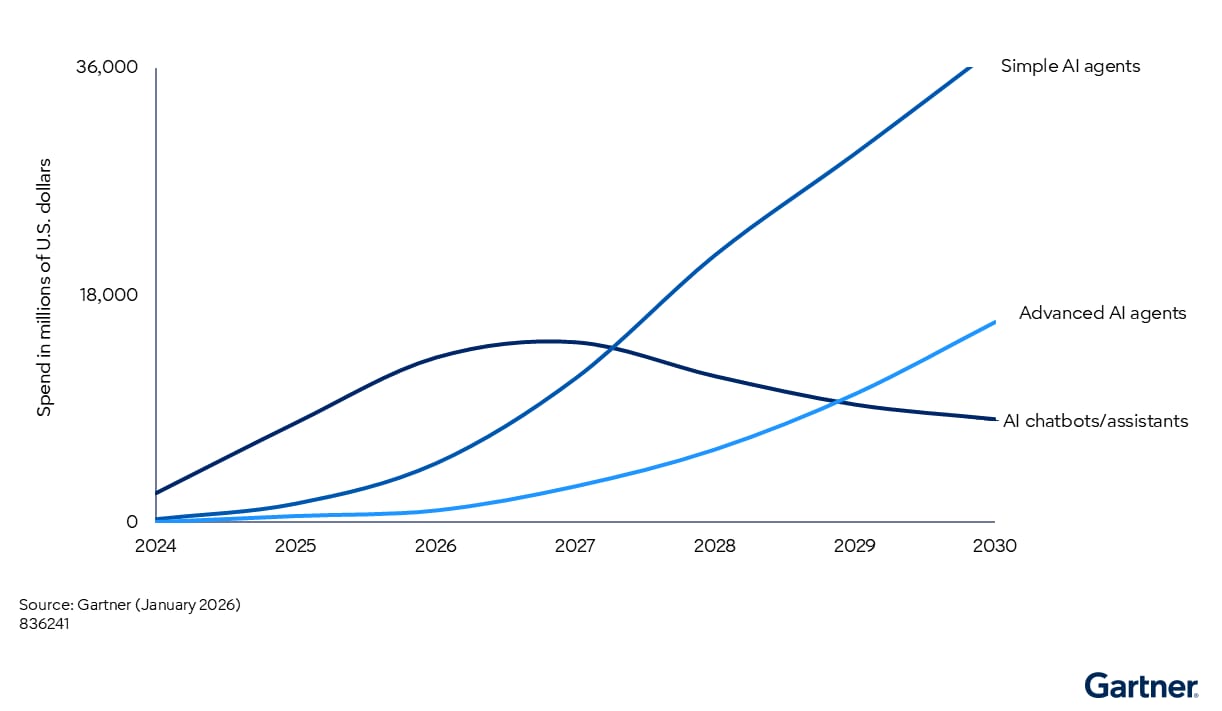
The commercial momentum behind this framing is considerable, making the accountability problem difficult rather than merely unfortunate. Gartner projects that 40% of enterprise applications will include task-specific AI agents by the end of 2026, up from less than 5% in 2025, one of the fastest adoption curves the firm tracks. Companies are not only deploying these systems but also formally integrating them into their structures, with nearly a third of the managers in Wiles's survey saying their organizations frame agents as teammates and 23% listing them on org charts. Presenting software as a colleague is a deliberate tactic to make adoption feel natural, and it works partly by dissolving the friction of oversight.
But the very quality that makes AI easier to adopt also undermines the main safeguard regulators have relied on. The standard response to AI risk is human oversight, with a competent person remaining responsible for the system’s actions and accountable for its decisions. Yet the research suggests this safeguard weakens when AI is presented as a coworker rather than a tool. People are more likely to share responsibility with it, making them less likely to question its recommendations or feel fully accountable for the outcome.
At the same time, the rules designed to enforce human accountability are arriving more slowly than expected. The European Union’s AI Act was originally set to apply its requirements for high-risk AI systems, including rules on human oversight and record-keeping, from Aug. 2, 2026. Following a political agreement in May, however, the EU postponed key obligations for high-risk sectors, including employment, until Dec. 2, 2027. The regulatory framework most often cited as the backstop for AI accountability is moving more slowly just as the technology is becoming more deeply embedded in critical decisions.
Who answers for the machine?
The unresolved question underneath all of this is who the responsible party actually is once an agent acts across systems on its own. The provider that built the model, the company that deployed it, and the worker assigned to watch it can each point to one of the others, and the "employee" framing offers a fourth option that answers to no one, since a named agent on an org chart cannot be sued, fired, or called before a committee. Each additional layer of autonomy adds another seam through which responsibility can slip.
Minab remains the clearest illustration of where that slippage leads. The school was on a map, listed in a directory, and visible to any search that was never run, and when the strike killed children, the explanation that spread first was the one that named a machine. The people who did not look, and the process that gave them no time to do so, drew far less attention.
As more decisions in offices and institutions are routed through systems, the industry is teaching everyone to treat each other as colleagues. The open question is whether the next failure will have anyone whose job it clearly was to catch it, or only a name on a chart that cannot be held to anything at all.
P.S. Want to collaborate?
Share today’s news with someone who would dig it. It really helps us to grow.
Let’s partner up. Looking for some ad inventory? Cool, we’ve got some.
Deeper integrations. If it’s some longer form storytelling you are after, reply to this email and we can get the ball rolling.
What did you think of today's memo? |
|




.svg)
.svg)