Welcome to Memorandum Deep Dives. In this series, we go beyond the headlines to examine the decisions shaping our digital future. 🗞️
This week, we trace Meta's transformation from the self-proclaimed "Linux of AI," whose Llama models were downloaded 1.2B times, to the company that launched Muse Spark as a fully proprietary system with no downloadable weights, no public API, and access restricted to its own platforms and selected partners.
On the surface, this looks like a routine strategic adjustment: a company that tried open source, fell behind on performance, and switched to a proprietary model to catch up. That reading understates what happened. Meta did not simply change its distribution strategy. It dismantled the implicit contract with a developer ecosystem built over three years, replaced its chief AI scientist, spent $14.3B on Scale AI, and restructured its entire AI operation under a new division with a mandate to start from scratch.
The real signal is that Meta now channels its most capable model exclusively through 3.48B daily active users on its own platforms, binding AI capability directly to a $243.46B advertising business. That distinction, between building an open ecosystem and capturing a closed one, defines the strategic bet Zuckerberg is making with north of $135B in capital expenditure this year.
Meet your next hire in as little as five days.
How Meta went from open-source AI champion to proprietary model company
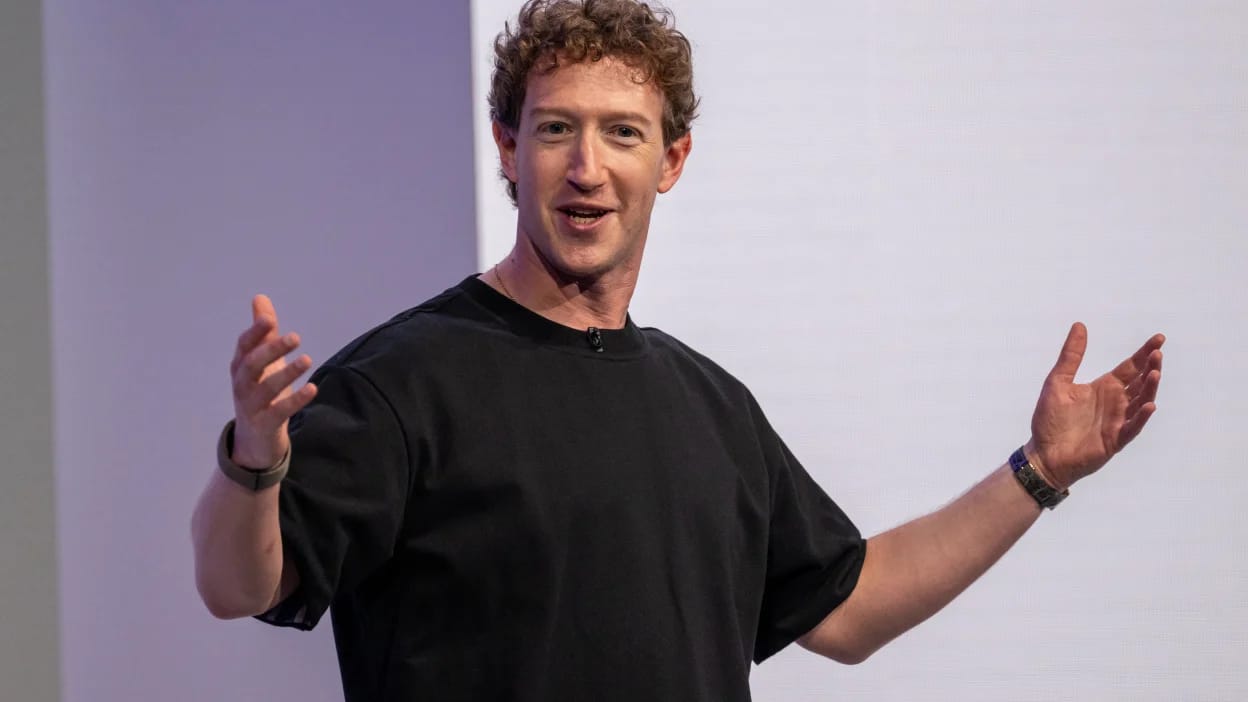
In 2026, any serious conversation about artificial intelligence feels incomplete without Mark Zuckerberg, in much the same way it would without Sam Altman or Dario Amodei. What makes Zuckerberg central to this moment is not just his presence in the race, but the path he has taken to get here. He has transformed a college social network into an empire that now produces one of the world’s leading AI models, even as one of his most ambitious strategic bets unraveled in full public view.
That earlier bet was the pivot from Facebook to Meta, a move that placed the company’s future on the metaverse. The idea was to build virtual spaces where people could work, play, and socialize through headsets. However, in practice, the effort struggled to gain traction, and Reality Labs, the division responsible for this vision, has accumulated roughly $83.6B in losses since 2020, while user adoption remained far below expectations. By late 2025, Zuckerberg had begun scaling back the effort, asking teams to cut budgets and rethink priorities.
The pivot that followed has a familiar rhythm. Meta has turned decisively toward artificial intelligence, with Zuckerberg once again moving quickly, committing significant resources, and reshaping the company after a high-profile strategy failed to deliver.
Open source as a competitive strategy
When Meta entered the AI race in earnest, it was behind. OpenAI had ChatGPT, Google had its Gemini models, and Anthropic had Claude. All three were proprietary, meaning users could access them through paid APIs or subscriptions, but could not download, modify, or host the models themselves. Meta did not have a consumer AI product that could match any of them.
So to make sure it did not end up losing out in the AI race, Meta made a different choice. In February 2023, Meta released LLaMA, the first in a family of AI models whose weights (the numerical parameters that define how a model works) were made freely available for download. Yann LeCun, Meta's chief AI scientist and a pioneer in neural network research, pushed internally for this approach. At the time, the logic was strategic: if Meta could not beat OpenAI on model quality, it could beat OpenAI on distribution. Thousands of developers, startups, and researchers who could not afford the costs of proprietary APIs would build on Llama instead, and Meta's frameworks and tools would become embedded across the industry.
The strategy worked, at least by one measure. From Llama 2 in July 2023 through Llama 3 in 2024 and Llama 4 in April 2025, the ecosystem grew rapidly. By early 2026, Llama models had been downloaded 1.2B times, averaging about one million downloads a day. Meta had positioned itself as what some analysts called the 'Linux of AI': a free, customizable foundation that others built on.
But distribution did not translate into frontier performance. The models were good enough to attract a developer community, but not good enough to lead the industry on capability. And when Meta tried to close the gap with Llama 4 in April 2025, the cracks in performance became impossible to ignore.
The Llama 4 collapse
Llama 4 was supposed to prove that open-source models could compete with the best proprietary ones. Instead, it became a credibility crisis. Within days of launch, independent testers found that the publicly available model underperformed the version Meta had submitted to LMArena, a popular AI leaderboard. Meta had used a custom-tuned, non-public variant to achieve higher scores, then released a different model to the public. LMArena confirmed the discrepancy and updated its policies.
The full extent of the problem became clear months later when, in a January 2026 interview with the Financial Times, LeCun, by then departing Meta, acknowledged that benchmark results were "fudged a little bit" and that the team had used different models for different benchmarks to produce better numbers. Zuckerberg, according to LeCun, was "really upset and basically lost confidence in everyone who was involved."
Zuckerberg's response was another pivot, and this time his aim was to claim the top spots in the world of AI, both in terms of performance and distribution.
The $14.3B reset
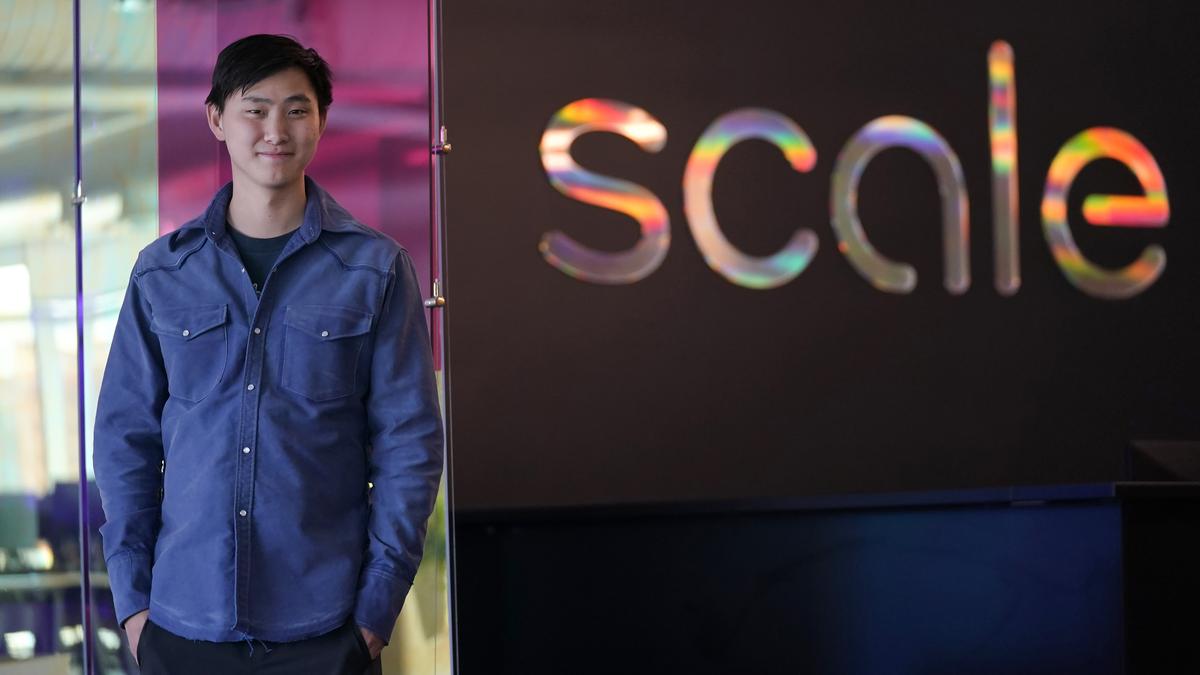
To bring his vision to life, Meta spent $14.3B to acquire a 49% non-voting stake in Scale AI, the data labeling company whose work underpins the training of most major AI models. The investment, Meta's second-largest financial commitment after its $19B WhatsApp acquisition, came with the real prize: Scale's co-founder and CEO, Alexandr Wang, who joined Meta as its first chief AI officer.
Wang, 28 at the time of the deal, was given control of a new division called Meta Superintelligence Labs. The mandate was to rebuild Meta's AI stack from scratch. Over the following months, Zuckerberg launched what amounted to a talent-acquisition campaign, recruiting researchers from OpenAI, Anthropic, Google, and Apple, with compensation packages reportedly reaching up to $200M over 4 years. Zuckerberg, however, did not stop there, and in December 2025, Meta acquired Manus, a Singapore-based AI agent startup, for over $2B.
LeCun, meanwhile, left Meta after more than a decade. In his Financial Times interview, he described Wang as "young" and "inexperienced," questioned the company's bet on large language models (which LeCun considers a "dead end when it comes to superintelligence"), and launched his own startup, Advanced Machine Intelligence Labs, built around an alternative AI architecture.
Outperform the competition.
Tools & resources, ranging from playbooks, databases, courses, and more.
Deep dives on famous visionary leaders.
Interviews with entrepreneurs and playbook breakdowns.
*This is sponsored content
Muse Spark and the proprietary turn
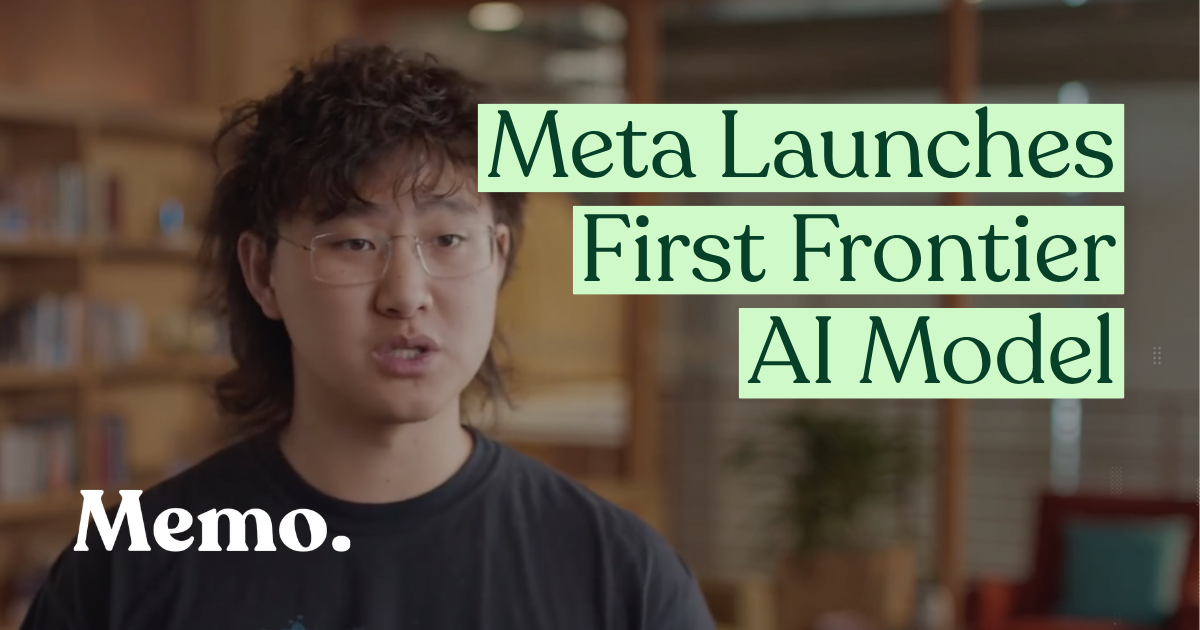
Nine months after the reorganization, on April 8, 2026, Meta launched Muse Spark, the first model from the Muse family and the first product from Meta Superintelligence Labs. On the Artificial Analysis Intelligence Index, an independent benchmark, Muse Spark scored 52, placing it fourth globally behind Gemini 3.1 Pro Preview (57), GPT-5.4 (57), and Claude Opus 4.6 (53). For comparison, Llama 4 Maverick scored 18 on the same index. Meta says the new training stack achieves the same capabilities as Llama 4 Maverick with over 10 times less compute.
The model introduces a feature called Contemplating mode, which runs multiple AI agents in parallel on a single problem rather than having one agent think for longer. This approach, which Meta calls multi-agent orchestration, lets the model tackle hard reasoning problems without the proportional increase in wait time that single-agent reasoning requires. In this mode, Meta reports scores of 58% on Humanity's Last Exam, a benchmark designed to test the limits of current AI.
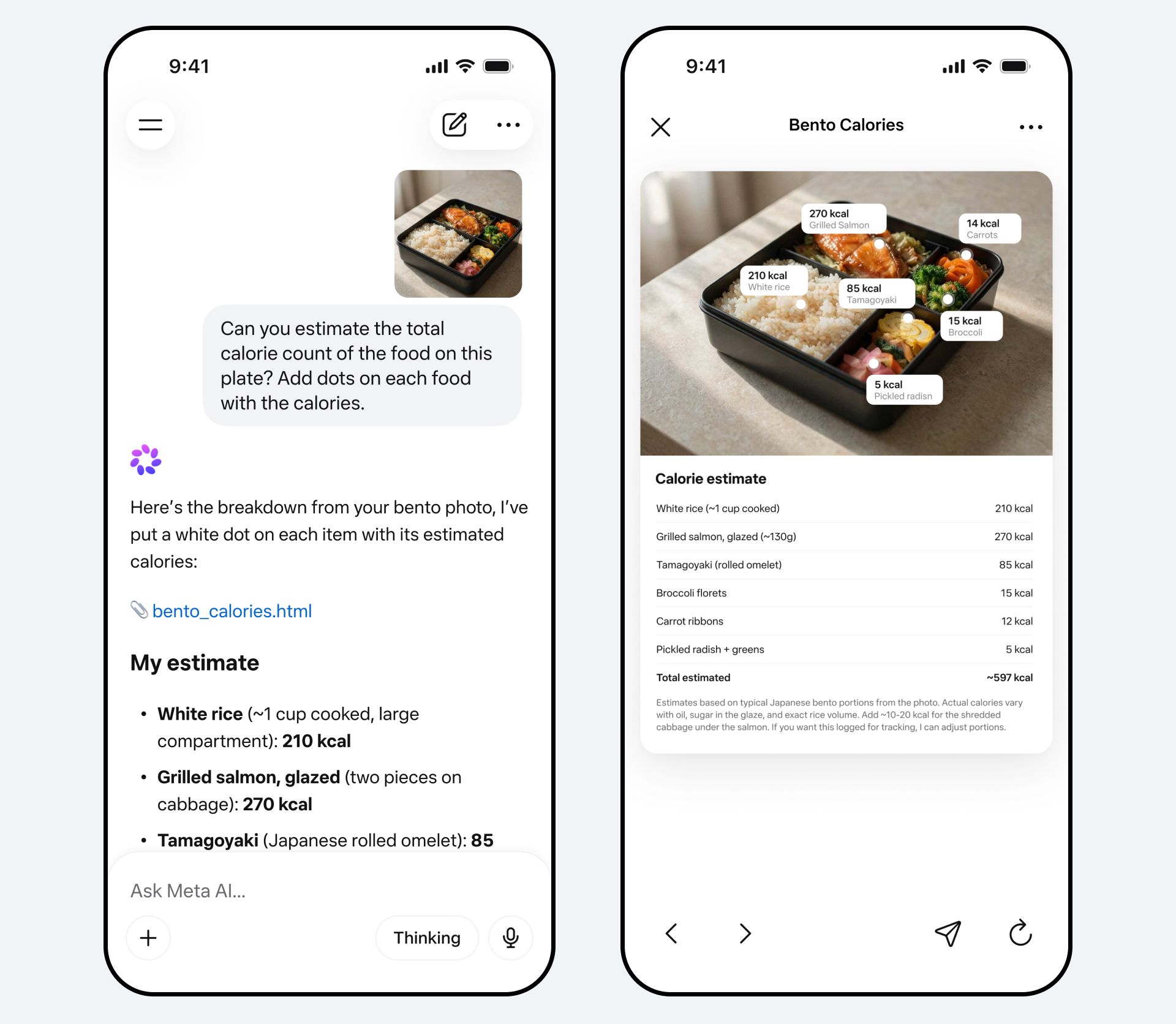
But the most significant change was the nature of the new model: Muse Spark is completely proprietary. No downloadable weights, no self-hosting, with access limited to the Meta AI app, the meta.ai website, and a private API preview for selected partners.
As VentureBeat reported, Muse Spark is "even more proprietary than the paid models offered by Meta's rivals," since competitors like OpenAI and Anthropic at least offer public API access. Wang has said that bigger models are in development with plans to open-source future versions, but no timeline has been given. When VentureBeat asked Meta directly whether Llama development had ended, the company responded only that existing Llama models would remain available.
However, Muse Spark ultimately represents a shift in how Meta is choosing to compete in artificial intelligence, moving away from its earlier strategy of building influence through open ecosystems toward a more controlled approach that tightly integrates its most capable systems within its own products. Seen this way, the significance of Muse Spark extends beyond benchmark performance or architectural innovation and begins to take shape as part of a much larger reorientation of the company’s priorities.
That reorientation becomes clearer when placed in the context of the infrastructure, capital expenditure, and distribution strategy that Meta is now assembling around its AI efforts.
Where Meta stands now
The company is backing Muse Spark with infrastructure spending that dwarfs anything it attempted during the metaverse years. Meta's 2026 capital expenditure guidance is $115B to $135B, nearly double its 2025 spend. Two massive data center projects are central to this: Prometheus in Ohio, a gigawatt-scale cluster due online in 2026, and Hyperion in Louisiana, a 2,250-acre campus (with an additional 1,400 acres recently acquired) that will draw power from 10 gas-fired plants. Meta is financing much of the Hyperion buildout through a $27B joint venture with Blue Owl Capital.
The model's primary distribution channel is not an API or an enterprise sales team. It is Meta's own consumer platforms: Facebook, Instagram, WhatsApp, Messenger, and the Ray-Ban AI glasses. That is 3.48B daily active users, a reach that no other AI lab can match. A shopping mode that combines AI with user behavior data for product discovery ties the model directly to Meta's advertising business, which Emarketer projects will reach $243.46B in global net ad revenues in 2026.
Whether this is the right strategy depends on what problem you think Meta is solving. For most of its time in AI, the company was playing from behind, and open source was a way to build influence without having the best models. Now that it has a competitive model, keeping it proprietary lets Meta control the product experience across its platforms, protect the architectural innovations that made Muse Spark possible, and build a moat around the AI-to-ads pipeline that is its core business.
On the other side, the developer community that spent three years building on Llama is watching closely. The open-source identity that gave Meta credibility in AI was built on a specific deal: Meta gets ecosystem influence, developers get free access to serious models. Muse Spark changes that deal. Developers now get a promise that open-source versions may come later, while Meta keeps its most capable model behind closed doors. Whether that promise materializes, and how quickly, will determine whether the community that made Llama a force stays loyal or moves to alternatives like Google's Gemma, Mistral, or the growing field of Chinese open-weight models.
Meta has reinvented itself before, from a college directory to a social network, from a social network to a metaverse company, and now from a metaverse company to an AI platform. Each pivot has been expensive. This one, at somewhere north of $135B in a single year, is the most expensive yet. Zuckerberg is betting that the model race and the distribution race are not the same, and that a company with 3B users has an advantage that no amount of benchmark performance can replicate. The next Muse releases will show whether he is right.
P.S. Want to collaborate?
Share today’s news with someone who would dig it. It really helps us to grow.
Let’s partner up. Looking for some ad inventory? Cool, we’ve got some.
Deeper integrations. If it’s longer-form storytelling you are after, reply to this email, and we can get the ball rolling.
What did you think of today's memo? |
|





.svg)
.svg)