Welcome to Memorandum Deep Dives. In this series, we go beyond the headlines to examine the decisions shaping our digital future. 🗞️
This week, we're looking at one of the biggest questions hanging over the AI boom: is the technology actually taking people's jobs? Since ChatGPT arrived in November 2022, some of the loudest warnings have come from the companies building AI, and those warnings have been strikingly specific.
In May 2025, Anthropic's Dario Amodei said AI could wipe out half of all entry-level white-collar jobs within one to five years. Less than a year later, ServiceNow's Bill McDermott warned that unemployment among new graduates could climb into the mid-30% range. Forecasts like these set the expectation that office jobs would soon start to disappear.
Now, researchers at Yale and Stanford have spent the past year combing the jobs data for the first signs that those forecasts are coming true. What they have found so far is surprising, and making sense of it means going back to a 1945 strike by New York's elevator operators.
Put your brand in front of 250,000 tech decision-makers.
Bay Area Times reaches more than 250,000 founders, operators, investors, and venture capitalists, 90% of them in the United States, with a 53% open rate.
Native placements sit inside the editorial flow rather than beside it, so your message gets read with the news instead of scrolled past. Slack, Attio, and Granola have run here.
Goodies delivered straight into your inbox.
The AI job losses have not shown up yet
Every month, the U.S. government publishes a survey of American households and the work they do. The survey exists so that the government and researchers who study the economy can track shifts in the workforce before those shifts affect people's everyday lives. For the past year, researchers at Yale's Budget Lab have used each release to look for one thing in particular: a sign that AI has started replacing workers. Similarly, at Stanford, the Digital Economy Lab keeps its own watch using pay records from ADP, a payroll company used by employers across the country, because those records show who is being hired and who is not. And what both teams have found so far is worth a closer look, because it is not what most people expected.
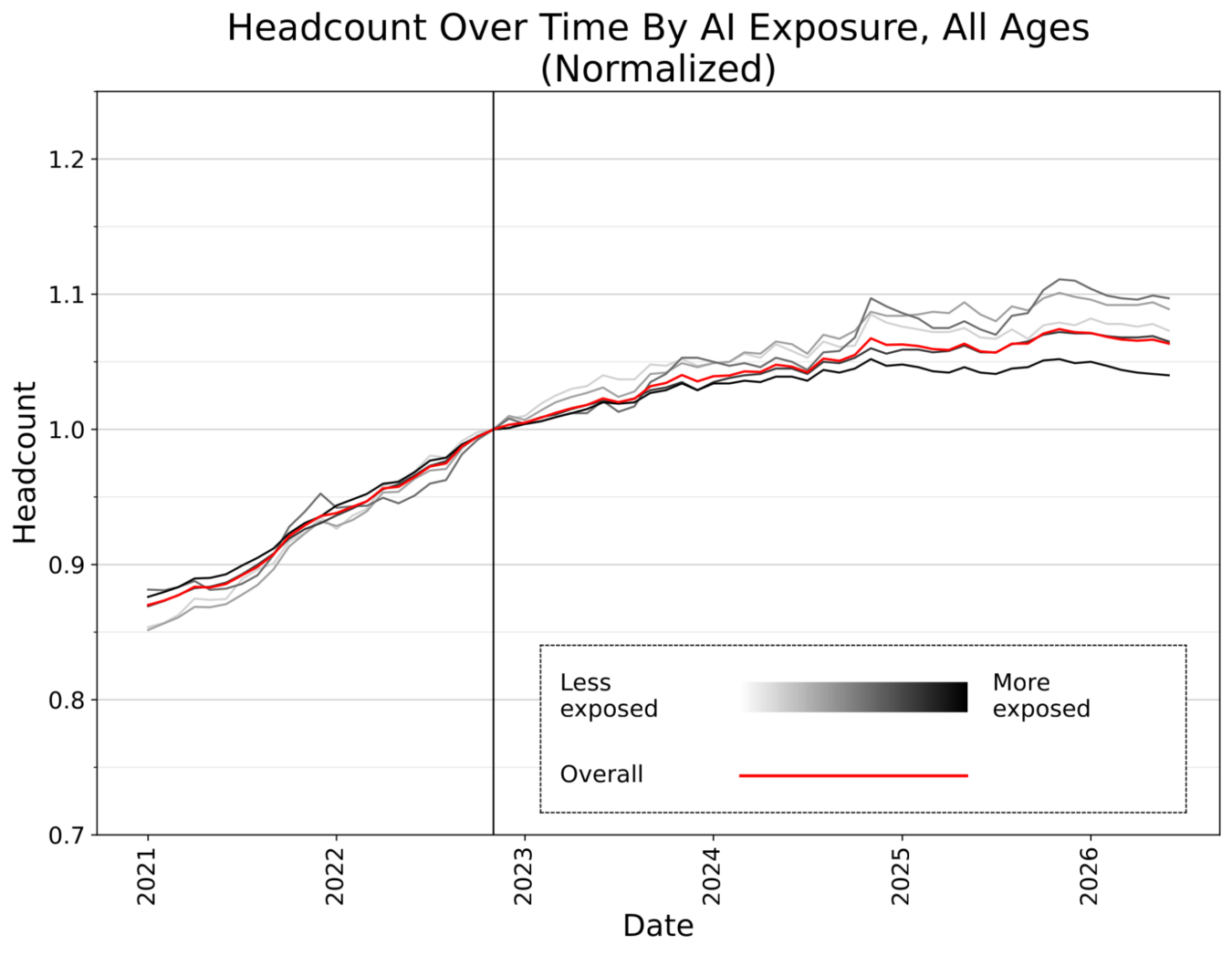
As of September 2026, neither team has found the moment AI began taking jobs, and both say so plainly. Stanford's latest revision, released on August 12, found no widespread displacement across the economy. In the same way, Yale's update on September 15 found that the mix of jobs Americans hold is not changing in ways that match AI's arrival. Taken together, the two findings suggest that since ChatGPT's release in November 2022, job data have shown no clear mark of the technology that was supposed to reshape them.
At face value, the lack of any clear signal looks like a failed prediction about AI. However, it fits an old pattern in how technology changes work, because most jobs are made up of many different tasks and a new machine usually takes over only some of them. As a result, the job itself carries on, while the people doing it take on a new mix of work. AI appears to be doing the same thing, since it is changing what people do inside their jobs much faster than it is removing the jobs themselves.
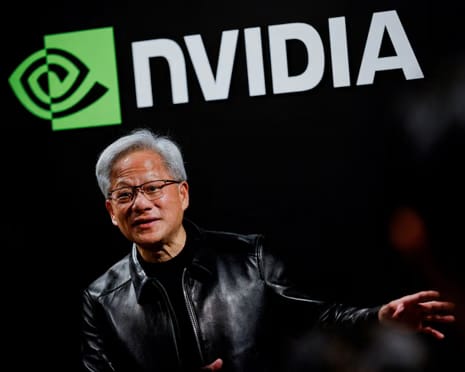
That pattern matches one part of what NVIDIA's Jensen Huang predicted: that AI would change every job and that people who learned to use it would replace those who did not. Huang never claimed that overall employment would hold steady. Even so, his view that AI reshapes the work before it removes the worker fits the data far better than the warnings of mass job losses. And because that change happens inside each job, the headline figures cannot see it.
The warnings came from the people building AI
The calm data are surprising because the expectation that AI would take jobs did not come from outsiders. Instead, some of the loudest warnings came from the people building and selling the technology. The most specific of them came from Dario Amodei, who runs Anthropic, when he told Axios on May 28, 2025, that AI could wipe out half of all entry-level white-collar jobs within one to five years. He also warned that unemployment could rise to between 10% and 20% as a result, putting millions of office workers out of jobs.
Amodei was not alone, and other executives went further in the months that followed. In March 2026, for example, ServiceNow's chief executive Bill McDermott said unemployment among new graduates could reach 30% within a couple of years. Because these forecasts came from the companies that build and sell AI, they set the expectation that office jobs would soon begin to disappear.
Not everyone building AI agreed
Even when those warnings were made, though, some of the industry's most powerful figures did not accept them. The most prominent was Jensen Huang, whose company NVIDIA makes the chips that most AI systems run on, and who told a conference in May 2025 that "every job will be affected, and immediately." Unlike Amodei, however, Huang then turned the warning around, arguing that people would lose their jobs to someone who uses AI rather than to AI itself.
Think of it this way: Huang drew a line between a job and the work done inside it. On his account, AI changes what a job involves, so the worker who learns to use it ends up replacing the worker who does not. The job itself survives, even if the person doing it is someone new. That is why, when he was asked about Amodei's forecast in Paris the following month, Huang said he disagreed with almost everything Anthropic's chief executive says.
Hire smarter with Athyna, save up to 70% on salary costs.
Athyna connects you with top LATAM AI talent, fast!
*This is sponsored content
Jobs change their work long before they disappear
History, as it turns out, sides with Huang, and the clearest example is the elevator operator. By 1900, elevator makers had already built cars that could run with nobody inside to drive them. However, passengers refused to trust the driverless elevator and stepped back out to look for the operator, so office buildings kept paying people to move the cars between floors for another four decades. That only changed in 1945, when a strike by New York's operators kept 1.5M office workers from work and building owners demanded a change.
Once riders accepted the automatic elevator after that strike, the operator's job disappeared completely. It disappeared because the job had only ever been one task, moving the car, and a button could now do it. Yet that kind of outcome turned out to be rare, and we know how rare because an economist counted. James Bessen of Boston University checked which of the 270 occupations in the 1950 U.S. census automation had eliminated over the following six decades, and he found only one: elevator operator. Every other occupation lost some tasks to machines and kept going, while the people in it simply took on a different mix of work.
AI has followed the same path so far because it has taken over only a small part of any job. To measure how small AI's impact is, economists Anders Humlum and Emilie Vestergaard surveyed 25k Danish workers and found that AI saved them 3% of their time on average, with no measurable effect on their pay or hours. A tool that saves someone about an hour a week changes how they work, but it gives an employer little reason to replace them. That is why the data at Yale and Stanford look so calm.
The pressure is building at the bottom of the ladder
The calm picture does have one exception, however, and it sits exactly where Amodei said the damage would land. Because Stanford's pay records can be split by age, the researchers could see how young workers were doing, and they found that they were falling behind. Among 22- to 25-year-olds in jobs most exposed to AI, employment is now 19% behind that of young workers elsewhere, up from 15% a year earlier. More telling still, the gap has opened mainly because companies are hiring fewer young people into those roles, while experienced workers in the same fields have held steady.
To explain why, the Stanford researchers look at the kind of work beginners are given. A new employee usually starts on the parts of a job written down in manuals and procedures, which is exactly the kind of work AI now does well. Senior staff, on the other hand, rely on judgment built up over years of practice, and that judgment has become more valuable as a result. So when AI takes over the written part, the job survives as Huang predicted, but the company has less reason to hire someone new to learn it.
The coming years will decide which forecast holds
Because the evidence is still unsettled, the two predictions now point to different futures, and the data arriving over the next few years will test both. Amodei's window, for one, runs until 2030, so his warning cannot yet be called wrong. Some economists also think the damage has only been delayed, and Goldman Sachs economists estimated AI already costs a net 16k jobs a month, though they cautioned that their method likely overstates the effect.
The clearest test, however, will come from Stanford, which now updates its figures every month. If experienced workers in the most exposed jobs begin falling behind their peers, AI will have moved from changing jobs to removing the people in them, and Amodei's future will have started to arrive. But if those workers keep holding steady, the pattern Bessen found will have held once more, with AI rewriting the work inside jobs while the jobs themselves remain.
In the end, the elevator operator lost the job only when a button could do it all. Most jobs today hold far more than one task, which is why they have survived AI so far. AI, however, is taking the written-down tasks first, and those were the very tasks that brought beginners in. So the next few years of data will show whether AI stays a tool that changes the work, as Huang expected, or keeps taking tasks until some jobs are as thin as the operator's.
P.S. Want to collaborate?
Share today’s news with someone who would dig it. It really helps us to grow.
Let’s partner up. Looking for some ad inventory? Cool, we’ve got some.
Deeper integrations. If it’s some longer-form storytelling you are after, reply to this email, and we can get the ball rolling.
What did you think of today's memo? |
|







.svg)
.svg)