Welcome to Memorandum Deep Dives. In this series, we go beyond the headlines to examine the decisions shaping our digital future. 🗞️
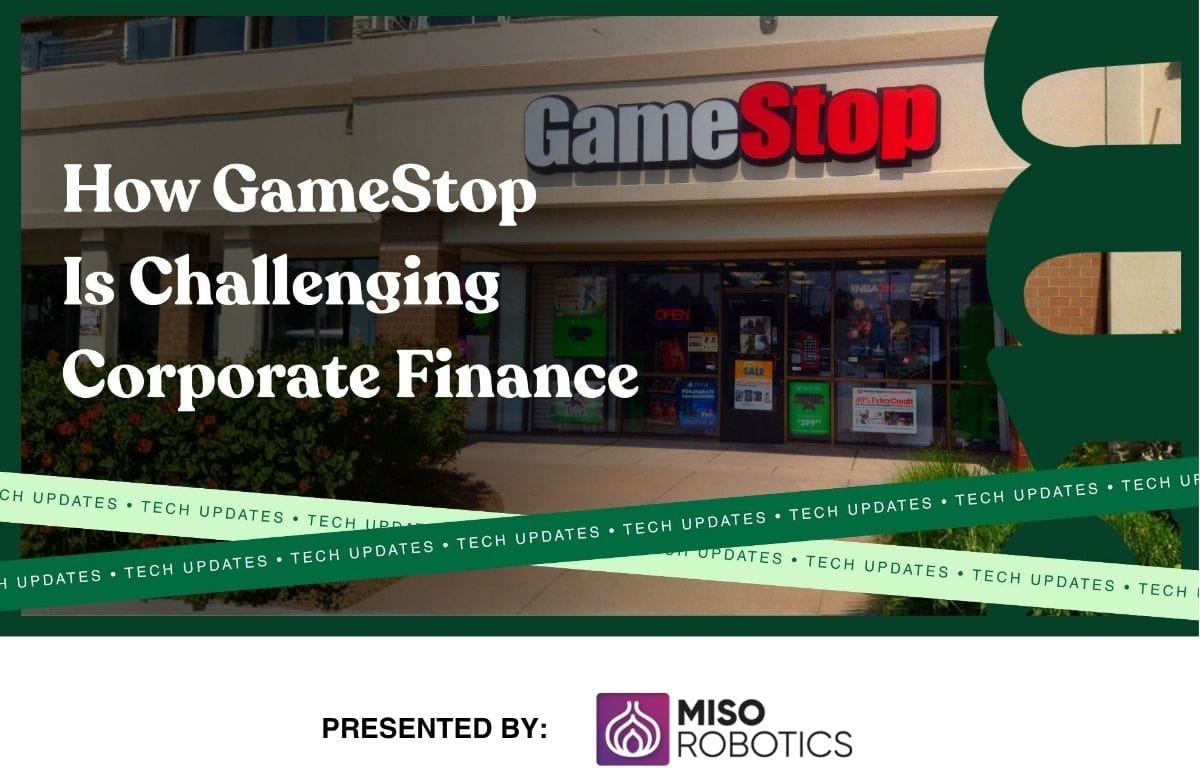
This week, the subject is GameStop’s unsolicited, non-binding $55.5B proposal to acquire eBay: an offer that sent GameStop shares down roughly 10%, lifted eBay about 5% to $109 (well short of the $125 offer price), and forced a public reckoning with the math of meme-stock-financed dealmaking.
The surface reading is straightforward: a company one-quarter the size of its target made a bid it cannot fully fund, and the market responded accordingly. What the proposal actually exposes, however, is a shift in how capital formed outside traditional operating performance can be mobilized to force serious corporate conversations.
The story, then, extends well beyond GameStop’s ambition, revealing how fragile the boundary has become between meme-driven valuations and real acquisition power.
In partnership with

The CEOs of NVIDIA, Tesla, & Microsoft Agree on One Secret
This year, the world’s biggest tech CEOs all said the same thing:
NVIDIA’s Jensen Huang called robotics a “once-in-a-lifetime opportunity.”
Microsoft’s Satya Nadella said 2026 is when AI will deliver real impact.
Tesla’s Elon Musk predicted, “AI and robots will make everyone wealthy.”
Miso’s Flippy Fry Station AI robot has already logged 200K+ hours for fast-food brands like White Castle. Now, Miso has added iconic restaurant brands like Jersey Mike’s, Jamba, and Cinnabon as new customers.
With a new NVIDIA collaboration, strategic investment by industry leader Ecolab, and a growing manufacturing partnership, Miso can now scale to meet 100,000+ US fast-food restaurant locations, a $4B/year revenue opportunity.
This is a paid advertisement for Miso Robotics’ Regulation A offering. Please read the offering circular at invest.misorobotics.com.
An unlikely takeover attempt
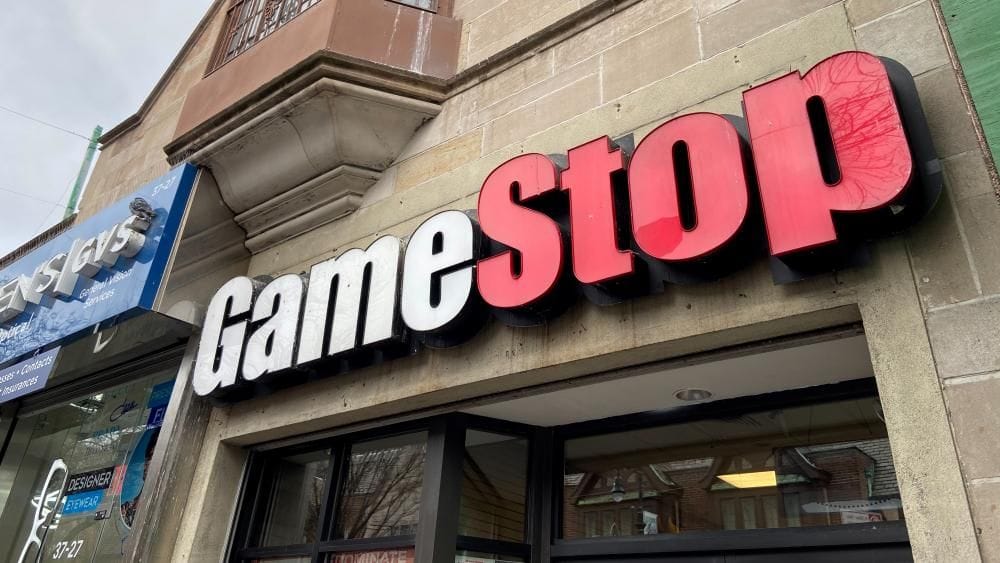
Over the past week, one headline has captured both the media’s and readers’ attention, and the reason is easily discernible. A company that just six years ago was closing stores, bleeding revenue, and widely regarded as a relic of physical retail that the market had left behind, submitted a non-binding proposal to acquire eBay for $55.5B, one of the largest unsolicited bids in retail history.
The offer values eBay at $125 per share, a 46% premium to its pre-bid price, after GameStop quietly began accumulating stock in February. By any conventional measure, a company barely a quarter of its target’s size is attempting to swallow it whole.
The bid is audacious, and it may also be improbable. Still, the fact that it exists at all tells a revealing story about what has changed in American corporate finance and in the e-commerce industry that gave rise to both companies.
From retail relic to market phenomenon
GameStop began as a brick-and-mortar retailer selling video games, consoles, and accessories, eventually growing into a global chain with thousands of stores. Its model thrived in the era of physical media, but began to unravel in the 2010s as digital downloads, online retail, and streaming steadily eroded its core business. And by early 2020, Wall Street had all but written the company off.
What happened next is by now well-documented, but its consequences are still unfolding. Ryan Cohen, the Canadian entrepreneur, disclosed a 9% stake in GameStop in August 2020 and joined the board in January 2021. Around the same time, members of the Reddit forum r/WallStreetBets noticed that roughly 140% of GameStop’s publicly available shares had been sold short by hedge funds betting on further decline.
Redditors organized to buy and hold, triggering a short squeeze that sent shares from roughly $17 to over $500 in a matter of weeks. As a result, hedge funds lost billions, prompting the online trading platform Robinhood to restrict trading and the U.S. Congress to hold hearings to investigate the legality of the entire incident.
Since then, the episode has become a cultural event and a rallying cry for people who believe that retail investors, not institutional investors, have the real power to shape market dynamics. Regardless of its cultural significance, the part that matters for the eBay bid is what the meme-stock frenzy ultimately financed.
The balance sheet behind the meme
The surge and revival of GameStop’s share price enabled Cohen to repeatedly issue new equity, steadily building a cash reserve that now stands at about $9.4B. At the same time, he pushed through aggressive cost cuts, resulting in GameStop moving from a $381M net loss in 2021 to $418M in net income for the fiscal year ending January 2026.
Cohen even briefly tried pivoting to Bitcoin, purchasing 4,710 BTC for roughly $512M in mid-2025 after GameStop’s board unanimously approved adding it to the treasury reserve list. However, by early 2026, he had moved on again, telling CNBC that a planned acquisition of a major consumer company was “way more compelling than bitcoin.” The entire Bitcoin position was transferred to Coinbase Prime in January 2026, and then came the eBay letter.
The deal doesn’t add up
The mechanics of the offer reveal both its ambition and its fragility. Under the deal, GameStop is proposing to pay half in cash and half in its own stock, with the cash portion coming from GameStop’s reserves and up to $20B in debt financing backed by a commitment letter from TD Securities.
However, the numbers do not add up since GameStop’s market cap is around $12B, and its cash is roughly $9.4B. As such, even with the TD letter covering $20B, the total comes to approximately $41B, about $15B short of the $55.5B price tag.
The market’s initial verdict on this calculation, or lack of it, was unambiguous, with GameStop shares falling roughly 10% on Monday, while eBay rose about 5% to $109, well below the $125 offer price. In deal-market shorthand, that kind of gap means investors do not believe the transaction will conclude.
Outperform the competition.
Tools & resources, ranging from playbooks, databases, courses, and more.
Deep dives on famous visionary leaders.
Interviews with entrepreneurs and playbook breakdowns.
*This is sponsored content
The company that doesn’t need saving
It’s worth noting that, despite market movements, eBay doesn’t look like a company in need of rescue.
Under CEO Jamie Iannone, the platform has spent three years refocusing around what it calls ‘focus categories’: trading cards, collectibles, certified pre-owned luxury goods, and auto parts. These are verticals where authenticity matters, where enthusiast knowledge creates real value, and where mass-market competitors like Amazon have less of an edge.
The strategy appears to be working, and eBay’s Q1 2026 results showed revenue of $3.1B, up 19% year-over-year, and gross merchandise volume (the total value of transactions on its platform) of $22.2B, up 18%.
In February 2026, eBay also agreed to acquire Depop, the Gen Z-oriented secondhand fashion marketplace, from Etsy for $1.2B, a deal designed to pull younger consumers onto the platform. Bernstein analysts captured the prevailing Wall Street skepticism in a client note that questioned the strategic rationale, noting that eBay’s turnaround was already working and asking why anyone would disrupt it.
An e-commerce market coming apart.
To understand why GameStop would even consider making such a bid for eBay, one needs to take a closer look at the bigger picture and what it reveals about the e-commerce landscape both companies inhabit.
eBay’s challenge is no longer just Amazon; it is now competing with Temu, Shein, and TikTok Shop: platforms rooted in Chinese manufacturing and logistics that have reshaped consumer expectations around price, speed, and discovery. The company’s Gross Merchandise Volume (GMV) peaked at $100B in 2020 and slid to $79.6B by 2025 as these newer entrants carved away market share.
The numbers then show that the focus categories strategy is partly a retreat to defensible ground, areas where cheap mass production cannot compete with authenticity and curation. Meanwhile, Cohen’s pitch is that eBay needs the scale and physical infrastructure to fight back more aggressively, and that his 1,6k stores can serve as authentication centers, fulfillment hubs, and live-commerce studios.
Beyond increased competition, live commerce is becoming an increasingly important area for companies to consider for long-term growth.
In China, platforms like Taobao Live have already built a massive real-time shopping ecosystem, while Western markets are still experimenting, with eBay only just beginning to test the format. Cohen’s idea behind acquiring eBay looks to be a reimagination of physical stores as live-streaming studios for sellers. But whether that model can translate remains uncertain, adding another layer of risk to an already ambitious deal.
From meme stock to acquisition currency
Beyond the specifics of this transaction, the episode raises a deeper question: whether the meme-stock phenomenon has created a new template for corporate acquisitions.
GameStop’s $9.4B cash pile did not come from selling video games; it came from selling stock to enthusiastic retail investors at prices disconnected from operating fundamentals. If that capital can be used to acquire real, profitable businesses, it represents something new in corporate finance: companies converting cultural momentum into acquisition currency.
Cohen’s performance-based stock option award, which vests if GameStop reaches a $100B market cap, is a strong motivator for him. Acquiring a company with $11B in annual revenue and nearly $80B in GMV would be one obvious path to get there.
A new playbook, or a one-off?
As such, whether this particular deal closes is almost secondary to what it signals. eBay’s board has confirmed receipt of the proposal and said it will review it. Cohen has indicated he would pursue a proxy fight or take the offer directly to eBay shareholders if the board declines.
The financing gap, the dilution math, and the strategic skepticism all argue against completion. Yet the fact that a company rescued from near-death by Reddit traders is now in a position to force a serious conversation about acquiring a $46B e-commerce platform says something about the strange new rules governing American corporate life. Whether those rules prove durable, or whether this moment represents the high-water mark of a financial anomaly, is a question the market is yet to answer.
P.S. Want to collaborate?
Share today’s news with someone who would dig it. It really helps us to grow.
Let’s partner up. Looking for some ad inventory? Cool, we’ve got some.
Deeper integrations. If it’s some longer form storytelling you are after, reply to this email and we can get the ball rolling.
What did you think of today's memo? |
|





.svg)
.svg)