Welcome to Memorandum Deep Dives. In this series, we go beyond the headlines to examine the decisions shaping our digital future. 🗞️
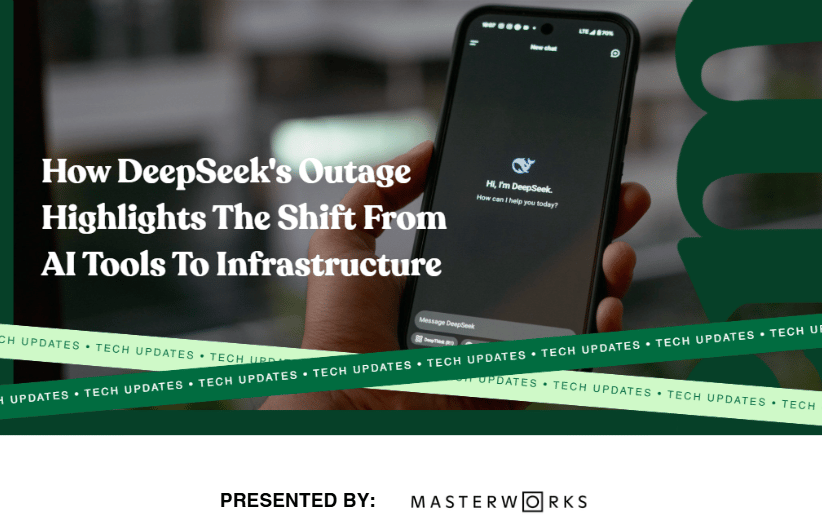
This week, a single outage forced a reckoning that the AI industry has been quietly avoiding. For most of the past two years, generative AI has been framed as a productivity layer, useful, impressive, but ultimately optional. That framing is no longer accurate for millions of users, and a seven-hour disruption on one of the world's most-used AI platforms made that undeniable.
The incident raised questions that go beyond one company's infrastructure. As AI embeds itself deeper into daily workflows, powering developer pipelines, customer support systems, & research processes, the cost of failure has quietly multiplied. Outages that once prompted a shrug now stall entire operations, & the gap between user expectations & platform readiness is widening fast.
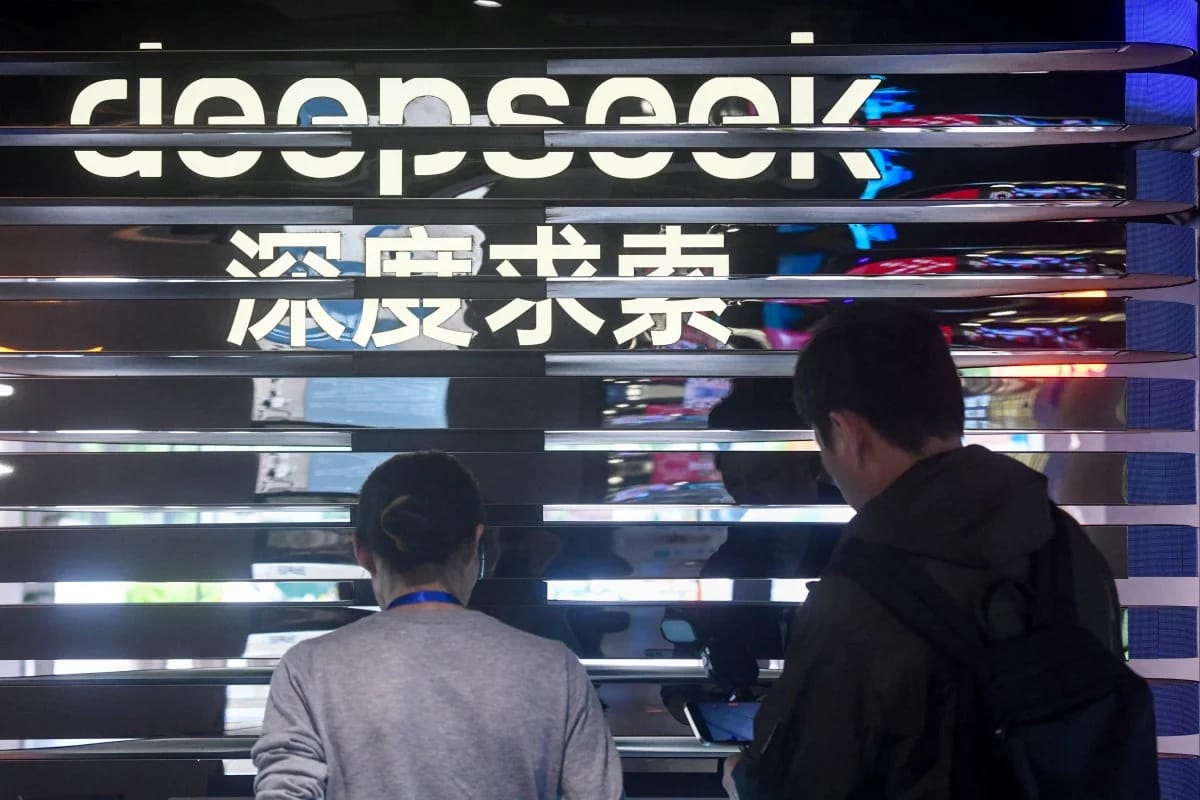
What happened with DeepSeek is less a story about a startup stumbling & more a signal about where the AI industry stands. The platforms that emerged from the model-building era are now being asked to behave like critical infrastructure, & not all of them are ready for that obligation.
In partnership with

Stocks, bonds, gold, and crypto are all falling at the same time. One market just grew 23.1% last year. Here’s how you can invest.
Here's the paradox no one's talking about: the Iran war should be sending investors into safe havens. But they’re selling instead.
Oil doubled since February 28. Historically, that’s helped drive inflation. Inflation drives rate hike expectations (now at 45%, up from 11%).
And higher rates have their impact on everything, gold included.
Still floating at record highs, it’s down 18.6% from its peak. In the middle of a war.
"Whether it's stocks, bonds, or gold, they're all falling," a Bank of East Asia strategist told CNBC this week.
But the art market seems to be in a growth trajectory.
U.S. auction sales rose 23.1% in 2025, and the $1mm-$5mm segment grew 40.8% in value.
Almost no one knows this, but post war and contemporary art grew 10.2% annually over the last 30 years with near-zero equity correlation.*
It trades in any global currency. And supply is scarce.
Masterworks gives you access, offering shares in works featuring Banksy, Basquiat, Picasso, and more. Net annualized returns on completed sales like 14.6%, 17.6%, and 17.8%.
70,000+ members. $1.3 billion across 500+ works.
*According to Masterworks data. Investing involves risk. Past performance not indicative of future returns. See important disclosures at masterworks.com/cd.
The Gap Between Dependence & Readiness
Eighteen months ago, most enterprises treated generative AI as a productivity experiment where teams tested chatbots drafting emails, summarizing documents, and generating boilerplate code. If the tool went down, people shrugged and returned to their usual workflows.
However, that posture no longer holds as AI has moved from the periphery to the core of daily operations. Developers run automation through AI APIs, customer support flows through chatbot interfaces, and researchers increasingly begin with AI for literature reviews, analysis, and drafting.
What many organizations underestimated in this transition is the cost of failure when AI becomes a cognitive layer rather than just another tool. In AI-dependent environments, outages do not just pause systems; they can also disrupt AI systems. They disrupt the flow of work itself, and as automation stalls, response times slip, development slows, and content pipelines falter. The damage is rarely immediate or dramatic, accumulating over time, unsettling the cadence of work, and stretching recovery well beyond the outage.
When the system fails
On 29 March, an outage in DeepSeek led to users reporting failed logins, delayed responses, and dropped sessions across web and mobile. The company reportedly fixed the problem; however, the fix did not hold, and a second, more severe disruption followed, leaving the platform inoperable for seven hours and 13 minutes.
For a platform serving more than 355M users as of February 2026, the disruption was significant. DeepSeek had maintained close to 99% uptime since launching its R1 model in January 2025, and its chatbot had never experienced an outage lasting more than 2 hours. The March incident broke both records.
And while the company has yet to disclose the cause of the outage, reports suggest it could have been due to infrastructure strain from rising demand or backend changes tied to its upcoming V4 model. What makes these the most viable reasons is that the outage followed earlier signs of stress, including a 40-minute outage on 5 March and a partial disruption on 10 March, indicating the system was already under pressure.
Regardless of what caused the outage, the experience was unpleasant for users, and many took to social media, filling it with complaints as the outage dragged on. One user said they no longer knew how to work without it, while another compared the chatbot to a reliable employee who suddenly didn’t show up.
Stay ahead of AI at work.
Cut through the hype. Roko’s Basilisk distills the day’s AI breakthroughs, market moves, and workable workflows into a five-minute brief.
Get one sharp deep dive, fast Quick Hits, and a witty pro tip, plus links that actually matter.
*This is sponsored content
From outage to dependency
The disruption affected both consumer users and developers who rely on DeepSeek’s API for third-party integrations. According to a Bloomberg report, the company deployed several updates to address the issue, but the lack of a public explanation stood out.
DeepSeek’s status page provided timestamps and fixed confirmations, but no root-cause analysis or forward-looking commitments on uptime. For a startup that has built its reputation on technical innovation and cost efficiency, the communication gap was notable. The contrast with how major cloud providers handle comparable incidents, typically issuing detailed post-mortems within days, underscored a maturity gap between DeepSeek’s product capabilities and its operational transparency.
Efficiency meets its limits
For DeepSeek, a company that has relied on its claims of efficiency to reach its current market position, the incident underscores a harder truth. Efficiency in building models does not guarantee resilience in running them.
DeepSeek’s rise has been built on doing more with less. Its V3 model was reportedly trained for about $5.5M on roughly 2,000 Nvidia H800 chips, far below the costs of models like GPT-4. Its pricing undercut competitors, and its R1 reasoning model proved that performance was no longer the exclusive domain of the most heavily funded labs. That shift mattered. It challenged assumptions about how much compute frontier AI really needs and widened access for developers priced out of the market.
But serving AI at scale is a problem in its own right. Supporting hundreds of millions of users across time zones while preparing for a transition to a new model introduces stresses that training efficiency cannot solve. Reliability at that level depends on redundancy, load balancing, fault tolerance, and clear incident response. These are not optimizations that emerge from better algorithms. They require sustained investment and operational depth, the kind built over years by infrastructure players like Alibaba Cloud and Amazon Web Services.
The timing of the outage also reflects a broader shift, as China’s AI ecosystem is straining under rising demand, with daily token usage pushing providers such as Alibaba Cloud, Baidu Smart Cloud, Zhipu AI, and Tencent Cloud to raise prices in March 2026. The era of ultra-cheap AI inference may be fading. What replaces it will reward companies that can pair cost efficiency with reliability, which enterprise users increasingly see as non-negotiable.
A signal, not a verdict
With the hype and focus on AI in the current news cycle, it would be easy to overread DeepSeek’s outage as a turning point. However, when one avoids the trap and broadens their perspective, the situation changes.
A seven-hour disruption for a platform that grew from near-zero to 355M users in roughly 14 months is, by historical standards, unremarkable. AWS, Google Cloud, and Microsoft Azure have all suffered comparable or longer outages during periods of rapid scaling, and none of those events meaningfully altered their competitive trajectories. DeepSeek’s near-99% uptime record across 14 months of explosive growth is, if anything, impressive for a startup operating without the infrastructure depth of a hyperscaler.
What the outage does reveal is the widening gap between the expectations users place on AI platforms and the operational realities those platforms face. DeepSeek’s users have moved past treating the chatbot as a convenience, and they now treat it as infrastructure. That shift carries obligations: not just to build models that perform well on benchmarks, but to serve them reliably, communicate transparently when things go wrong, and invest in the operational scaffolding that enterprise-grade dependence requires.
DeepSeek has time, talent, and a loyal user base. The question now is whether it will invest in the less glamorous work of infrastructure resilience with the same intensity it brought to the more visible work of model innovation.
P.S. Want to collaborate?
Share today’s news with someone who would dig it. It really helps us to grow.
Let’s partner up. Looking for some ad inventory? Cool, we’ve got some.
Deeper integrations. If it’s some longer form storytelling you are after, reply to this email and we can get the ball rolling.
What did you think of today's memo? |
|





.svg)
.svg)