Welcome to Memorandum Deep Dives. In this series, we go beyond the headlines to examine the decisions shaping our digital future. 🗞️
This week, we examine one of the most consequential shifts in modern warfare, one that unfolded not on a traditional battlefield, but across server racks, availability zones, and cloud platforms powering the global economy.
The conflict between the U.S. and Iran has been widely covered for its geopolitical stakes, its ceasefire drama, and its oil market shockwaves. But buried beneath those headlines is a development with far-reaching implications for governments, technology companies, and anyone building on cloud infrastructure in an increasingly volatile world.
What has emerged from this conflict is a strategic insight that neither Wall Street nor Silicon Valley has fully priced in, and one that will reshape how nations, militaries, and corporations think about where they build, what they protect, and what they can no longer afford to take for granted.
In partnership with

Want to get the most out of ChatGPT?
ChatGPT is a superpower if you know how to use it correctly.
Discover how HubSpot's guide to AI can elevate both your productivity and creativity to get more things done.
Learn to automate tasks, enhance decision-making, and foster innovation with the power of AI.
A new kind of war
The conflict between the United States and Israel on one side and Iran on the other is likely to be remembered as one of the most consequential military confrontations of the century, not only for its immediate geopolitical stakes but for the way it has revealed the limits of conventional military dominance. It has shown how even a superpower like the United States can be forced to recalibrate its strategy when faced with a weaker adversary leveraging asymmetric tactics, targeting infrastructure, and disrupting critical nodes of global trade.
What sets this conflict apart, however, is what it reveals about the changing nature of strategic assets in the age of AI, where the infrastructure that powers models is no longer peripheral but central to both economic and military capability. Data centers, cloud networks, and the broader compute stack have effectively joined the list of critical infrastructure, making them not just enablers of modern systems but legitimate targets in wartime.
When the cloud came under fire
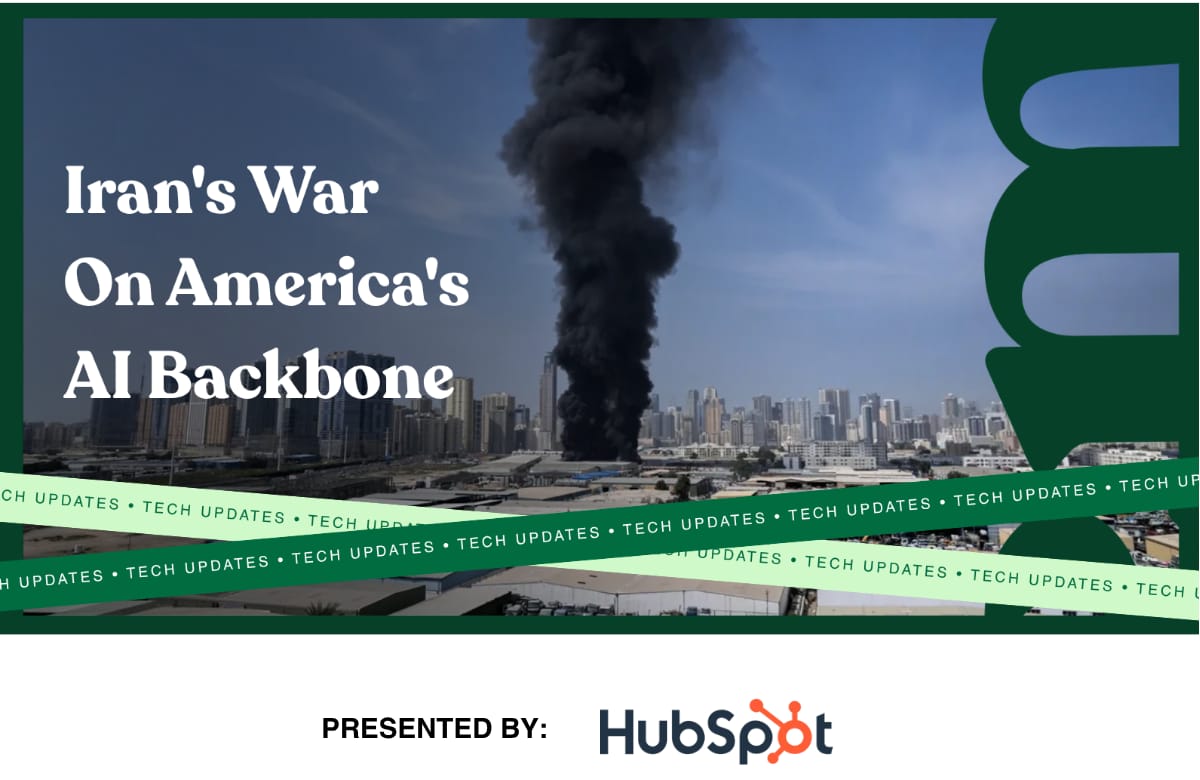
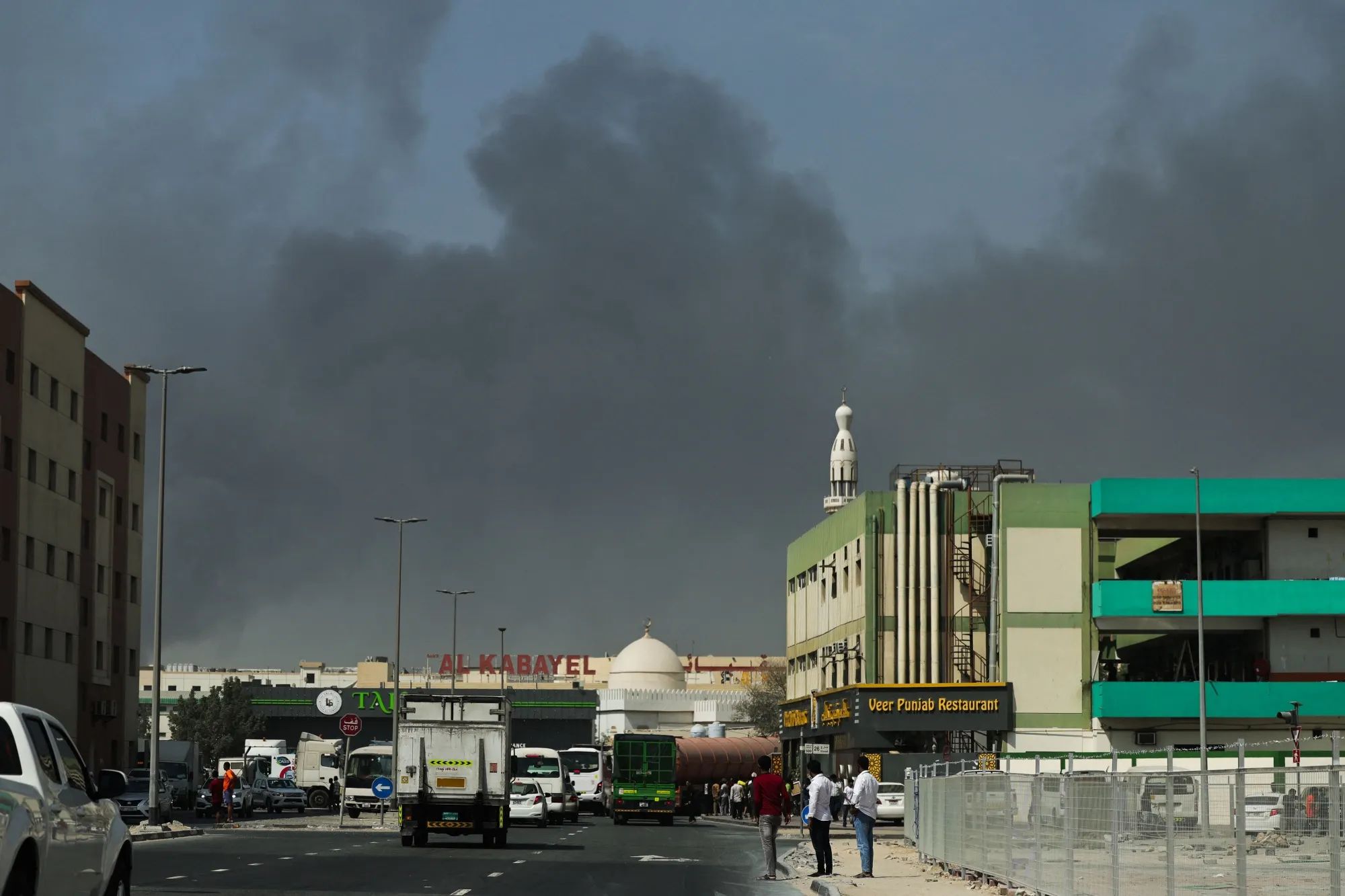
Before dawn on March 1, 2026, Iranian Shahed drones struck two Amazon Web Services data centers in the United Arab Emirates. They disrupted a third of Bahrain, knocking two of the three availability zones in AWS’s UAE region offline simultaneously and triggering widespread disruption across banking systems, payments platforms, and enterprise software. Companies such as Careem, Alaan, and Hubpay, along with major UAE banks, reported outages, and AWS ultimately waived all usage charges for the region for the entire month of March, a tacit acknowledgment of the scale of the failure.
However, as observers across outlets such as Bloomberg, Fortune, and Rest of World noted, this marked the first time a state had deliberately targeted commercial data centers during wartime, making the attacks less an isolated disruption and more a signal that compute infrastructure has entered the target set, with Iran demonstrating a clear understanding of its strategic value as leverage.
Turning infrastructure into a weapon
For the Islamic Revolutionary Guard Corps (IRGC), recognizing the strategic importance of AI data centers required little inference, given the sheer scale of global investment, with the five largest U.S. cloud and AI companies set to spend over $600B in 2026 alone, most of it directed toward building out AI infrastructure.
A significant share of that expansion was concentrated in the Gulf, where Microsoft committed $15.2B to the UAE, including a $1.5B stake in G42. Amazon Web Services pledged more than $5.3B for an AI hub in Saudi Arabia, drawn by the region’s energy economics, capital availability, and geographic position.
At the center of this buildout is Stargate UAE, a $30B, five-gigawatt AI campus in Abu Dhabi backed by OpenAI, SoftBank, Oracle, NVIDIA, Cisco, and G42, which the United States Department of Commerce described as the largest data center deployment outside the United States. Construction began in March 2026, even as the conflict had already exposed the vulnerability of such assets, effectively validating earlier warnings from Sam Winter-Levy of the Carnegie Endowment for International Peace that placing critical AI infrastructure within range of Iranian missiles carried clear strategic risks.
The March 1 strikes marked the beginning of a more explicit escalation, as the IRGC moved from demonstration to signaling intent. On March 11, the IRGC-linked Tasnim News Agency published a list of 29 tech facilities across the region labeled “Iran’s New Targets,” including sites tied to Amazon, Microsoft, Google, IBM, NVIDIA, Oracle, and Palantir, framing the shift as a move toward infrastructure war.
The threat carried weight because the earlier strikes had already established capability, demonstrating that Iran could reach and disrupt data centers in the Gulf, and extending that precedent to Stargate. This $30B facility would represent one of the largest concentrations of AI compute capacity outside the United States.
Stay ahead of AI at work.
Cut through the hype. Roko’s Basilisk distills the day’s AI breakthroughs, market moves, and workable workflows into a five-minute brief.
Get one sharp deep dive, fast Quick Hits, and a witty pro tip, plus links that actually matter.
*This is sponsored content
Why does this work as a threat?
Iran’s focus on data centers carries strategic weight because the U.S. military is already dependent on commercial AI infrastructure to conduct operations. Systems developed by Palantir, drawing in part on Anthropic’s Claude model, are being used to identify and prioritize targets, embedding AI directly into the decision-making loop of modern warfare.
The reliance on AI rests on physical infrastructure that the IRGC is threatening. The Pentagon’s cloud operations run on the same commercial platforms that support civilian services, meaning the data centers hosting these systems are not abstract assets but tangible, targetable sites. As Ioannis Kalpouzos has noted, facilities supporting such systems fall within the logic of wartime targeting, alongside AI infrastructure, energy grids, telecom networks, and satellites, as part of the expanding set of dual-use assets.
The result is a structural contradiction where the United States helped drive the development of AI infrastructure in the Gulf, launched a conflict that exposed it to attack, and now relies on systems running on that same vulnerable infrastructure to prosecute the war, turning data centers into both a strategic advantage and a point of fragility.
The new target set
James Henderson, CEO of risk management firm Healix, told CNBC that the pattern is sustained and that “future crises may target data centers and cloud platforms as much as traditional strategic sites.” Standard commercial insurance excludes acts of war, as Marsh’s 2026 Political Risk Report detailed, and AWS, Microsoft, and Google all declined to comment on security arrangements at their regional facilities.
The March 1 strikes proved that data centers can be hit. The IRGC’s escalating threats demonstrated that adversaries recognize its value. The Pentagon’s reliance on commercial AI demonstrated that disruptions to compute capacity degrade military capability.
Taken together, these developments point to a future in which AI data centers are treated not as commercial real estate but as critical national infrastructure, targeted in conflicts the way power stations and oil refineries have been for a century. The cloud was built on the assumption that threats came from hardware failures, cyberattacks, and natural disasters. That assumption no longer holds.
P.S. Want to collaborate?
Share today’s news with someone who would dig it. It really helps us to grow.
Let’s partner up. Looking for some ad inventory? Cool, we’ve got some.
Deeper integrations. If it’s longer-form storytelling you are after, reply to this email, and we can get the ball rolling.
What did you think of today's memo? |
|






.svg)
.svg)