Welcome to Memorandum Deep Dives. In this series, we go beyond the headlines to examine the decisions shaping our digital future. 🗞️
This week, a federal jury in Oakland dismissed Elon Musk's lawsuit against OpenAI, ending one of the most closely watched legal battles in the artificial intelligence industry. The case pitted the world's wealthiest person against the company he helped found, with billions of dollars and the future of AGI governance hanging in the balance.
On the surface, the ruling looked like a clean win for OpenAI. The for-profit public benefit corporation structure survived, the immediate legal threat dissolved, and the company is now reportedly preparing for a public listing at a valuation exceeding $1T. Many observers treated the verdict as a vindication of the company's controversial transformation from nonprofit research lab to commercial powerhouse.
But the courtroom story and the industry story are not the same story. What unfolded over weeks of testimony revealed something larger than a dispute between two former allies, touching on questions that extend well beyond OpenAI to Anthropic, xAI, and the entire race to build artificial general intelligence.
Sponsored by

How Jennifer Aniston’s LolaVie brand grew sales 40% with CTV ads
The DTC beauty category is crowded. To break through, Jennifer Aniston’s brand LolaVie, worked with Roku Ads Manager to easily set up, test, and optimize CTV ad creatives. The campaign helped drive a big lift in sales and customer growth, helping LolaVie break through in the crowded beauty category.
Before the AI boom
For decades, humanity’s relationship with artificial intelligence has existed largely in the realm of imagination. Popular culture oscillated between two extremes. In one version, AI became humanity’s executioner, cold, autonomous, and uncontrollable, as seen in films like The Matrix and The Terminator. In the other, it evolved into a trusted companion, helping humans navigate the unknown and push the boundaries of civilization, as in Interstellar, where AI systems quietly guide astronauts through deep space.
But most of those stories begin after AI already exists and has reshaped civilization. They rarely explore the chaotic phase before that point, when researchers, corporations, and billionaires were still scrambling to build it first and deciding whether AI would become a public responsibility, a scientific mission, or the century’s biggest commercial opportunity. By the mid-2010s, that question was no longer theoretical.
A mission built on fear
When OpenAI was founded in 2015, its founding documents read more like a manifesto than startup paperwork. The founders believed artificial general intelligence, capable of matching or surpassing human reasoning across domains, was coming, and that if such systems emerged inside conventional corporations answerable to shareholders, the consequences could be catastrophic.
OpenAI was therefore structured as a nonprofit, presenting itself as a research mission rather than a conventional business.
That framing helped OpenAI attract elite researchers and credibility while positioning itself as the responsible alternative to profit-driven AI development. That narrative became harder to sustain once billions of dollars entered the industry.
More importantly, the trial exposed how the early AI industry operated behind closed doors as idealism collided with capital, infrastructure, and control.
Before the mission changed, the economics already had
OpenAI long argued that commercialization was unavoidable because frontier AI required enormous compute, talent, and infrastructure. Donations and nonprofit fundraising could not compete with the economics of industrial-scale AI. And while the explanation still contains some truth, what complicated the trial was the timeline.
It further revealed that internal discussions about restructuring OpenAI into a for-profit entity had already begun by 2017, years before the public understood the scale of the commercial opportunity around generative AI and before Musk had formally severed ties with the organization. More importantly, Musk himself was not portrayed as an outsider objecting to commercialization on principle. According to evidence presented in court, he participated directly in conversations about alternative corporate structures and at one point proposed folding OpenAI into Tesla.
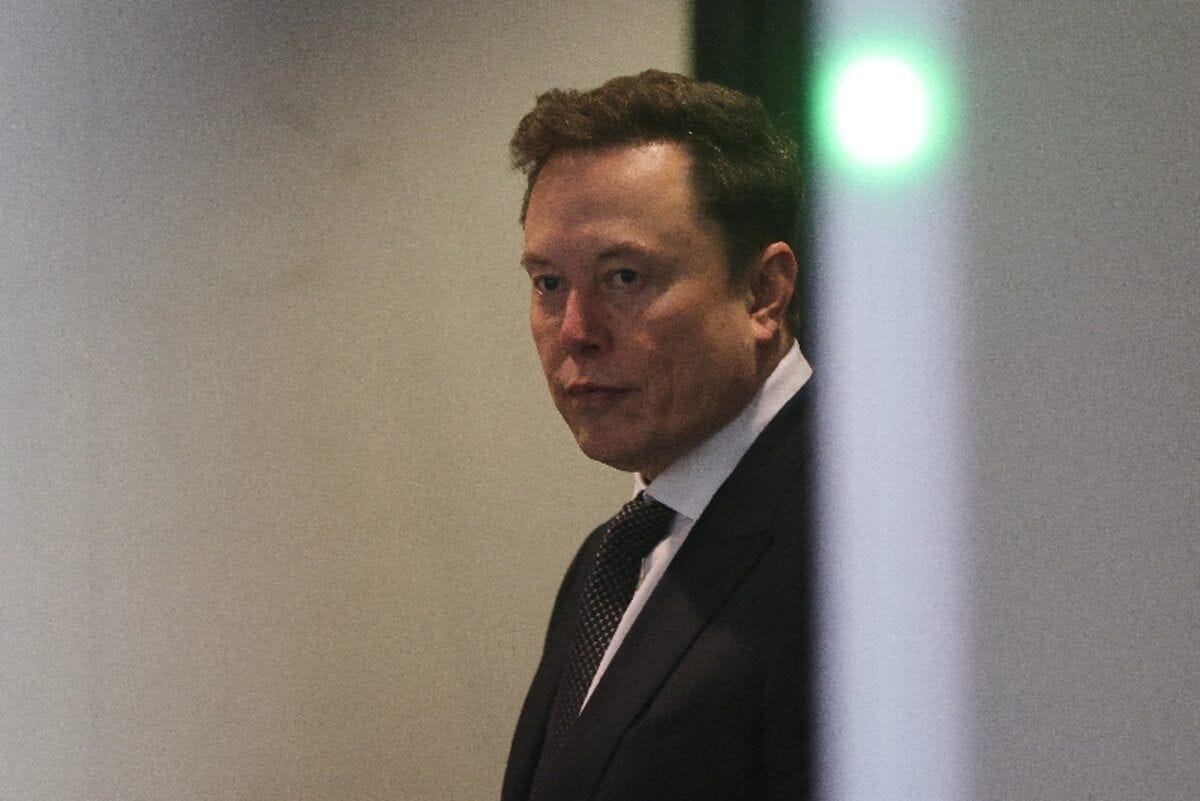
On the other hand, Musk, in his version of events, argued that he initially believed OpenAI’s nonprofit mission remained intact and only recognized the scale of the transformation after Microsoft’s multibillion-dollar investment formalized what had already been quietly happening inside the company. “Thinking that someone might steal your car is not the same as someone stealing it,” he told the court.
The trial ultimately raised a deeper question neither side fully answered: whether OpenAI’s nonprofit mission was ever sustainable once frontier AI demanded industrial-scale capital.
The question the jury never touched
OpenAI emerged from the trial in better legal shape than it entered. The for-profit public benefit corporation structure, completed in 2025 with a nonprofit foundation nominally retaining governance oversight, survived intact. The immediate existential threat, namely the possibility that a court might unwind the structure entirely, disappeared with the jury’s decision.
Reports suggest OpenAI could pursue an IPO as early as 2026 at a valuation exceeding $1T. But public filings may also reveal the scale of its spending, with projected annual cash burn reportedly in the tens of billions of dollars.
Yet the verdict also created a strange asymmetry: the case was dismissed on procedural grounds, not on the merits.
The jury never addressed the core governance question at the center of the dispute: whether a nonprofit can transform into a massively valuable commercial enterprise while retaining the legitimacy of its original mission.
Outperform the competition.
Tools & resources, ranging from playbooks, databases, courses, and more.
Deep dives on famous visionary leaders.
Interviews with entrepreneurs and playbook breakdowns.
*This is sponsored content
Three companies, one window
The trial’s timing was always about more than two men with a grudge. Within roughly the same 12-month window, OpenAI, Anthropic, and the merged SpaceX/xAI entity are all positioning themselves for eventual public-market debuts. Together, their implied private valuations already exceed $3.5T.
All three companies are effectively making the same argument to investors: that building artificial general intelligence requires staggering levels of capital expenditure, and that traditional governance norms should yield to the scale of the mission.
OpenAI framed that argument in terms of nonprofit origins and public-benefit language. Anthropic has attempted a softer version built around safety-focused branding and corporate guardrails. Musk’s xAI, merged into SpaceX earlier this year at a combined valuation reportedly reaching $1.25T, represents the more openly centralized variant in which founder control is treated not as a flaw but as a strategic necessity.
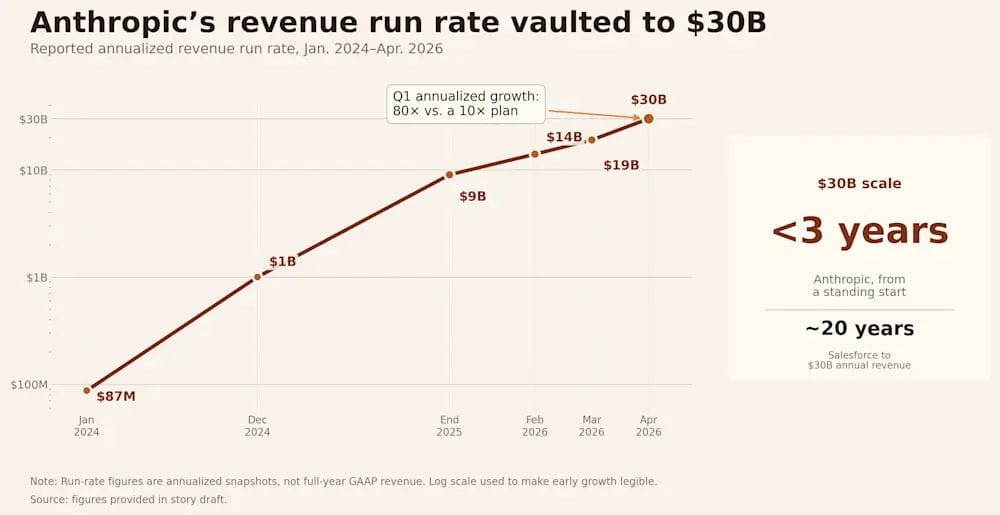
The governance questions surrounding these companies are no longer theoretical. Institutional investors are already debating them ahead of potential IPOs. Pension funds have reportedly criticized the governance structure proposed for the SpaceX/xAI listing as among the most management-friendly ever attempted at that scale. Anthropic, meanwhile, is trying to position itself as the comparatively stable alternative, with enterprise revenue reportedly reaching an annualized run rate of $30B by March 2026, with enterprise customers accounting for the majority of that figure.
The trial made visible something the AI industry has often preferred to obscure beneath technical jargon and futuristic rhetoric: the race to build artificial general intelligence is not merely a scientific competition. It is also a struggle over power, control, and legitimacy.
For years, popular culture imagined AI as either humanity’s destroyer or its trusted companion. But those stories largely skipped the stage the world is currently living through. The beginning was never going to look like science fiction; it was always going to look like boardrooms, legal filings, compute contracts, governance disputes, and a handful of extraordinarily powerful people trying to decide who gets to shape the most consequential technology of the century.
The question no jury touched
The Oakland courtroom did not answer the question of whether OpenAI abandoned its original mission. It answered only that Elon Musk waited too long to challenge it. The larger question, whether companies attempting to build AGI can realistically govern themselves while simultaneously pursuing trillion-dollar valuations, remains unresolved.
And that question matters because the systems described for decades in films like The Matrix or Interstellar no longer feel entirely hypothetical. The transition from speculative fiction to industrial reality is already underway, and the companies at its center are racing toward public markets, raising unprecedented sums of money, and asking investors and regulators to trust that concentrated power today will yield safe, beneficial intelligence tomorrow.
The founders of OpenAI once argued that artificial general intelligence was too important to be controlled by ordinary corporate incentives. The irony exposed by the trial is that building AGI may have become so expensive that those incentives were unavoidable from the very beginning.
Humanity has spent decades imagining what artificial intelligence might eventually become. The trial revealed something more immediate and perhaps more consequential: what kind of people, institutions, and incentives are shaping it before it arrives.
P.S. Want to collaborate?
Share today’s news with someone who would dig it. It really helps us to grow.
Let’s partner up. Looking for some ad inventory? Cool, we’ve got some.
Deeper integrations. If it’s some longer-form storytelling you are after, reply to this email, and we can get the ball rolling.
What did you think of today's memo? |
|





.svg)
.svg)